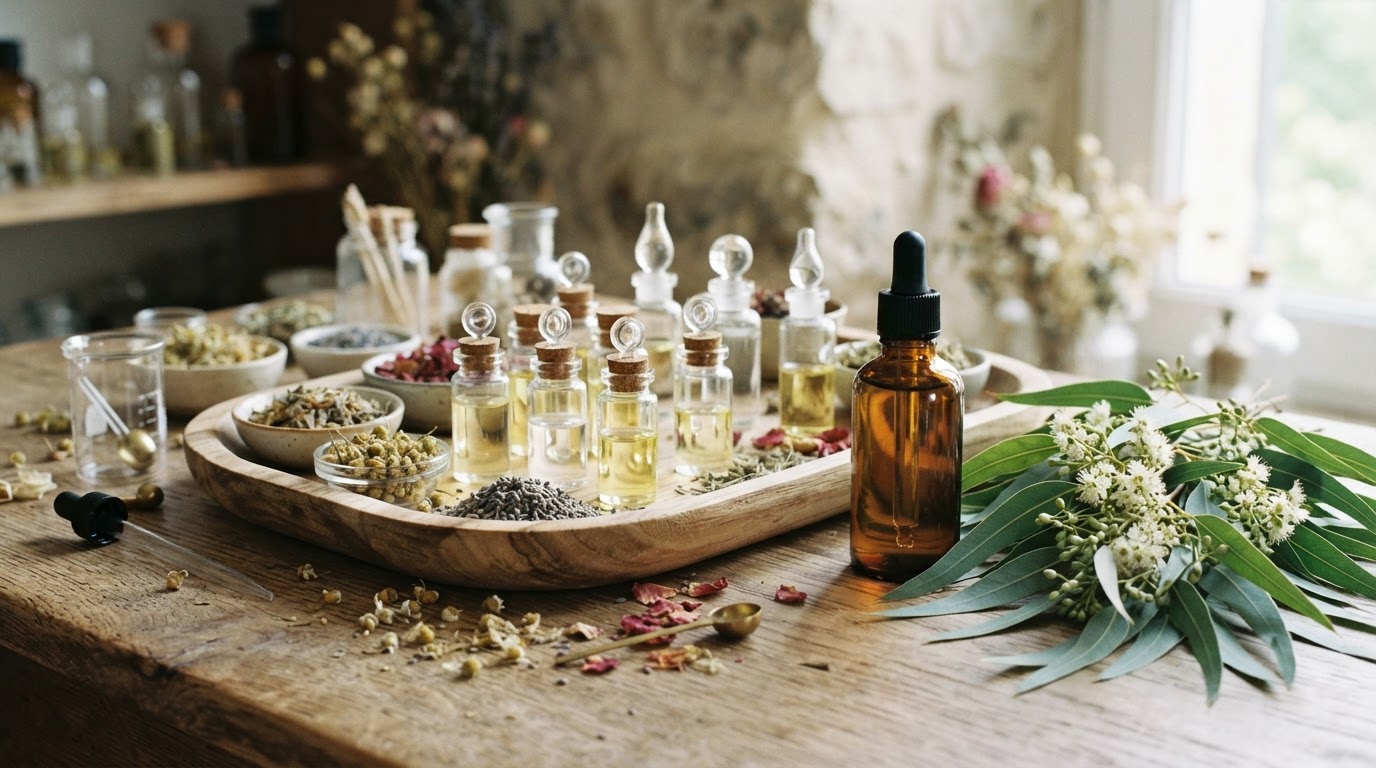
How to Dilute Lemon Eucalyptus Oil for Perfumery and Home Fragrance
Lemon eucalyptus oil is one of the brightest, most citrus-forward oils in the botanical world, but that brightness comes with intensity. Its high citronellal content gives it a sharp, lemony top note that can dominate a blend or feel harsh against skin if it isn't measured out with care. If you're experimenting with home perfumery or want a naturally scented room spray that doesn't smell like a science experiment, learning how to dilute lemon eucalyptus oil properly is the difference between a blend you'll reach for again and one that ends up forgotten in a drawer.
This guide walks through the tools, ratios, and steps for diluting lemon eucalyptus oil for perfumery and home fragrance use, along with the mistakes that trip up most people the first time they try it.
Why Dilution Matters in Perfumery and Home Fragrance
Essential oils are concentrated plant extracts, and lemon eucalyptus is more concentrated in character than most. A single drop can carry the scent load of several drops of a gentler oil like lavender or geranium. Used undiluted on skin, it's more likely to feel sharp or tingly to sensitive skin, and in a fragrance blend, it will often flatten out any subtler notes you've paired it with.
Diluting isn't just about stretching the oil further, though that's a nice side benefit for your wallet. It's about giving the scent room to develop. A properly diluted blend opens with that lemony brightness, settles into whatever heart notes you've chosen, and lingers instead of blasting out and fading in ten minutes. For anything applied near skin, a lemon eucalyptus carrier oil ratio in the 2 to 3 percent range gives you the fragrance without overwhelming the formula or the skin's comfort.
What You'll Need
- Lemon eucalyptus essential oil, ideally from a supplier who shares batch testing so you know what you're actually working with.
- A carrier oil for skin-adjacent blends like roll-ons or solid perfume. Fractionated coconut oil and jojoba are popular choices because they're lightweight and close to scentless, so they won't compete with the fragrance.
- Perfumer's alcohol or high-proof grain alcohol if you're building an alcohol-based spray perfume rather than a skin-applied oil blend.
- Dark glass bottles (amber or cobalt), since light and heat both degrade citrus-heavy oils faster than you'd expect.
- A small glass graduated cylinder or beaker for measuring by volume rather than guessing by eye.
- Glass droppers or pipettes, one per oil if you're blending multiple scents, so you're not cross-contaminating.
- Labels and a notebook to record your ratios. You will not remember the exact drop count three weeks from now.
- A small patch-test area and a bit of patience before wearing any new blend broadly.
Understanding Lemon Eucalyptus Oil Dilution Ratios
Dilution ratios in perfumery generally scale with how long you want the fragrance to last and how it's being applied. As a rough guide, one milliliter of essential oil is commonly approximated at around 20 drops, though this varies by dropper size and the oil's own viscosity, so treat these numbers as a starting point rather than a fixed rule.
| Application | Suggested Dilution | Approx. Drops per 1 oz (30 mL) Base |
|---|---|---|
| Skin-applied roll-on or solid perfume | 2 to 3% | 12 to 18 drops in carrier oil |
| Light alcohol spray (cologne-style) | 4 to 6% | 24 to 36 drops in alcohol |
| Stronger alcohol spray perfume | 8 to 12% | 48 to 72 drops in alcohol |
| Room and linen spray | 1 to 2% | 6 to 12 drops in water with a dispersant |
| Diffuser blend | Varies by blend | Follow your diffuser's manufacturer guidance |
Because lemon eucalyptus is such a forward note, most home perfumers find it works best at the lower end of these ranges, then layered against other oils rather than used as the dominant note in a high-percentage extrait-style blend.
Step-by-Step: How to Dilute Lemon Eucalyptus Oil
1. Decide on your application first
Are you making a roll-on for skin, an alcohol-based spray, or a room mist? The base you choose determines both the ratio and the tools you'll reach for, so settle this before you open any bottles.
2. Clean and sanitize your tools
Wipe down glassware and let it dry fully. Any leftover water in a bottle meant for an alcohol perfume will cloud the final blend and can shorten its shelf life.
3. Measure your base first
Pour your carrier oil or alcohol into your bottle or beaker before adding any essential oil. Working this direction keeps your math simple and avoids the common error of adding oil to an empty bottle and then trying to estimate how much carrier to top it off with.
4. Calculate your drop count
Using the table above as a reference point, work out how many drops of lemon eucalyptus oil your target dilution calls for. If you're new to this, start at the lower end of the range. It's much easier to add another drop than to remove one.
5. Add the oil gradually, testing as you go
Add a few drops, swirl gently (never shake a fragrance blend, it introduces air and can accelerate evaporation of top notes), and smell the result on a blotter strip rather than directly from the bottle. Wait a minute between additions since your nose adjusts quickly to strong scents and can trick you into over-adding.
6. Build out the rest of the accord
If you're constructing a full perfume rather than a single-note blend, this is the point to add your other oils, ideally in the classic top, heart, and base note structure. Lemon eucalyptus reads as a top note, so it will be the first thing noticed and the first thing to fade. Pairing it with a heart note like geranium or lavender and a grounding base note like cedarwood or vetiver gives the fragrance more staying power.
7. Let the blend rest
Cap the bottle and set it in a cool, dark place for 24 to 48 hours before final evaluation. This maceration period lets the individual notes marry into something more cohesive than what you'll smell right after mixing.
8. Patch test before broader use
Apply a small amount of the diluted blend to the inside of your forearm and wait 24 hours before using it more widely, especially if the blend is going on skin rather than into a room spray. This step matters every time you change a ratio or introduce a new oil, not just the first time you try lemon eucalyptus oil.
9. Label, date, and store
Write the dilution percentage, ingredients, and date on the bottle. Store away from direct sunlight and heat sources, which is where amber or cobalt glass earns its keep.
Tips for Better Results
- Start lower than you think you need. You can always build a blend up in a second batch once you know how the ratio smells on you specifically.
- Use a blotter strip, not your skin, for early testing. It's faster feedback and doesn't commit you to wearing an unfinished blend all day.
- Keep a blending journal. Ratios that smell right in the beaker can shift once they've rested for two days, and you'll want the exact drop counts to recreate (or adjust) a batch you liked.
- Pair thoughtfully. Lemon eucalyptus tends to sit well alongside citrus, mint, and light florals, and against woodier base notes like cedar for contrast.
- Respect the maceration period. A blend that smells sharp or unbalanced right after mixing often mellows considerably after a day or two resting.
Common Mistakes to Avoid
- Skipping the patch test. Skin sensitivity varies person to person, and a ratio that's comfortable for one person may not be for another.
- Using plastic containers. Concentrated citrus-heavy oils can degrade some plastics over time; glass is the safer long-term container.
- Assuming all droppers deliver the same drop size. Viscosity and dropper tip design both affect drop volume, so treat published drop counts as an approximation and adjust by scent evaluation, not just math.
- Adding too much lemon eucalyptus oil relative to the rest of the blend. Because it's such a forward note, even a small overage can flatten the other oils in the accord.
- Storing finished blends in sunlight or near heat. A windowsill might look pretty, but it will shorten the life of your fragrance considerably.
- Shaking instead of swirling. Vigorous shaking introduces air into the blend and can speed the loss of the lighter top notes.
What to Expect
When diluted thoughtfully, a lemon eucalyptus blend tends to open bright and citrusy, with many people describing the initial impression as fresh or energizing. Some people find a well-balanced room spray helps a space feel more inviting during the day. Results are subjective and will vary depending on the quality of the oil, the base you've chosen, your skin chemistry (for skin-applied blends), and how long the blend has rested before use. Anecdotal reports from home perfumers vary widely, and a ratio that one person finds perfect may read as too strong or too faint to someone else, which is exactly why testing your own small batch matters more than following a ratio blindly.
A Note on Safe Use
Always dilute lemon eucalyptus oil before applying it to skin, patch test any new blend, and keep concentrated oil away from children and pets. If you have questions about how a fragrance blend might interact with your specific circumstances, a qualified healthcare provider is the right person to ask, particularly before use around infants or anyone with known skin sensitivities. Store all essential oils out of reach of children and away from eyes and mucous membranes.
Frequently Asked Questions
What is the best lemon eucalyptus oil dilution ratio for skin-applied perfume?
Most home perfumers land somewhere around 2 to 3 percent for a skin-applied roll-on or solid perfume, which works out to roughly 12 to 18 drops per ounce of carrier oil. Because lemon eucalyptus is a strong top note, staying toward the lower end of that range tends to give a more balanced result.
Can I use lemon eucalyptus oil undiluted in a perfume?
It's not recommended. Undiluted use on skin increases the likelihood of discomfort for sensitive skin, and in a blend, an undiluted addition will typically overpower every other note you've included.
How do I dilute essential oil for a spray perfume specifically?
Measure your perfumer's alcohol first, then add drops of lemon eucalyptus oil gradually, testing on a blotter strip as you go, generally somewhere in the 4 to 12 percent range depending on how strong you want the finished spray to be.
Diluting lemon eucalyptus oil well is mostly a matter of patience: measure carefully, add slowly, let the blend rest, and trust your nose over a rigid formula. Once you've found a ratio that suits your own preferences and skin, it's easy to scale the same recipe up for a bigger batch.