A Signature Lemon Grove Morning Blend
Some mornings deserve more than a cup of coffee. This lemon grove blend was built for the kind of morning you want to stretch out in: windows open, light coming in at an angle, the air carrying something green and bright and worth breathing slowly. It pairs lemon eucalyptus oil with Boswellia serrata frankincense, and the result is a diffuser experience that feels genuinely different from the usual citrus blends that fade in fifteen minutes and leave nothing behind.
This guide covers everything you need to make it well: why serrata specifically, how to measure precisely, how to adapt it across the seasons, and how to store what you blend so it stays fresh. If you want to understand more about pairing lemon eucalyptus with other botanicals before diving in, the full resource at blending with lemon eucalyptus is a solid place to start.
Why Boswellia Serrata: The Case for This Variety
Frankincense is not one thing. The genus Boswellia includes several distinct species, each with its own resin chemistry, growing region, and aromatic personality. Choosing the right one for a morning citrus blend matters more than most blending guides acknowledge.
Boswellia serrata is native to India, particularly the dry deciduous forests of Rajasthan, Madhya Pradesh, and Jharkhand. Its resin has been harvested for centuries and is sometimes called Indian frankincense or shallaki in Ayurvedic tradition. The essential oil distilled from it is softer and woodier than the more resinous Boswellia sacra from Oman, and it lacks the sharp camphorous edge that can appear in Boswellia carterii. Serrata sits in the middle of the frankincense family in the best possible way: warm without being heavy, slightly citrus-tinted at the top note (which matters enormously here), and dry enough in the base to anchor brighter oils without competing with them.
That natural citrus undertone in serrata is what makes it the right frankincense for a lemon grove blend. It does not clash with the bright aldehydic quality of lemon eucalyptus. It meets it. The two oils share aromatic common ground, and that shared ground is where the blend becomes cohesive rather than just layered.
You can explore Boswellia serrata essential oil and its sourcing details on the product page before ordering, which is always worth doing when you are blending with a resinous botanical for the first time.
The Aroma Profile at a Glance
- Lemon eucalyptus (Corymbia citriodora): Fresh, lemony, slightly green, with a clean camphor note underneath. Bright top notes that diffuse quickly and cleanly.
- Boswellia serrata: Warm, woody, softly balsamic, with a subtle citrus-resin quality at the opening. Grounding base note that extends diffusion time.
- Sweet orange (Citrus sinensis): Juicy, round, slightly floral. Bridges the sharp citrus of lemon eucalyptus and the warmth of serrata without muddying either.
- Cedarwood Atlas (Cedrus atlantica): Dry, pencil-shaving woody, with a faint sweetness. Adds structural depth and slows the top-note evaporation rate.
The Signature Lemon Grove Morning Blend: Full Recipe
Ingredients (For a 10 mL Roller or Blending Base)
| Oil | Drops | Approximate mL | Role in Blend |
|---|---|---|---|
| Lemon eucalyptus (Corymbia citriodora) | 14 | 0.70 mL | Heart and top note: bright, citrus-green |
| Boswellia serrata frankincense | 8 | 0.40 mL | Base note: warm, woody anchor |
| Sweet orange (Citrus sinensis) | 10 | 0.50 mL | Mid note: round, juicy bridge |
| Cedarwood Atlas (Cedrus atlantica) | 4 | 0.20 mL | Base note: structural depth |
| Fractionated coconut oil (carrier, if blending for skin) | To fill to 10 mL | ~8.20 mL | Carrier for topical use only |
Total essential oil drops: 36 (this represents approximately a 1.8% dilution in a 10 mL base, suitable for most adults for topical application to pulse points.)
For Diffuser Use (Undiluted Blend Concentrate)
If you are making a concentrate for the diffuser only, omit the carrier oil and store the 36-drop blend in a 2 mL amber glass bottle. Add 4 to 6 drops to your diffuser water reservoir per session.
Step-by-Step Blending Instructions
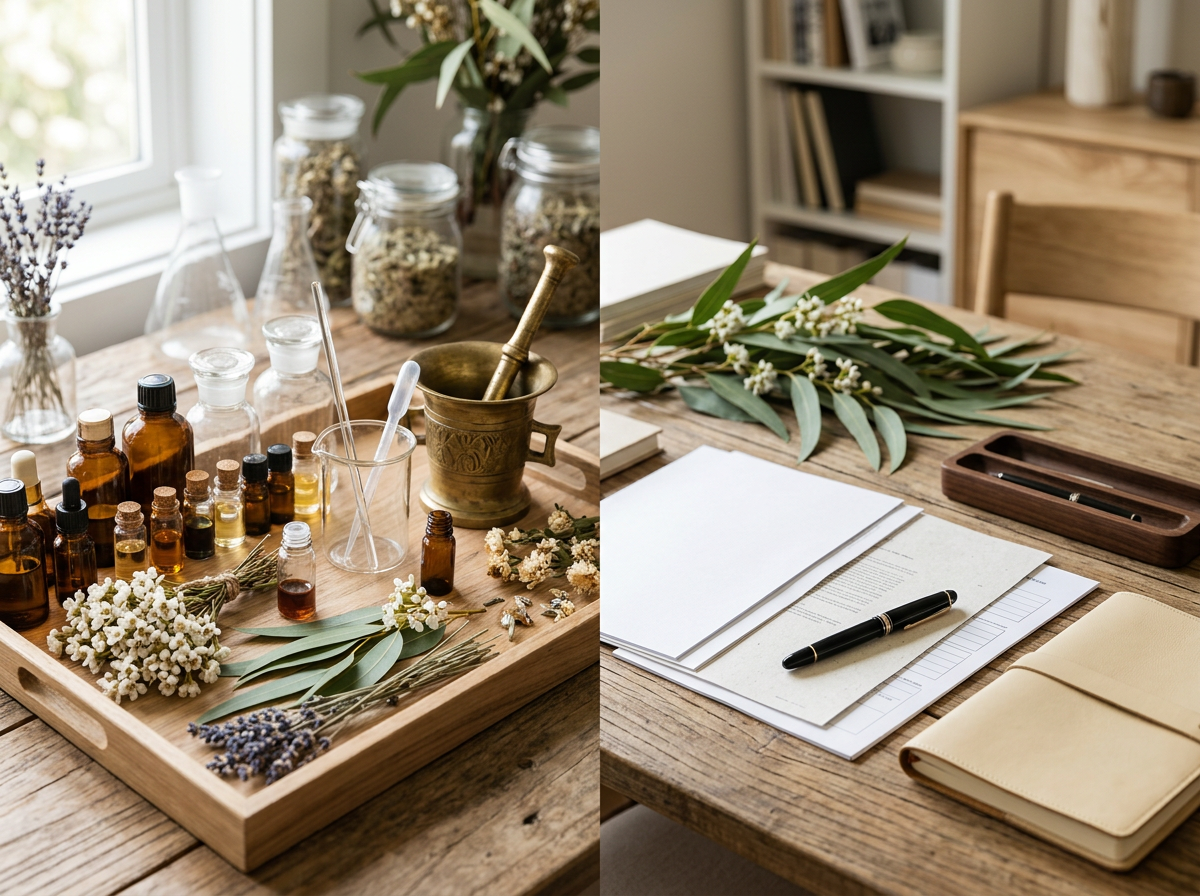
- Gather your materials. You will need: a small glass stirring rod or toothpick, your four essential oils, a 10 mL amber roller bottle (or 2 mL bottle for diffuser concentrate), a dropper or graduated pipette, and a blending strip or two if you want to preview the scent before committing.
- Layer the base notes first. Add Boswellia serrata (8 drops) to the bottle, followed by Cedarwood Atlas (4 drops). Base notes are heavier molecules and benefit from going in first so the lighter oils do not get trapped underneath.
- Add the bridge note. Drop in the sweet orange (10 drops). Swirl the bottle gently between each addition rather than stirring aggressively, which can introduce air bubbles and oxidize the blend faster.
- Add the star oil last. Lemon eucalyptus (14 drops) goes in at the end. Its volatile top notes are best preserved when they have the least contact time with the air during the blending process.
- Preview on a strip. Dip a blending strip and let it sit for 90 seconds before smelling. This allows the top notes to settle slightly and gives you a more accurate read of the full arc of the scent.
- Top up with carrier (if making a roller). Fill to the 10 mL line with fractionated coconut oil, cap, and roll gently between your palms for 20 seconds to integrate.
- Label immediately. Note the date blended and the contents. This sounds obvious and is routinely skipped.
Dilution, Patch Testing, and Safety Notes

The 1.8% dilution in this recipe (36 drops in 10 mL) falls within general cosmetic use guidelines for most adults applying to wrists and the base of the neck. If you are blending for a child over the age of ten, reduce the essential oil total to 18 drops per 10 mL (approximately 0.9%). Do not apply this blend to young children without consulting a qualified healthcare provider first.
Patch testing is not optional. Apply a small amount of the diluted roller blend to the inside of your wrist and wait 24 hours before broader use. If any redness, itching, or discomfort appears, discontinue use.
Lemon eucalyptus oil has a higher citral content than many eucalyptus varieties. Some individuals with sensitive skin may find citral compounds mildly sensitizing with repeated use. Rotating this blend with other morning blends rather than using it daily on the same skin area is a sensible practice.
Sweet orange is considered a low-risk oil for photosensitivity compared to expressed citrus peels, but if you are applying any citrus-containing blend to skin that will be directly sun-exposed, covering that area or applying after sun exposure is the more cautious approach.
For diffuser use only (no skin contact), the safety considerations are significantly reduced. Keep diffusion sessions to 30 to 60 minutes with adequate ventilation, and ensure the space is appropriate for any pets present, as some oils are not well tolerated by cats or small animals. Consult a veterinarian if you are uncertain.
Always consult a qualified healthcare provider before using essential oils if you are pregnant, nursing, or managing any ongoing health situation.
Storage and Shelf Life
Store your blended concentrate or roller in a cool, dark location away from direct light and heat sources. A drawer or a small dark box works well. Do not store near a window, even if the bottle is amber-tinted.
- Diffuser concentrate (no carrier): Approximately 12 to 18 months if stored properly. Lemon eucalyptus and sweet orange oxidize faster than the base notes, so if the top notes begin to smell flat or sharp, the blend is past its best.
- Roller blend (with carrier oil): The carrier oil will determine shelf life. Fractionated coconut oil is very stable; expect 12 months. Add a small amount of vitamin E oil (1 to 2 drops per 10 mL) to extend carrier freshness.
- Signs of oxidation: A sour, off, or astringent sharpness in what was once a smooth citrus note is the primary indicator. When in doubt, refresh the blend.
Blend Variations
Variation 1: The Green Grove (Cooler, Crisper Edition)
Reduce sweet orange to 6 drops and add 4 drops of spearmint (Mentha spicata) in its place. The result is a brighter, greener profile that leans into the eucalyptus character of the lemon eucalyptus oil. This version works particularly well on overcast mornings when the usual citrus warmth feels like too much.
Variation 2: The Harvest Grove (Warmer, Spiced Edition)
Reduce Cedarwood Atlas to 2 drops and add 2 drops of cardamom (Elettaria cardamomum) and 2 drops of benzoin resinoid. Cardamom adds an aromatic spice note that complements serrata's balsamic quality beautifully, and benzoin softens the whole blend into something that feels more golden, more autumnal. A good choice when the mornings start to cool toward the end of summer.
Variation 3: The Coastal Grove (Lighter, Open Edition)
Drop the Cedarwood Atlas entirely and add 4 drops of amyris (Amyris balsamifera) in its place. Amyris is lighter than cedarwood but still woody, with a faintly milky quality that opens the blend up rather than grounding it. This variation diffuses as something more airy and expansive. If you want to understand how this kind of citrus-forward blend might work in a larger outdoor setting, the backyard wedding scent case study is a good read for context and scale.
Making This Blend Part of a Morning Ritual
The lemon grove blend works best as an intentional part of your morning rather than background noise you switch on and forget. Start the diffuser before you make coffee or prepare breakfast. By the time the room fills with the opening citrus notes from the lemon eucalyptus and sweet orange, you are already moving. The serrata frankincense base note becomes more noticeable as the session progresses, shifting the room's atmosphere from sharp and bright toward something quieter and more settled. That arc, from citrus lift to woody warmth, mirrors a morning that is going well.
If you are building out a broader collection of morning and daytime blends to rotate through, the roundup at 10 sunny citrus clean diffuser blends gives you a lot to work with and plenty of places this lemon grove blend fits naturally alongside.
A well-sourced Boswellia serrata and a good bottle of Corymbia citriodora are the investment worth making here. The rest of the blend comes together in five minutes and stays good for months. That is a morning ritual worth returning to.