The Best Lemon Eucalyptus Insect Repellents: How to Shortlist One
We cannot honestly name "the best" lemon eucalyptus repellent: we sell none, and we have run no bite tests. What we can give you is a method. Filter to EPA-registered products with OLE or PMD, record the registration number, strength, format, pest claims and age statement, then compare those facts side by side.
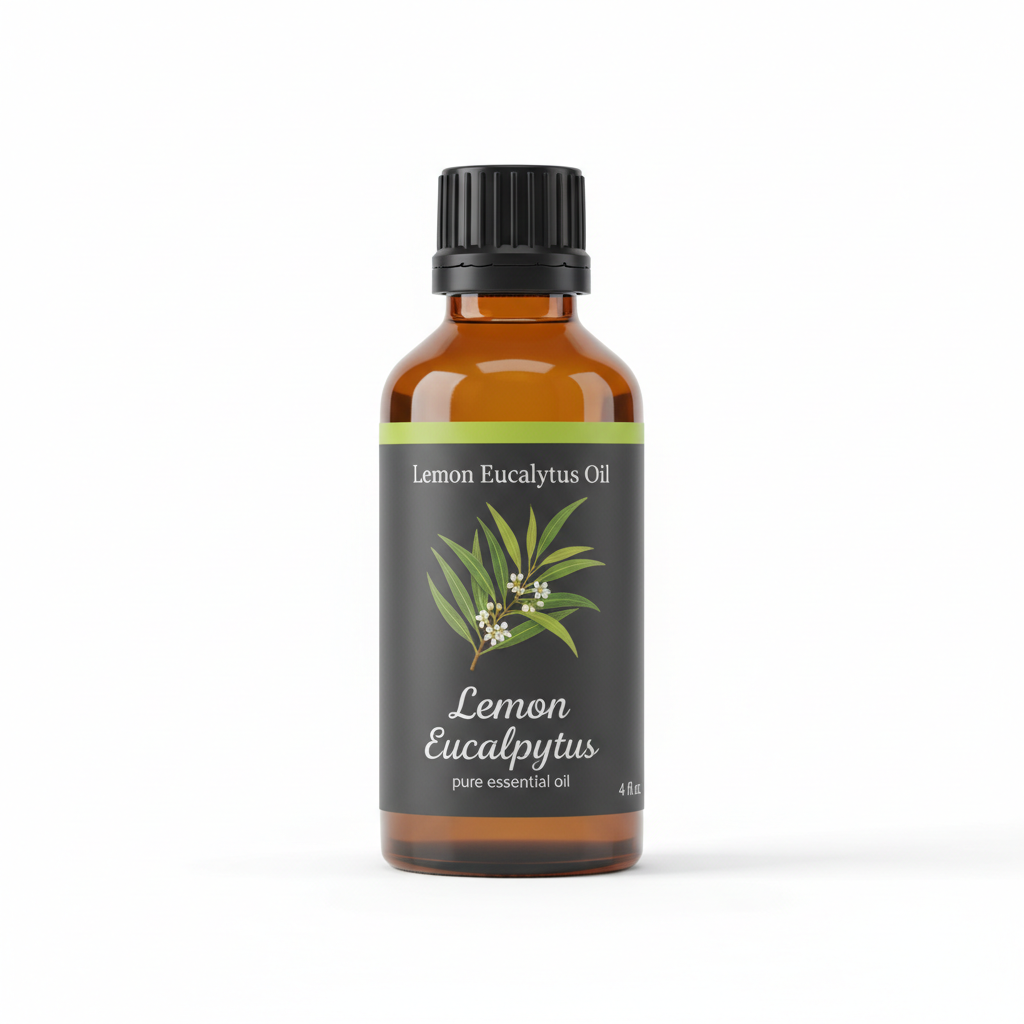
Lemon Eucalyptus Essential Oil
Our own Lemon Eucalyptus Essential Oil, in sizes from 0.5 oz to bulk.
From $9.99
Shop Now →Last reviewed: October 2026
Why this is not a "tested and ranked" list
Most "best repellent" pages imply hands-on testing. Ours does not exist, and we would rather say so than imitate it. This site sells one product, Lemon Eucalyptus Essential Oil, which is not an EPA-registered repellent (see our stance page). We have no affiliation with any repellent brand, no affiliate links, and no bite logs. Anything below that sounds like a result is a quotation from a label, a manufacturer page, or a published source, and we say which.
If you are new to the difference between the registered ingredient and our oil, read what OLE and PMD are and how to choose a lemon eucalyptus repellent first. This article is the next step: how to turn that checklist into a shortlist of two or three.
Step 1: Build the candidate pool from EPA, not from search results
EPA's "Find the insect repellent that is right for you" tool lets you filter by mosquitoes, ticks or both, protection time, active ingredient and other product details. Filter to oil of lemon eucalyptus or PMD. EPA's skin-applied ingredients page listed six OLE products and six PMD products when we read it, which is a short enough list to go through by hand. Everything that survives is, by definition, a registered product; that already removes the "natural spray" listings that carry no registration.
Step 2: Open the label, not the product page
EPA hosts label PDFs by registration number and date, and a manufacturer's own site often carries the label's text. You want the documents, because a marketing page can lag a revised label. When we looked, one Repel pump-spray label from 2007 listed 60.0% oil of lemon eucalyptus and a 2012 label for the same family listed 30.0%. Same company, different strength, different years. That is why we record the label date next to every figure below.
Step 3: Fill in the same six fields for every candidate
- EPA registration number.
- Active ingredient and percentage, and whether the label states OLE or PMD (see our concentration guide for the arithmetic).
- Format and its directions (spray versus lotion).
- Pests named on the label, with any stated hours.
- Age statement.
- Shelf-life or date-code guidance, if the maker gives it.
What we could verify: a worked example
These three rows show the method on documents we opened. They are examples, not endorsements, and none of them is "the best".
| Field | Repel Plant-Based Lemon Eucalyptus (pump spray) | Repel Essential lotion | Murphy's Naturals Lemon Eucalyptus spray |
|---|---|---|---|
| Registration number | EPA Reg. No. 305-62 | EPA Reg. No. 305-56 | Not shown on the product page we read |
| Document and date | Label copy, 2012, retailer-hosted | EPA master label, amendment 3/24/03 | Manufacturer product page, read October 8, 2026 |
| Active ingredient | OLE 30.0%, approx. 65% PMD | OLE 30.0%, approx. 65% PMD | OLE 30%; other ingredients water and corn ethanol |
| Format | Pump spray, 4 fl oz size on this label | Lotion, cream or spray-able lotion forms listed in the master label | Spray, 2 oz and 4 oz |
| Pests and times | Mosquitoes, up to 6 hours | Optional claims: mosquitoes and deer ticks, up to six hours | Mosquitoes up to 6 hours; deer ticks up to 4 hours; lone star and brown dog ticks over 8 hours |
| Age statement | Do not use on children under three | Do not use on children under three | Page says EPA removed the age restriction for 30% OLE; also says not registered in California for under three |
| Reapplication | Reapply once as needed; no more than twice per day | Same | Same wording on the page |
A few things this exercise surfaces that a ranked list would hide. The three products share one strength. The ticks claim sits on one and not on another. And the age statements disagree, which is the field most worth checking against the label on the bottle in your hand and with a pediatrician. We could not confirm that the older Repel documents match what is on shelves today; for the current label, use EPA's product label search by registration number.
Step 4: Price per ounce, only from a page you opened
Price comparisons go stale quickly, and we would normally leave them out. One verified data point shows how to do the arithmetic: the Murphy's Naturals page on October 8, 2026 showed a 4 oz bottle at $10.99 and a 2 oz bottle at $4.99. That is about $2.50 per ounce at either size (our calculation). We looked at no other retailers, so we make no claim about what is cheapest. Do the same sum with the prices you see, and compare ounces of the same OLE strength only.
Step 5: Decide by use, then eliminate
| If the use is | Prioritize on the label | Eliminate if |
|---|---|---|
| Evening in the yard | Mosquito claim, a format you will spread evenly | No registration number |
| Hiking or camping | Pest list including ticks, protection hours, reapplication cap | The tick claim is missing and ticks are your concern |
| Family with children 3 and over | Age statement, directions for applying to a child | The age line is silent or contradicts what a pediatrician told you |
| Long hot days | Highest labeled hours, but remember the twice-per-day cap | You expect to need more than two applications |
| Disease-risk travel | Talk to a travel-medicine clinic first | You were planning to rely on this article |
For the case where OLE is not the right tool, OLE versus DEET and OLE versus picaridin set out the trade-offs.
Four mistakes that wreck a shortlist
- Comparing percentages across different actives. 30% OLE, 20% picaridin and 25% DEET are not three measures of the same thing. Penn State Extension lists a different recommended concentration for each, so compare protection times and age rules instead.
- Trusting the front of the pack over the active ingredient box. Phrases such as "made with lemon eucalyptus" describe marketing. The box with the registration number and percentage is what CDC and EPA guidance refer to. CDC does not recommend "pure" lemon eucalyptus oil as a repellent.
- Skipping the age line. It is the field where the sources we read disagree, and it matters most for families.
- Assuming a tick claim from a mosquito claim. The 2012 Repel label we read names mosquitoes only. A tick claim has to be on the label of the product in front of you; see our tick article.
Re-check before every season
Labels change, and so do the claims allowed on them. In the Repel documents we opened, strength moved between label years, and a manufacturer page today describes an age-restriction change that the older labels do not show. A shortlist you built two summers ago is a history document. Rerun steps 1 through 3 each spring, and treat the date on the label you read as part of the data.
Why we distrust "tested" claims, including our own
EPA's repellency awareness graphic page says protection times shown on labels are "typical" values based on multiple studies, and that actual protection may vary. A CDC-framed summary on a mosquito-control district page says efficacy and duration are markedly affected by temperature, perspiration, water exposure and abrasive removal. In plain terms, one reviewer's weekend with one bottle tells you about that weekend. If we ever run a real comparison, the protocol and the results will be written up in our field test page, and until then that page is a protocol, not a result.
What we leave out on purpose
We have not ranked scent, feel or stickiness. Those need a person to wear each product, and we have no such data.
FAQ
Which lemon eucalyptus repellent should I buy?
We will not name one. Use the six-field method above on two or three EPA-registered candidates, then check the age statement with a pediatrician if children will use it.
Is a registered OLE product better than essential oil from this shop?
For repelling insects, our essential oil is not a registered repellent and we do not recommend it for that. It is for scent and crafts; see the shop.
Do I need a tick claim?
Only if ticks are in your area and your plans. Check that the label itself names ticks. See our tick article for the evidence.
Where do I verify a product's registration?
On EPA's repellent search tool and the label PDF hosted by EPA. If the number does not show up, do not buy it.
Who should I ask about safety?
A pharmacist or physician for general questions, a pediatrician for children, an OB-GYN or midwife in pregnancy. Call Poison Help at 1-800-222-1222 after a swallowed dose or an eye exposure.
Lemon Eucalyptus Essential Oil
Lemon Eucalyptus Essential Oil from our own shop, in sizes from 0.5 oz to bulk.
From $9.99
Shop Now →Sources & Further Reading
- EPA: Find the insect repellent that is right for you
- EPA: Skin-applied repellent ingredients
- EPA: Repellency Awareness Graphic
- Repel Plant-Based Lemon Eucalyptus label, EPA Reg. No. 305-62 (2012 version, retailer-hosted)
- EPA label record: Repel Essential lotion master label, 305-56 (2003)
- EPA label record: Repel Essential pump spray, 305-57 (2007)
- Murphy's Naturals product page (manufacturer)
- Mosquito and vector control district page summarizing CDC evaluation of repellents
- CDC Yellow Book: Mosquitoes, Ticks, and Other Arthropods