Does Lemon Eucalyptus Repellent Expire?
Check your label. Some repellents carry a "not for sale or use after" date, which EPA requires when a product cannot demonstrate one year of storage stability, and others carry none. We found no published shelf-life figure for lemon eucalyptus (OLE) repellents specifically, so the safest rule is to follow the date on the bottle and replace anything old, hot, leaking or changed.
Lemon Eucalyptus Essential Oil
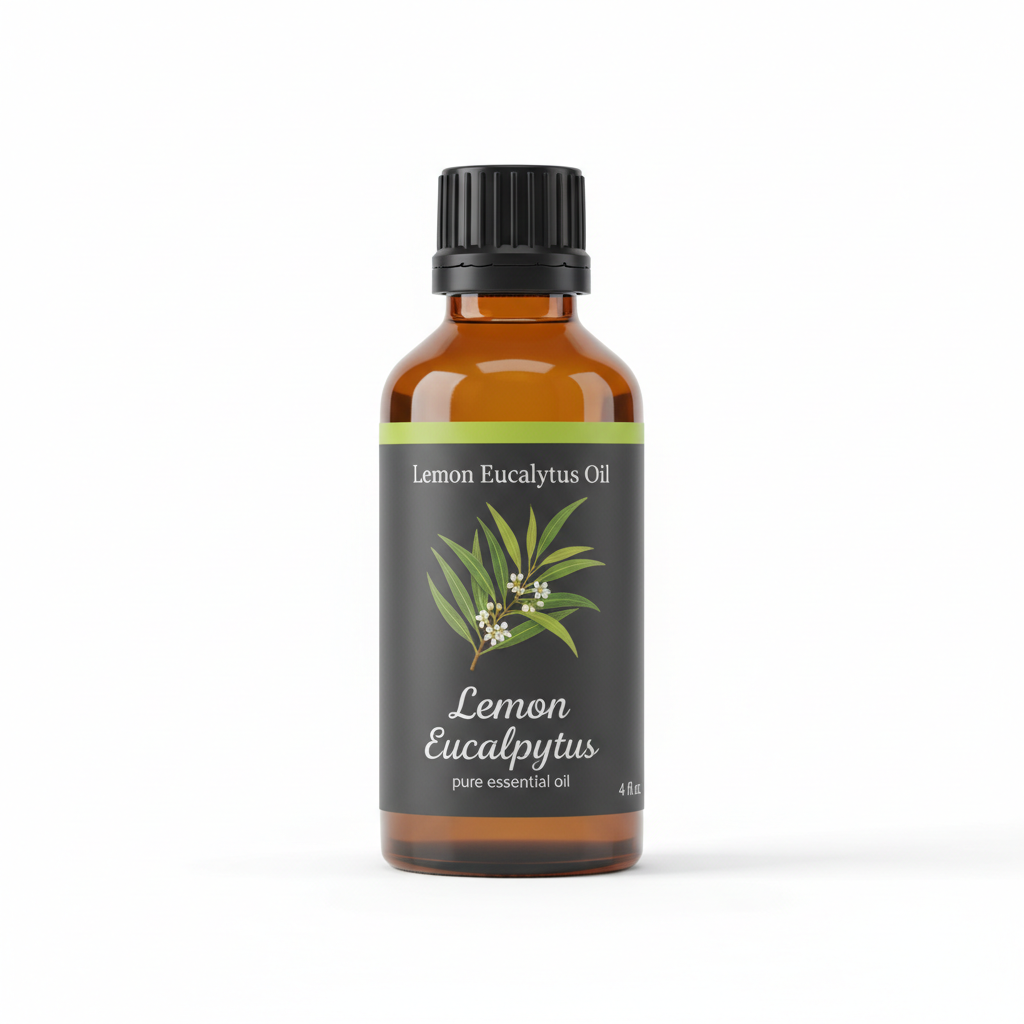
Our own Lemon Eucalyptus Essential Oil, in sizes from 0.5 oz to bulk.
From $9.99
Shop Now →Questions about expiry usually arrive in the same week as a heat wave, a glove-box discovery or a half-used bottle from last summer. The honest answer has three parts: what regulators require, what makers say about different ingredients, and what heat does to the bottle. We sell none of these repellents; our product is a lemon eucalyptus essential oil, which is a different material, as our OLE guide explains. This page is about registered OLE repellents that you buy elsewhere.
What the rules say, and what they do not
EPA's pesticide labeling questions and answers are the most useful primary source here. They say the agency requires an expiration statement for products that cannot demonstrate one year of storage stability, worded "Not for sale or use after" a date. They add that a product must meet all label claims up to the expiration date shown. In other words, no date on the bottle does not prove the product lasts forever, but it does mean the maker did not need to declare a short shelf life to EPA.
Beyond that, storage guidance comes from the label itself. Labels carry a "storage and disposal" section, and on both lemon eucalyptus labels we read it says to store the product in a cool, dry place. One of them also says to keep it out of reach of children and adds a physical hazard line: "COMBUSTIBLE. Do not use or store near heat or open flame." Our walk-through of how to read an insect repellent label shows where those lines sit.
What makers say about shelf life, by ingredient
The only ingredient-by-ingredient statements we could open come from a manufacturer's blog, which reprinted a general-interest article. Treat them as one company's account, not an independent finding, and note that none covers OLE or PMD.
| Active ingredient | Shelf-life statement we found | Caveat |
|---|---|---|
| DEET | "Theoretically, an infinite shelf life." | Manufacturer blog reprint, not independent |
| Picaridin | "Nearly endless shelf life." | Same source |
| IR3535 | About two years before it starts breaking down. | Same source |
| Oil of lemon eucalyptus or PMD | No figure found | Ask the maker or follow the label |
| Brand guidance | The same source says most brands, such as Ranger Ready and Off!, recommend discarding bug spray older than three years, and Sawyer promises 10 years when stored correctly. | Brand claims vary and none is an EPA requirement |
The same article describes what aging means in plain terms: a printed date "doesn't really mean much other than it may not work quite as well," that is, reduced potency, not a sudden hazard. For a repellent, reduced potency is the problem. The label's protection time is based on a fresh product, so an old bottle may not deliver what the bottle says.
Why OLE is a question mark
The registered ingredient in OLE products is not a steam-distilled leaf oil. In EPA's records, the active ingredient of a registered lemon eucalyptus product we looked up is described as "Oils, eucalyptus, E. citriodora, hydrated, cyclized," at 30%. That is a processed material, and what the aromatic oil does on a shelf cannot be assumed to apply to it. So we cannot give you a number, and we would rather say so than repeat a figure from a page that never opened a lemon eucalyptus label. If you want a number, call or email the maker and give them the lot code printed on the bottle. The labels we read include a company contact line and a note about the lot code for exactly this purpose.
The hot car question
This is where expiry stops being theoretical. Emory University's environmental health and safety office warns that heat such as the inside of a car on a sunny day can raise the pressure in an aerosol can enough to burst it. It adds that car interiors can reach 100°F within minutes on an average Georgia day and easily exceed 130°F. That guidance is about aerosol cans, which hold propellant under pressure, so it applies directly to aerosol repellents and less so to pump sprays and lotions.
For non-aerosol bottles, the risk is different and more modest, and here we are reasoning from the labels and the potency point above rather than quoting a test. Heat is on the list of things to avoid on the labels we read, plausibly softens or separates lotions, and may shorten useful life, so a bottle that has baked in a car is a candidate for replacement. If your label says "combustible," keep it away from grills, campfires and engine bays.
Reading a date when you find one
If a bottle carries a date, read the exact wording. "Not for sale or use after" is the EPA phrasing for a hard cutoff, and it means the maker supports the label's claims only up to that date. A "best by" or "period after opening" style mark is the maker's own choice rather than the EPA phrase, so check the maker's website for what it means. If the date is missing and you cannot tell the age, the lot code on the label is what the company will ask for when you contact them.
Storage do and don't
| Do | Don't | Basis |
|---|---|---|
| Store in a cool, dry place | Leave it in a parked car or direct sun | Label storage text; Emory EHS on aerosols in hot vehicles |
| Keep it in the original container with the label on | Decant it into unmarked bottles | EPA: the label is the law; the directions and lot code live on the label |
| Keep it out of reach of children | Leave it in a beach bag within a child's reach | Label statement on the 2010 label we read |
| Keep it away from heat and open flame if the label says combustible | Use it near a grill or campfire | "COMBUSTIBLE" physical hazard line on the label |
| Write the purchase month on the bottle | Rely on memory | Our suggestion, so you can apply the maker's date guidance |
| Follow local waste directions for leftovers | Pour unused product down a drain | Label disposal text |
Our rule of thumb for replacing a bottle
This is our judgment, not a regulation. Replace the product if any of these is true: the printed date has passed; the bottle was left in a hot car or in direct sun for hours; the contents have separated, changed color or smell, or the pump no longer sprays evenly; or you cannot tell how old it is and you are heading somewhere where bites carry health consequences. For that last case, ask a travel-medicine clinic which repellent they would pack, and read how to choose a lemon eucalyptus repellent before you buy. Because a fresh registered bottle is the one with a protection time you can rely on, that is the safer choice.
Also keep gear in mind. If you spray near fabric, sunglasses or plastics, read the label's cautions; our page on lemon eucalyptus repellent and clothing or gear covers it.
Frequently asked questions
Does lemon eucalyptus repellent have an expiration date?
It depends on the product. EPA requires an expiration statement when a maker cannot show one year of storage stability, so some labels carry one and some do not. If yours has none, ask the maker for guidance.
Can I use last summer's bottle?
If it was stored cool and dry, still sprays or spreads normally, smells as it did and is within any printed date, many people do. Because a repellent's value is its protection time, we would not use an old bottle for travel to areas where bites matter or for children, and we would ask a pediatrician about anything for a young child.
Is it safe to leave repellent in a hot car?
Not for aerosol cans. Emory's guidance says heat can burst them. For pump sprays and lotions, heat is still something labels tell you to avoid, and it may cut the useful life of the product.
How can I tell if repellent has gone bad?
No official test exists that we found. Our checks are changes in smell, color, consistency or spray pattern, leaks, and any printed date that has passed. When in doubt, replace it.
What about the lemon eucalyptus essential oil you sell?
That is a different product, and it is not a repellent. Our shop page says it typically holds its character for 2 to 3 years unopened, and our guide to storing lemon eucalyptus oil covers keeping it fresh. If you are here for fragrance, soap or candle work, see the shop.
If I swallow or splash repellent from an old bottle, what do I do?
Follow the first-aid text on the label and call Poison Help at 1-800-222-1222, which the National Capital Poison Center lists as free, expert and confidential. In an emergency, call 911.
Last reviewed: October 2026
Lemon Eucalyptus Essential Oil
Lemon Eucalyptus Essential Oil from our own shop, in sizes from 0.5 oz to bulk.
From $9.99
Shop Now →Sources & Further Reading
- EPA: Pesticide Labeling Questions and Answers
- EPA Explains: How to Read a Pesticide Product Label
- EPA-hosted label, Repel Essential Insect Repellent Pump Spray (2007), EPA Reg. No. 305-57
- EPA: Pesticide Product Label System (PPLS), more information
- Emory University EHSO: Toolbox Training, Proper Management of Aerosols
- Sawyer (manufacturer blog): Does Bug Spray Expire?
- Poison Help, National Capital Poison Center