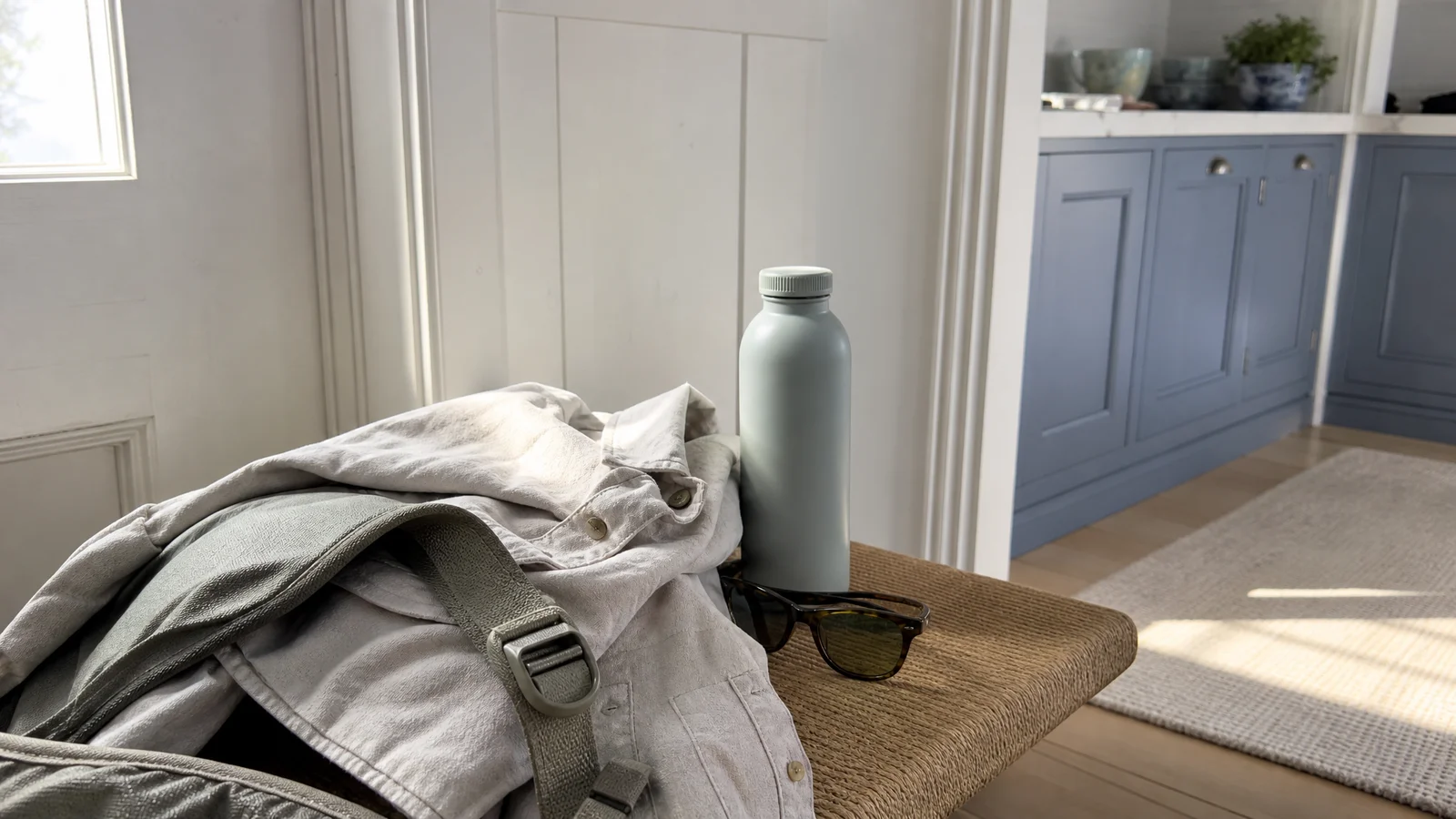
Does Lemon Eucalyptus Repellent Damage Clothing and Gear?
We found no independent source showing that registered lemon eucalyptus repellent damages fabric or plastic, and none showing it is safe on everything. DEET is the one with documented plastic and synthetic-fabric damage. The honest advice is to read your product's label, keep it off lenses and finishes, and spot-test fabric you care about.

Lemon Eucalyptus Essential Oil
Our own Lemon Eucalyptus Essential Oil, in sizes from 0.5 oz to bulk.
From $9.99
Shop Now →Last reviewed: October 2026
What this answer covers, and what it does not
"Lemon eucalyptus repellent" here means EPA-registered products whose active ingredient is oil of lemon eucalyptus (OLE), made by other companies. We sell none of them. Our product is Lemon Eucalyptus Essential Oil, which is not a registered repellent, and we have not tested it or any repellent on clothing, sunglasses or gear. We have no spot tests, photos or damage reports, so everything below comes from labels and published sources. If you need to separate the registered material from the essential oil first, our buying guide does that in its first section.
What is documented: DEET is the troublemaker
Penn State Extension states that DEET can damage plastics, synthetic fabrics, leather, and painted or varnished materials, and that it does not damage natural fibers such as cotton or wool. That sentence is the origin of most gear advice, including the familiar warnings about eyeglass frames and watch crystals. The Poison Control article on insect repellent states that IR3535 can melt some plastics and damage some fabrics, and describes picaridin as non-damaging to clothing and plastics. Those are the only ingredient-level material statements we opened from independent sources.
Notice what is missing: neither source says anything about OLE or PMD. When we searched for authoritative material on OLE and plastics or synthetics, we did not find any. Absence of a warning is not a clearance, and a marketing line is not either.
What the OLE labels and makers say
We opened these directly:
- Repel Plant-Based Lemon Eucalyptus (EPA Reg. No. 305-62, 2012 label): "To repel insects, apply to exposed skin and clothing." The label has no gear or fabric-damage statement that we saw, and it carries a combustible warning (do not use or store near heat or open flame).
- Repel Essential lotion master label (EPA Reg. No. 305-56, 2003): for the spray-able lotion form, optional label text reads "Use on clothing may cause discoloration."
- Murphy's Naturals Lemon Eucalyptus spray (manufacturer page): says the spray is safe for outdoor gear and most fabrics, but strongly recommends testing a small amount on an inconspicuous part of the fabric first. Its product description also says it is proven not to harm gear. We saw no test data behind that line.
Read together, these do not say the same thing. One label permits use on clothing, another warns about discoloration for a related format, and one maker advises a spot test even while promoting gear compatibility. So the most defensible reading is the cautious one: label permission to apply to clothing is not a guarantee that every dye, coating or finish tolerates it. The point about alcohol-based formulas is our reasoning, not a sourced finding: the Murphy's page says its other ingredients are water and corn ethanol, and solvents can interact with finishes. We cannot tell you which finishes.
A practical material table
| Item | Documented concern | What we would do |
|---|---|---|
| Cotton, wool, natural fibers | Penn State says DEET does not damage them. Nothing found for OLE. | Light-colored cotton: test a hidden spot first, since one label warns of discoloration. |
| Synthetics (nylon, polyester, rayon, spandex) | DEET is documented to damage synthetics. Nothing found for OLE. | Apply to skin rather than the garment, or spot-test on a seam allowance. |
| Eyeglass frames, sunglasses, lenses, watch crystals | DEET damages plastics per Penn State. Nothing found for OLE. | Take them off before applying. Wash hands after application, then handle them. |
| Phone cases, camera bodies, plastic gear | No source we opened addresses OLE. | Keep sprays off them; wash your hands before touching them. |
| Leather and painted or varnished items | DEET can damage them per Penn State. | Keep OLE off them as a precaution; no OLE-specific source found. |
| Technical outdoor fabric with a water-repellent finish | We found no source. | Ask the repellent maker and the garment maker; spot-test first. |
Applying so it never reaches your gear
Most of the problem is avoidable by how you apply. EPA says to apply repellents only to exposed skin and/or clothing and not under clothing, and, when using sprays, to spray onto your hands first and then apply to the face. The Repel label says to spread the product by hand. Doing it that way keeps overspray off a jacket. Then wash your hands before you pick up sunglasses or a phone, and let the product dry before putting on anything you care about. EPA also says to wash the skin and clothes you applied it to with soap and water when you come indoors. For step-by-step directions, see how to apply lemon eucalyptus repellent, and for formats, spray versus lotion.
Skin repellent versus clothing repellent: do not confuse the two
Permethrin is a different tool. CDC's Yellow Book says permethrin at 0.5% applied to clothing repels and kills ticks, chiggers and mosquitoes, that items should be prepared 24 to 48 hours before packing so they dry, that factory-pretreated and home-applied items keep their activity through repeated launderings but should be re-applied according to the label, and that permethrin must never be applied to skin. Penn State Extension adds that you should spray only enough to lightly dampen the outer fabric, work outdoors, never spray a garment someone is wearing, and let it dry completely. Skin repellent and clothing repellent are separate layers with separate rules; see OLE versus permethrin. Permethrin has its own safety concerns around cats, which that article covers with a veterinary source.
How we would spot-test a garment
Both the Murphy's page and the lotion master label point toward the same habit. This is our suggested routine, not a protocol from either maker:
- Pick a hidden spot, such as an inside hem or seam allowance.
- Apply a small amount the way the label directs and let it dry completely.
- Look at it in daylight against an untouched part of the same fabric, and check for color change, a sticky feel or a changed sheen.
- If there is any change, apply the repellent to skin only, and keep it off that garment.
For anything with a coating, such as a rain shell or a tent fly, ask the garment maker. A spot-test will not tell you whether a water-repellent finish degrades over repeated exposure.
What we could not find
We did not find a source on whether OLE affects fabric that was factory-pretreated with permethrin, on whether it affects mosquito netting, or on how it behaves on technical membranes. Do not take our silence as clearance. If you are building a layered kit, the permethrin article linked above explains how skin and clothing layers fit together, and each product's label is the authority on what it can touch.
Why we are not more definitive
The common answer to this question is confident: "OLE is gentler than DEET." That sentence may be true. We did not find a source that establishes it, so we will not say it. If a material test exists in the OLE registration data, EPA or the manufacturer is the place to ask. A label that says it is safe on gear and a label that says it may discolor clothing can both be accurate for their own formulations. Compare with DEET specifics in OLE versus DEET, and for planning a whole kit see bug protection for hiking and camping.
FAQ
Will lemon eucalyptus repellent ruin sunglasses?
We found no source that says so, and none that says it will not. DEET is documented to damage plastics. Take sunglasses off, apply, wash your hands, and put them back on.
Can I spray it on my shirt?
One label we read says to apply to exposed skin and clothing, and a related lotion label warns that use on clothing may cause discoloration. Follow your own label and spot-test.
Does it stain light fabric?
The lotion master label's optional text mentions possible discoloration. We have no stain tests, so test a hidden area.
Is our essential oil safe on fabric and gear?
We have no tests and make no claim. Do not use it as a repellent on skin or clothing. If you are looking for the oil for aromatic and craft use, it is in the shop.
Who should I ask?
The repellent maker and the gear maker for material compatibility. For skin reactions, a dermatologist. After a swallowing or eye exposure, call Poison Help at 1-800-222-1222.
Lemon Eucalyptus Essential Oil
Lemon Eucalyptus Essential Oil from our own shop, in sizes from 0.5 oz to bulk.
From $9.99
Shop Now →Sources & Further Reading
- Penn State Extension: Using Insect and Tick Repellents Safely
- Poison Control: Insect repellent
- EPA: Using insect repellents safely and effectively
- CDC Yellow Book: Mosquitoes, Ticks, and Other Arthropods
- Repel Plant-Based Lemon Eucalyptus label, EPA Reg. No. 305-62 (2012 version, retailer-hosted)
- EPA label record: Repel Essential lotion master label, 305-56 (2003)
- Murphy's Naturals product page (manufacturer statements)