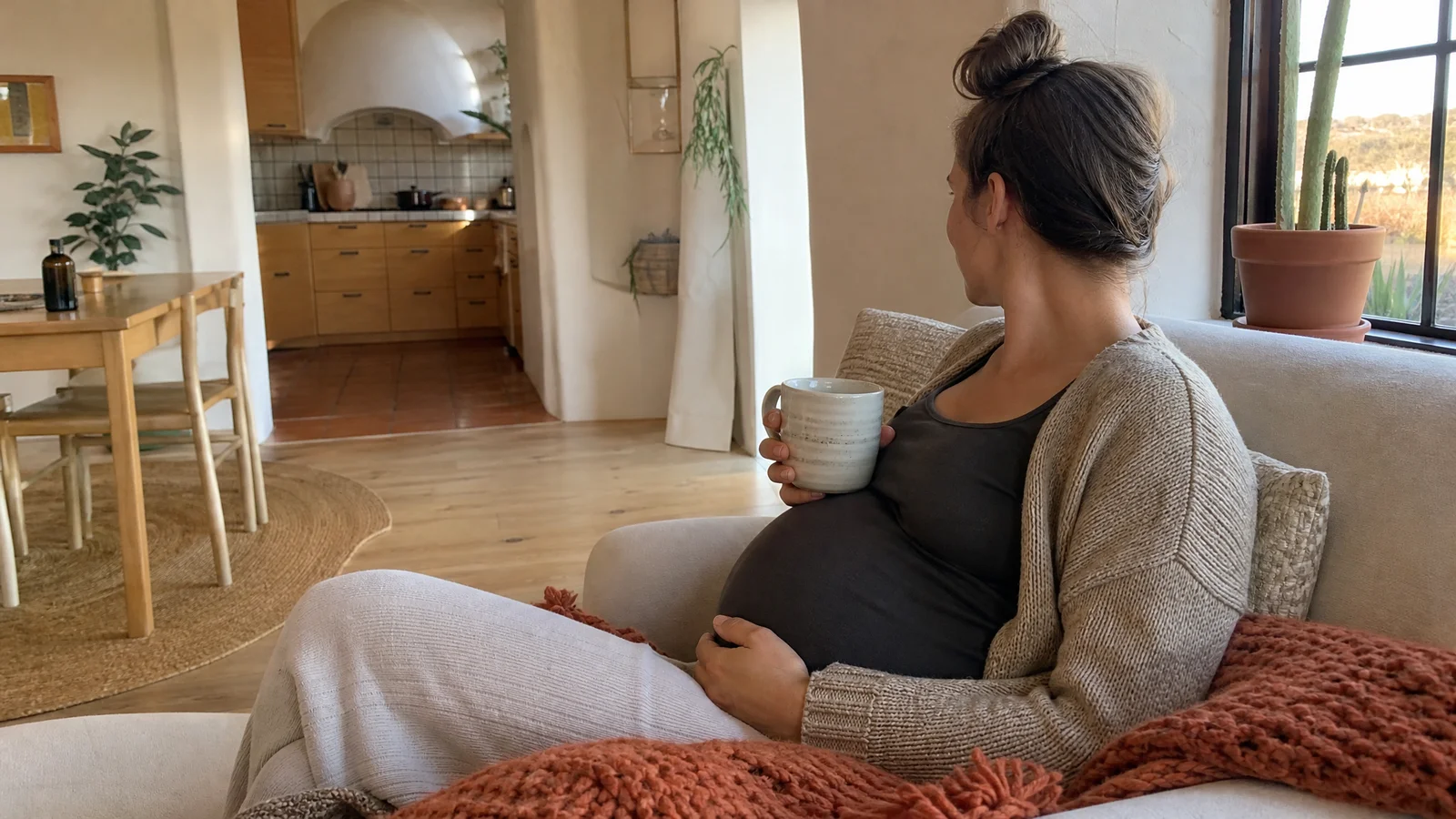
Lemon Eucalyptus During Pregnancy and Breastfeeding
CDC says EPA-registered insect repellents are considered safe for pregnant and breastfeeding women when used as directed. That covers registered products, not lemon eucalyptus essential oil, which is not a registered repellent. MotherToBaby notes that PMD has not been studied in human pregnancy, so ask your OB-GYN or midwife which active suits you.

Lemon Eucalyptus Essential Oil
Our own Lemon Eucalyptus Essential Oil, in sizes from 0.5 oz to bulk.
From $9.99
Shop Now →Two products, two different answers
Anyone searching "lemon eucalyptus pregnancy" is usually asking one of two questions. The first: can I use an EPA-registered repellent whose active ingredient is oil of lemon eucalyptus (OLE) or PMD? The second: is it okay to use lemon eucalyptus essential oil, the kind sold for scent, candles and soap? Health agencies have spoken to the first question and not the second. We sell the essential oil, so we will be plain about the limits of what anyone can say about it. For the product split, see OLE vs lemon eucalyptus essential oil and our pillar on lemon eucalyptus safety.
This is general information, not medical advice. Decisions about your pregnancy belong with your OB-GYN, midwife or other prenatal provider; a pharmacist can also check a specific label.
What CDC says about registered repellents
- CDC's Yellow Book: EPA-registered products "are considered safe when used as directed, even for pregnant and breastfeeding women" (CDC Yellow Book).
- CDC's West Nile virus FAQ answers "Yes" to whether pregnant women can use repellent, noting that repellents with EPA-registered active ingredients are considered safe for pregnant and breastfeeding women (CDC FAQ).
- CDC's page on breastfeeding and environmental exposures: "When used as directed, EPA-registered insect repellents are safe and effective for breastfeeding women." It advises keeping the repellent away from the nipple area so the baby does not get any in the mouth while feeding (CDC).
CDC's list of registered actives includes OLE and PMD alongside DEET, picaridin, IR3535 and 2-undecanone, so by CDC's framing an OLE or PMD repellent is a registered option. The same CDC list tells you not to use OLE or PMD on children under 3, which matters if you plan to apply repellent near an infant or let a baby touch your skin.
What MotherToBaby adds, and where evidence thins out
MotherToBaby, a service of the Organization of Teratology Information Specialists, reviewed its insect repellent fact sheet on July 1, 2026. Its statements are more cautious than the CDC summary line, and the difference is useful (MotherToBaby):
- For DEET: "Less than 10% of the total amount of DEET applied on skin enters the bloodstream," and "Most studies do not find that using DEET increases the chance of birth defects."
- For the others: "Picaridin, PMD, IR3535, and 2-undecanone have not been studied in human pregnancy." It adds that, when used as directed, only low amounts of these are expected to be absorbed through the skin.
- For breastfeeding, it says to follow the same instructions as during pregnancy.
Read together, CDC says registered products are considered safe as directed, and MotherToBaby says the evidence base in human pregnancy is thicker for DEET than for PMD. Those are not contradictory: "considered safe" reflects regulatory review of labeled use, while "not studied in human pregnancy" is a statement about what human data exist. Which risk tolerance fits you is a conversation for your provider. Our lemon eucalyptus vs DEET article compares the two on protection and age limits rather than on pregnancy.
The essential oil: no guidance, so no claims from us
We found no CDC, EPA or MotherToBaby statement that sets out how lemon eucalyptus essential oil should be used in pregnancy, as a repellent or otherwise. CDC does state that it does not recommend "pure" oil of lemon eucalyptus as a repellent because it has not undergone validated testing for safety and efficacy and is not EPA-registered. Our shop page advises diluting to 0.5% to 2% in a carrier oil with a patch test for skin use, keeping the oil away from eyes, children and pets, and not taking it internally. That is the full extent of what we document, and it does not include any statement that the oil is appropriate or inappropriate during pregnancy.
So our stance is simple. We make no pregnancy or breastfeeding claims for the oil. If you are pregnant or nursing and want to use it for fragrance, ask your provider first, and do not use it as a bite barrier. If you are looking for protection from bites, pick a registered product (see how to find one in our application guide).
One point of judgment, since regulators leave it open: "natural" and "plant-derived" are not evidence of pregnancy safety in either direction. CDC and MotherToBaby both rest their statements on registered, labeled products and on human data, and neither treats a botanical origin as a reason to relax. If a seller of any essential oil, including us, tells you an oil is "pregnancy safe" without citing a source, ask for the source. We are not citing one because we have none, which is why this page makes no such claim. The practical consequence is that the decision to use any fragrance product, and the choice of a repellent if you need one, should be made with the person who knows your medical history.
Questions to bring to your provider
| Topic | Question to ask |
|---|---|
| Which active | Given my pregnancy, would you prefer DEET, picaridin, OLE/PMD or another registered active, and why? |
| Concentration | Is there a percentage range you want me to stay within? |
| Where I am going | Will I be in an area with mosquito-borne illness? Should I see a travel-medicine clinic? (See travel and lemon eucalyptus.) |
| Skin | I have sensitive or eczema-prone skin. Should I patch test or choose a different format? |
| Breastfeeding | Where on my body should I avoid applying repellent while nursing? |
| Fragrance products | Is there any reason to avoid candles, diffusers or soap scented with essential oils right now? |
Practical steps that follow from the sources
- Use an EPA-registered product, not a homemade or unlabelled one. EPA's repellent tool helps you find registered products.
- Follow the label exactly; use only on exposed skin and clothing, never over cuts, wounds or irritated skin (EPA).
- Apply to the face by spraying onto your hands first and avoiding eyes and mouth (EPA).
- If you use sunscreen, put it on first, then the repellent (CDC Yellow Book).
- Wash skin and clothing with soap and water after coming indoors (EPA).
- If nursing, keep repellent away from the nipple area (CDC).
- Use non-product measures too: long sleeves and pants, and avoiding the outdoors at dusk and dawn when West Nile mosquitoes are most active (CDC).
If something goes wrong
If you get repellent or essential oil in your eyes or swallow some, call Poison Help at 1-800-222-1222 or use webPOISONCONTROL; call 911 for collapse, seizure, trouble breathing or inability to wake someone. See our first-aid page. For a skin reaction, wash with soap and water and call your provider. Pregnancy does not change the number to call, but tell the poison specialist that you are pregnant.
Travel and disease areas
Some pregnant travelers ask about repellents because of mosquito-borne illness at their destination. That decision is bigger than a choice between two bottles: it involves where you are going, the season, and your stage of pregnancy. A travel-medicine clinic and your OB-GYN or midwife should plan it together, and our travel guide explains why we think pure essential oil is not a basis for that plan. Nothing in this article should be read as a reason to skip a repellent a clinician has recommended.
Frequently asked questions
Is lemon eucalyptus bug spray safe while pregnant?
CDC considers EPA-registered repellents safe for pregnant women when used as directed. MotherToBaby notes PMD has not been studied in human pregnancy. Ask your OB-GYN or midwife which active they prefer.
Can I use lemon eucalyptus essential oil while breastfeeding?
We found no agency guidance on the essential oil. Ask your provider, and keep it off the nipple area and away from your baby. It is not a registered repellent.
Does the under-3 rule matter if I am the one applying it?
Yes, if the baby will touch your skin or the product, since CDC says OLE and PMD products are not for children under 3. A breastfeeding parent should also follow CDC's nipple-area advice.
Is DEET a better choice in pregnancy?
MotherToBaby says DEET has the most human pregnancy data, and CDC lists it as registered. Whether it fits you is a clinical question. See our safety guide for the broader picture.
Last reviewed: October 2026.
Lemon Eucalyptus Essential Oil
Lemon Eucalyptus Essential Oil from our own shop, in sizes from 0.5 oz to bulk.
From $9.99
Shop Now →Sources & Further Reading
- CDC Yellow Book: Mosquitoes, Ticks, and Other Arthropods
- CDC: West Nile Virus FAQs
- CDC: Other Environmental Exposures (breastfeeding)
- CDC: West Nile Virus Prevention
- CDC: Preventing Mosquito Bites
- MotherToBaby: Insect Repellents
- EPA: Using Insect Repellents Safely and Effectively
- EPA: Find the Insect Repellent That Is Right for You
- National Capital Poison Center: First Aid for Poisonings