Is Lemon Eucalyptus Safe? Side Effects, Precautions, and Who Should Avoid It
It depends on which product you mean. EPA-registered repellents containing oil of lemon eucalyptus (OLE) or PMD are considered safe by CDC when used as directed, except on children under 3. Pure lemon eucalyptus essential oil is a different, unevaluated material, and CDC does not recommend it as a repellent.
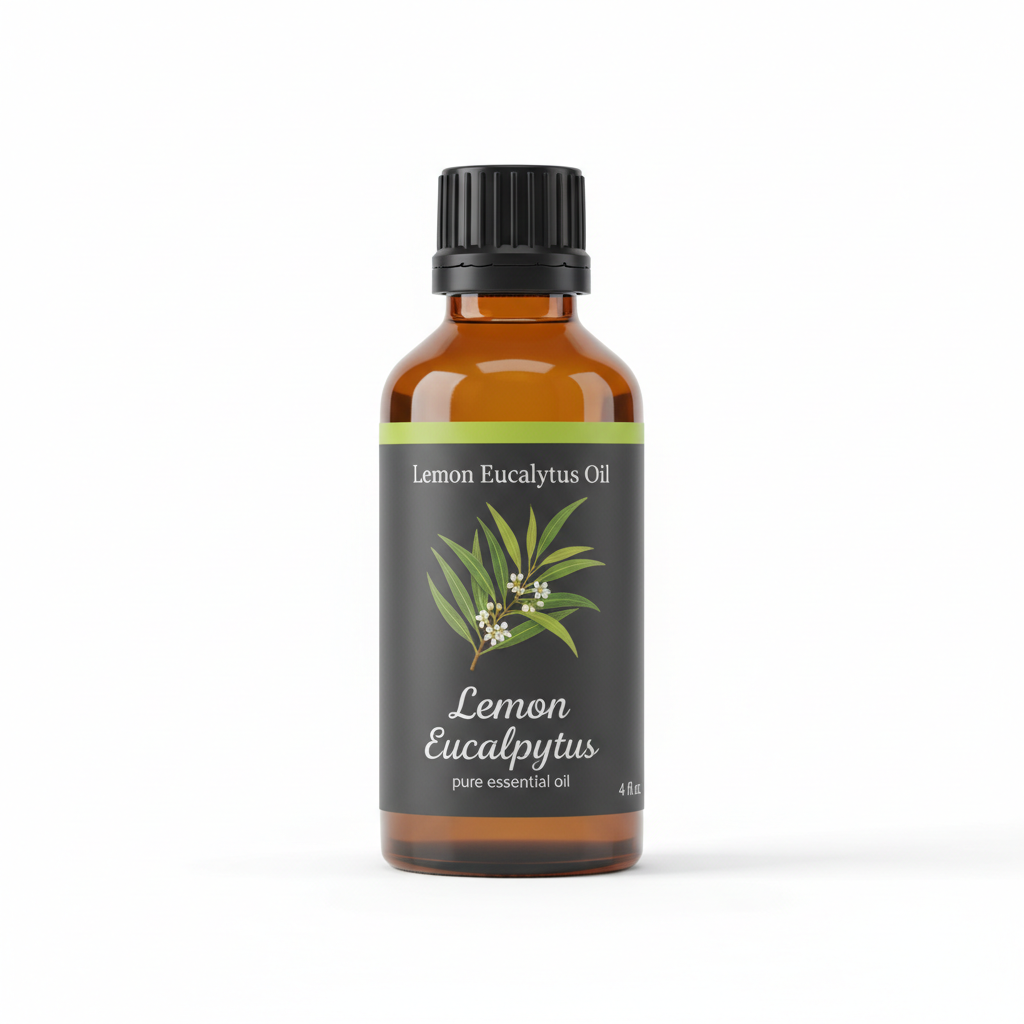
Lemon Eucalyptus Essential Oil
Our own Lemon Eucalyptus Essential Oil, in sizes from 0.5 oz to bulk.
From $9.99
Shop Now →First, decide which product you are asking about
Most safety confusion on this subject comes from one name covering two different things. The first is a finished, EPA-registered repellent whose label lists "oil of lemon eucalyptus" or "p-menthane-3,8-diol (PMD)" as the active ingredient. The second is lemon eucalyptus essential oil, the steam-distilled leaf oil of Corymbia citriodora, which is what this shop sells. They share a tree, not a safety record. For the full split, read the pillar guide on oil of lemon eucalyptus.
We sell the essential oil. It is not a registered repellent, and we do not suggest using it as one (see our stance page). That is why this guide is written the way it is: the repellent answers come from CDC, EPA and pediatric sources, and the essential oil answers are deliberately cautious because no regulator has evaluated that oil for use on skin as a bite barrier.
This page is general information, not medical or veterinary advice. For a specific person or animal, ask a physician, pharmacist, pediatrician, OB-GYN or midwife, dermatologist or veterinarian. For a possible poisoning, call Poison Help at 1-800-222-1222.
What CDC and EPA actually say
CDC's mosquito-bite prevention page says to "use proven EPA-registered insect repellents" and lists six active ingredients: DEET, picaridin, IR3535, oil of lemon eucalyptus, para-menthane-diol (PMD) and 2-undecanone. The same page says: "Do not use products containing OLE or PMD on children under 3 years old." (CDC, Preventing Mosquito Bites.)
CDC's Yellow Book chapter on arthropods adds the sentence that matters most for shoppers of the essential oil: CDC does not recommend using "pure" oil of lemon eucalyptus as a repellent, because it has not undergone similar validated testing for safety and efficacy and is not registered with EPA as an insect repellent. The same chapter says EPA-registered products "are considered safe when used as directed, even for pregnant and breastfeeding women," and that parents should not use OLE or PMD products on children under 3 "to avoid potential allergic skin reactions" (CDC Yellow Book, page dated April 23, 2025).
EPA's safe-use page adds practical rules from product labels: do not apply near the eyes and mouth, apply sparingly around the ears, never use repellents over cuts, wounds or irritated skin, and after coming indoors wash exposed skin and clothing with soap and water (EPA, Using Insect Repellents Safely and Effectively). EPA also notes that some OLE products carry an under-3 restriction on the label while certain products with OLE as the sole active ingredient at 30% or less do not. CDC's blanket under-3 line is the safer rule to follow; our guide for kids explains the difference.
Safety at a glance, by group
| Group | Registered OLE or PMD repellent, used per label | Lemon eucalyptus essential oil (what we sell) | Who to ask |
|---|---|---|---|
| Adults | CDC lists OLE and PMD among recommended actives. Follow the label. | Not a repellent. Our shop page advises 0.5% to 2% dilution in a carrier oil and a patch test for skin use, and not to take it internally. | Pharmacist, dermatologist |
| Children under 3 | CDC: do not use OLE or PMD products. | Keep away. Our shop page says keep away from children. | Pediatrician |
| Children 3 and older | Adults apply it; children do not handle it. | Keep away from children. | Pediatrician |
| Pregnancy and breastfeeding | CDC: EPA-registered repellents are considered safe as directed. MotherToBaby notes PMD has not been studied in human pregnancy. See the pregnancy guide. | No repellent guidance exists. Ask your provider before using it on skin. | OB-GYN, midwife |
| Dogs | Do not use human products on pets unless the label says they are for animals (ASPCA). See the dog guide. | Eucalyptus appears on ASPCA's toxic list. Keep it out of reach and off the coat. | Veterinarian |
| Cats | Same rule. See the cat guide. | Pet Poison Helpline says eucalyptus is toxic to cats. Keep it away entirely. | Veterinarian |
Common side effects and what usually causes them
The most plausible problems with any lemon eucalyptus product are the ordinary ones for anything applied to skin or sprayed near the face: skin irritation, a rash from an allergic reaction, and stinging or redness if it reaches the eyes. CDC's under-3 rationale, "to avoid potential allergic skin reactions," tells you the regulators consider skin reaction the main concern for this ingredient.
Our reasoning, not a published finding: the essential oil is sold 100% pure and undiluted, so undiluted contact is the likeliest route to a bad reaction. That is the whole reason the shop page says to dilute and patch test. A repellent is already formulated to a stated concentration; a bottle of essential oil is not. Handling them as interchangeable is the mistake that creates risk. Our skin irritation guide covers rash triage and patch testing.
Using a registered repellent safely
- Read the whole label first, including the age statement. CDC recommends not using OLE or PMD products on children under 3.
- Apply only to exposed skin and clothing, not under clothing, and never over cuts, wounds or irritated skin.
- For the face, spray onto your hands first, then apply, avoiding eyes and mouth. HealthyChildren (American Academy of Pediatrics) gives the same advice for children's faces.
- If you also use sunscreen, CDC's Yellow Book says to use separate products, apply sunscreen first, then repellent.
- Wash skin and clothing with soap and water when you come indoors.
"Natural" is not a safety category: a plant-derived ingredient can still irritate skin or sensitize it, which is the very reason CDC gives for the under-3 rule.
One more point of judgment. "Safe" and "effective" are separate questions, and a product can be safe and still disappoint. CDC says it does not know the effectiveness of repellents that are not EPA-registered, which is the category an unformulated essential oil falls into. If a bite carries real risk where you live or travel, a registered product from CDC's list is the sensible route, and the choice of which active suits your situation belongs with a clinician who knows you.
Who should avoid it or ask first
- Anyone shopping for a bug spray. Our bottle is the wrong purchase. If protection from bites is the goal, use an EPA-registered product and find it with EPA's repellent selection tool.
- Parents of children under 3. No OLE or PMD repellent, per CDC. Ask a pediatrician about nets, clothing and other non-product options.
- Anyone with sensitive or broken skin, or a history of fragrance allergy. Ask a dermatologist or pharmacist before using any new product.
- Pregnant or breastfeeding people. CDC says registered repellents are considered safe as directed, but MotherToBaby notes PMD and similar ingredients have not been studied in human pregnancy. Your OB-GYN or midwife can weigh that.
- Households with cats or dogs. Keep the essential oil sealed and out of reach.
- Anyone planning to swallow it. Our shop page says not to take it internally.
If something goes wrong
For product in the eyes or swallowed, start with our first-aid page. In short: call Poison Help at 1-800-222-1222 or use webPOISONCONTROL, and call 911 if someone collapses, has a seizure, has trouble breathing or cannot be awakened (National Capital Poison Center). For a pet, call your veterinarian, ASPCA Animal Poison Control at (888) 426-4435 or Pet Poison Helpline at (855) 764-7661; both may charge a consultation fee.
Frequently asked questions
Is lemon eucalyptus oil toxic?
The essential oil is a concentrated material and should not be swallowed, and it should be kept away from eyes, children and pets. Registered OLE repellents are a separate, evaluated category that CDC considers safe as directed. Ask Poison Help (1-800-222-1222) about any specific exposure.
Is lemon eucalyptus repellent safer than DEET?
Neither is "safer" in general. Both are EPA-registered and considered safe as directed by CDC, with different age limits: CDC says OLE and PMD should not be used under 3, while its Yellow Book says DEET, picaridin, IR3535 and 2-undecanone can be used on children without age restriction. See lemon eucalyptus vs DEET.
Can I use the essential oil as a bug spray if I dilute it?
We do not recommend it. Dilution reduces irritation risk but does not make an unregistered oil a tested repellent. Our DIY article explains why we give no recipe and no dosing.
Where do I read about dilution for fragrance use?
Our dilution guide covers the arithmetic. If you want the oil itself for scent, candles or soap, the shop lists sizes from 0.5 oz up.
Last reviewed: October 2026.
Lemon Eucalyptus Essential Oil
Lemon Eucalyptus Essential Oil from our own shop, in sizes from 0.5 oz to bulk.
From $9.99
Shop Now →Sources & Further Reading
- CDC: Preventing Mosquito Bites
- CDC Yellow Book: Mosquitoes, Ticks, and Other Arthropods
- EPA: Using Insect Repellents Safely and Effectively
- EPA: Find the Insect Repellent That Is Right for You
- HealthyChildren.org (American Academy of Pediatrics): Insect Repellents
- MotherToBaby: Insect Repellents
- ASPCA: Eucalyptus
- Pet Poison Helpline: Eucalyptus
- ASPCA: Memorial Day weekend pet safety (repellent and sunscreen note)
- National Capital Poison Center: First Aid for Poisonings