Lemon Eucalyptus vs Citronella: Does Citronella Work for Mosquitoes?
Citronella has weak, inconsistent evidence against mosquitoes. Candles repelled 14% of mosquitoes indoors in one test and had no effect in another, and citronella lotion gave about 30 minutes of protection in a lab assay. Registered oil of lemon eucalyptus (OLE) products are on CDC's list; citronella and plain essential oils are not.

Lemon Eucalyptus Essential Oil
Our own Lemon Eucalyptus Essential Oil, in sizes from 0.5 oz to bulk.
From $9.99
Shop Now →Searchers comparing these two usually mean one of three things: a citronella candle against a lemon eucalyptus spray, citronella oil against lemon eucalyptus oil, or "which natural option works." Those are three different questions with three different answers, and mixing them is how both ingredients end up with muddled reputations. This page covers the bug question only. If you are choosing between the two as scents, our existing scent comparison of lemon eucalyptus and citronella oil is the better read, and we will not repeat it. Last reviewed: October 2026.
Sort the question first
Three separate items hide behind the word "citronella," and two behind "lemon eucalyptus":
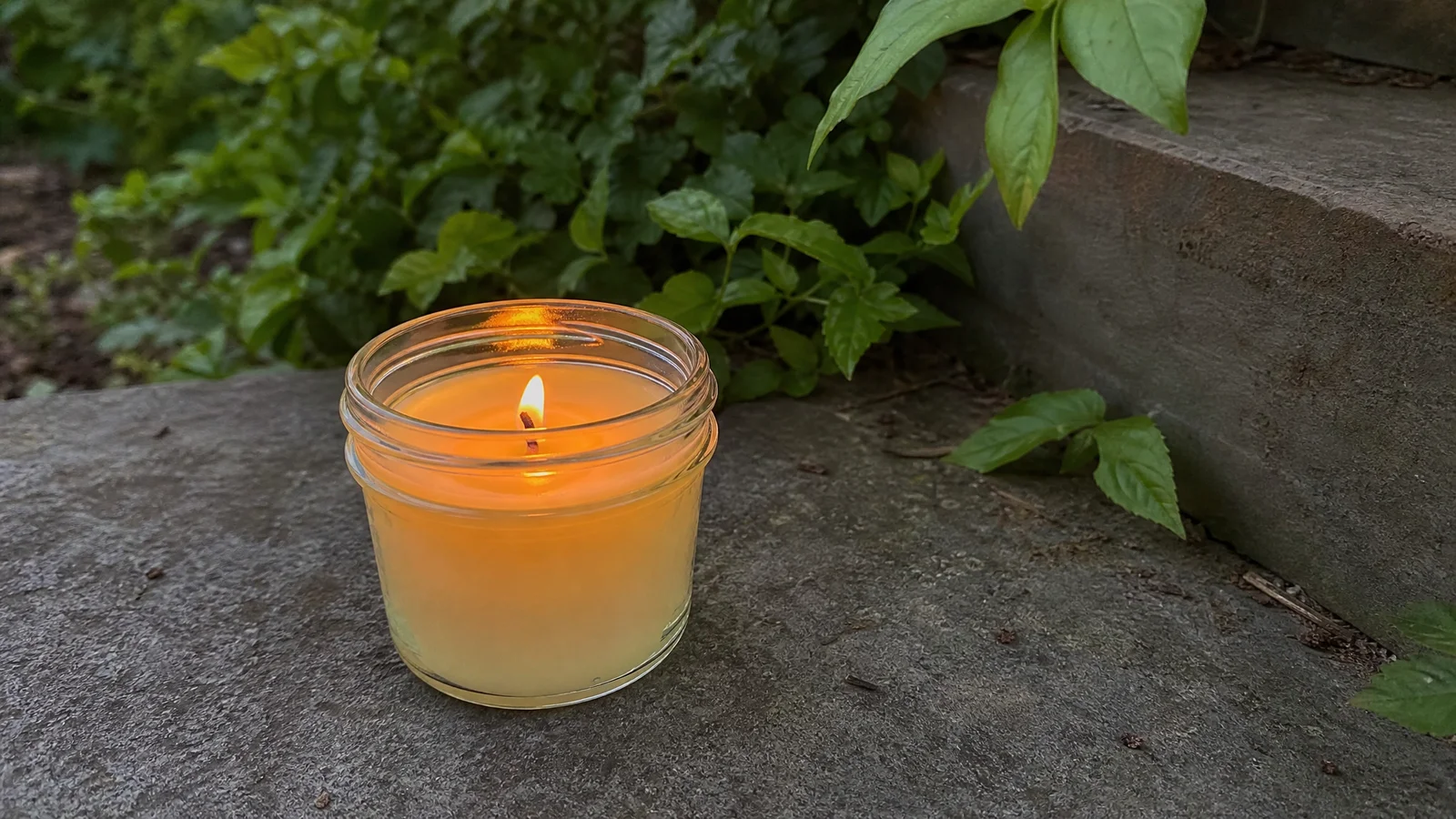
- Citronella candles and torches, which release vapor into the air around them.
- Citronella sprays and lotions, applied to skin or clothing.
- Citronella oil, the raw essential oil.
- Registered OLE repellents, finished products with an EPA registration number.
- Lemon eucalyptus essential oil, the steam-distilled oil we sell, which is not a registered repellent.
Only the fourth item is on CDC's list. CDC recommends EPA-registered repellents containing DEET, picaridin, IR3535, oil of lemon eucalyptus (OLE) or PMD, or 2-undecanone (CDC), and states that it does not recommend "pure" oil of lemon eucalyptus as a repellent (CDC Yellow Book). Citronella does not appear on the list either. So the honest comparison is registered OLE versus citronella products, and our bottle belongs in neither column.
The regulatory difference
EPA says citronella oil is one of several ingredients used in repellents sold without registration, because in the 1990s EPA determined these ingredients posed minimal risk to human health, and it adds that "products made from these ingredients have not been evaluated for effectiveness" (EPA). A registered OLE product is the opposite case: the registration number means the company provided EPA with technical information on effectiveness. Put simply, an EPA-reviewed safety finding for citronella is not an efficacy finding. If you want the registered side explained, start with the guide to oil of lemon eucalyptus.
What the studies show for citronella
Here are the key results, kept to studies we opened. Treat the numbers as belonging to the specific products tested.
| Study | What was tested | Result |
|---|---|---|
| Muller et al., 2009, Journal of Vector Ecology | Commercial citronella candles (5% active, 88 g) and diffusers (20 g, 100% active) | Indoors, candles repelled 14% and diffusers 68%; outdoors, diffusers 6 m from traps repelled 22% |
| Rodriguez et al., 2017, Journal of Insect Science | A citronella candle among 11 products, Aedes aegypti, wind tunnel | No significant effect on attraction |
| Luker et al., 2023, Scientific Reports | Citronella as a 10% lotion, arm-in-cage and tick assays | About 30 minutes of protection against mosquitoes; not significant against ticks |
| Lopez et al., 2026, Frontiers in Insect Science | Seven commercial essential-oil candles, cage assay | Several reduced attraction (strongest 56%, 45%, 40%); authors call for field testing; earlier citronella field results conflict |
| Maia and Moore, 2011, Malaria Journal (review) | Plant-based repellents | Citronella repellents protect "for about two hours" |
Sources for the table: Muller et al., Rodriguez et al., Luker et al., Lopez et al. and Maia and Moore.
Where the sources disagree
The two protection-time figures, about 30 minutes (Luker, 2023) and about two hours (Maia and Moore, 2011), are far apart. The reasons are visible in the methods: Luker tested one citronella ingredient as a 10% lotion in a standard arm-in-cage assay, while the review summarizes commercial citronella repellents of varying formulations. Neither is a statement about all citronella products, and neither used the registration test that sits behind a registered OLE label. A CDC-authored 2024 perspective makes the same caution for the whole category of unregulated minimum-risk products: effectiveness differs among them, and recommendations cannot reliably rest on the active ingredient alone (Eisen, 2024).
Candles versus sprays
The delivery method matters more than the oil. A candle has to push vapor outward through moving air; in the Muller data, the same citronella chemistry repelled 14% of mosquitoes from a candle and 68% from a continuous-release diffuser indoors. That is a useful reading for a patio: a candle is a scent source with limited, uneven reach, not a barrier. A spray or lotion puts the active material on the surface that mosquitoes target, which is why registered repellents are skin or clothing products. We would not tell anyone to rely on a candle for protection against disease-carrying mosquitoes. If the concern is illness rather than annoyance, CDC's recommendation is a registered repellent, and a physician or travel-medicine clinic can advise on specific risks.
Ticks
If ticks are the concern, citronella is the weaker answer still. In the Luker study, citronella did not significantly protect against blacklegged tick (Ixodes scapularis) crossings, while clove and cinnamon did. The Eisen perspective reports that in a human skin bioassay of 19 individual active ingredients, none gave complete protection beyond 2 hours, whereas DEET gave 6 hours. For tick-specific guidance, use CDC's advice on registered repellents rather than a botanical oil.
Choose citronella or OLE: a decision table
| Your situation | Better fit | Why |
|---|---|---|
| You want fewer bites on a hike or at a campsite | A registered repellent (OLE, or another CDC-listed active) | Registration includes tested effectiveness; citronella products have not been evaluated by EPA |
| You want a pleasant outdoor scent at a dinner | Citronella candle or a scent of your choice | Fine as ambiance; do not count on it for bite protection |
| A child under 3 is involved | Ask the pediatrician | CDC says not to use OLE or PMD products under 3; botanical oils have no tested age guidance |
| You are in a region with mosquito-borne illness | CDC-listed registered repellent plus a physician or travel clinic | CDC's advice is the registered list |
| You are choosing between oils for scent | See the scent comparison | Different question, different article |
Our position
We sell lemon eucalyptus essential oil, and we are telling you that for mosquito protection the right purchase is a registered repellent, not our bottle and not a citronella candle. Citronella is not worthless in every setting: it is a pleasant outdoor scent, and the better candle studies report some reduction in a cage. It simply has not been shown to carry a patio or a trail. For the full ranking of botanical options by evidence strength, see lemon eucalyptus versus other essential oils for bugs and the ingredient comparison. If instead you are after the lemony, green scent of lemon eucalyptus for a candle, diffuser or room spray, our shop page lists the sizes, and the stance page explains that it is not a registered repellent.
What would change this verdict
Two things would move citronella up our list: an EPA registration with efficacy data behind a specific citronella product, or independent field trials that measure bites outdoors rather than attraction in a cage. The 2026 candle paper itself asks for field testing, so the gap is acknowledged by the researchers. Until then, the position above stands, and a shopper who wants a lower chance of bites should read the label for an EPA registration number and the pest list before anything else.
FAQ
Do citronella candles work for mosquitoes?
The evidence is weak and inconsistent. One study found 14% repellency indoors from citronella candles and another found no effect on attraction; a 2026 paper says earlier field results conflict. Candles are better treated as ambiance.
Is citronella EPA-approved?
Citronella oil is among ingredients EPA determined to be minimal risk, so products made from it are sold without registration. EPA says these products have not been evaluated for effectiveness.
Is lemon eucalyptus better than citronella?
Registered OLE products are on CDC's list, so they have the stronger regulatory and evidence footing. The essential oil, sold as an oil, is not registered; a 2017 study found an OLE spray significantly reduced mosquito attraction while a citronella candle did not.
Can I use citronella oil on skin?
We do not advise using any essential oil on skin as a repellent. Poison Control notes that essential oils can cause serious poisoning if misused and recommends dilution in a carrier oil to avoid skin reactions; ask a pharmacist or physician about any skin concern.
Which smells stronger?
That is a scent question, and the scent comparison answers it.
Lemon Eucalyptus Essential Oil
Lemon Eucalyptus Essential Oil from our own shop, in sizes from 0.5 oz to bulk.
From $9.99
Shop Now →Sources & Further Reading
- CDC: Preventing mosquito bites
- CDC Yellow Book: Mosquitoes, Ticks, and Other Arthropods
- EPA: Regulation of Skin-Applied Repellents
- Muller et al. (2009), Journal of Vector Ecology
- Rodriguez et al. (2017), Journal of Insect Science
- Luker et al. (2023), Scientific Reports
- Lopez et al. (2026), Frontiers in Insect Science
- Maia and Moore (2011), Malaria Journal
- Eisen (2024), Emerging Infectious Diseases
- Poison Control: Essential oils