Lemon Eucalyptus vs Lemon Myrtle: Australia's Two Citrus Natives
Two of Australia's most fragrant exports rarely get compared side by side, yet they show up in the same diffuser blend recipes, the same candle-making forums, and the same searches from people hunting for a "natural lemon scent." Lemon eucalyptus and lemon myrtle share a home continent, a bright citrus top note, and a following among people who prefer plant-based fragrance over synthetic lemon fragrance oil. Beyond that, the resemblance mostly stops. They come from different plant families, carry different aromatic molecules, and behave differently once they hit a diffuser, a candle pot, or a bottle of homemade linen spray.
If you've been weighing lemon eucalyptus vs lemon myrtle for a specific project, this guide walks through where each oil comes from, how they compare on paper, and which one actually fits what you're making. Think of it as a lemon myrtle essential oil comparison built for people who want a decision, not just a botany lesson.
Two Different Trees, One Citrus Note
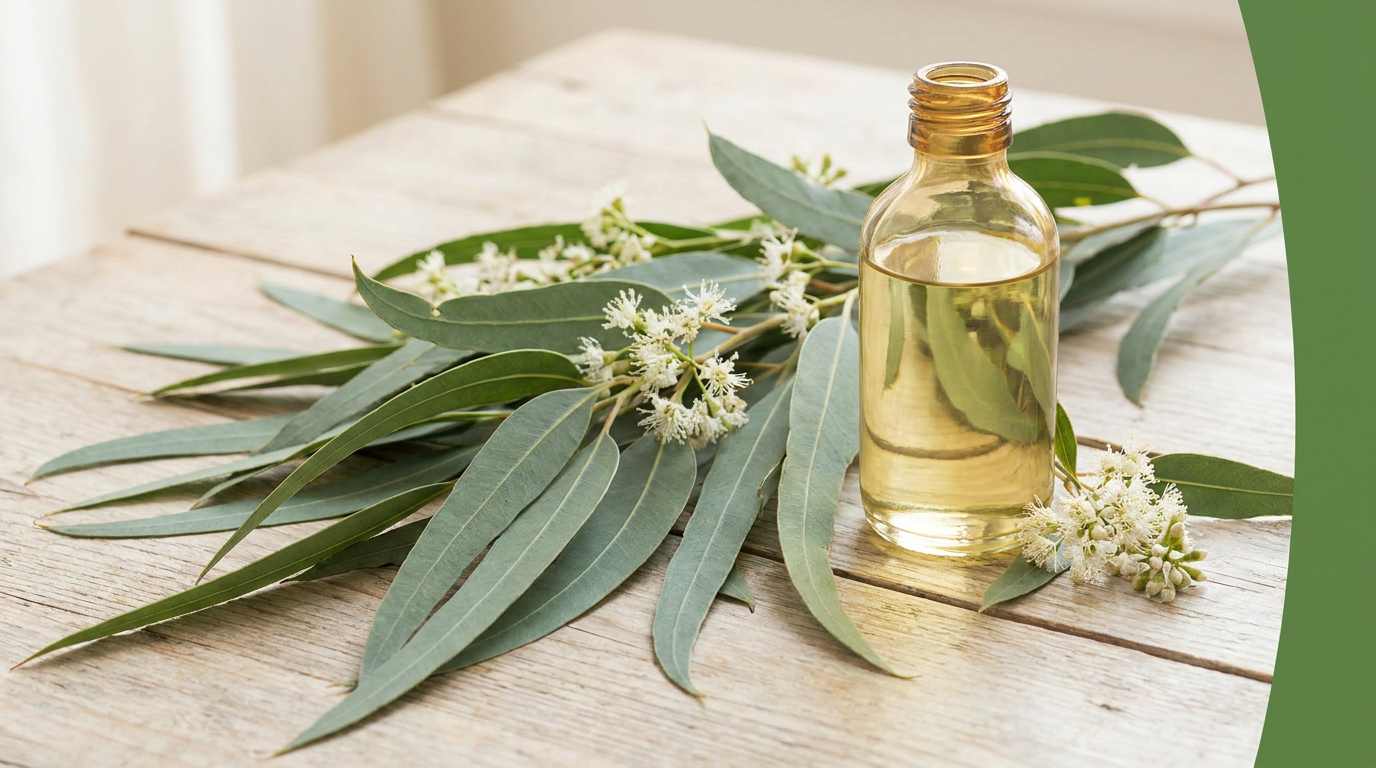
Lemon eucalyptus oil comes from Corymbia citriodora, a tall gum tree native to the coastal forests of Queensland. It belongs to the broader eucalyptus family, though botanists reclassified it out of the genus Eucalyptus and into Corymbia decades ago. The leaves are steam distilled to produce an oil whose citrus character comes primarily from citronellal, the same aromatic molecule found in citronella grass, just at a higher concentration.
Lemon myrtle oil comes from Backhousia citriodora, a rainforest understory tree native to the subtropical belt of New South Wales and southern Queensland. It isn't related to eucalyptus at all; it's a member of the myrtle family in a broader sense, but a genetically distinct genus from Corymbia. Lemon myrtle's signature molecule is citral, and it carries an unusually high concentration of it, often reported in the 90 to 98 percent range depending on harvest and distillation. That single fact explains most of the differences you'll notice once you open both bottles.
Oil of Lemon Eucalyptus (OLE) vs the Essential Oil in This Comparison
Oil of Lemon Eucalyptus, sometimes labeled PMD, is a further-processed derivative of the essential oil that concentrates a different compound and is separately registered with the EPA as an active ingredient in some insect-deterring outdoor sprays. The raw lemon eucalyptus essential oil discussed throughout this comparison, the kind used in diffusers, candles, and perfumery, is chemically distinct from OLE and isn't formulated or labeled the same way. Anyone shopping specifically for OLE-based products should look for that exact wording on the label rather than assuming a bottle marked "lemon eucalyptus essential oil" is the same thing. The fuller breakdown of what separates the two lives in a dedicated guide to OLE, PMD, and the essential oil.
How Each Oil Is Made
Both oils start the same way agriculturally: leaves and small branches are harvested, then run through steam distillation, where pressurized steam pulls the volatile aromatic compounds out of the plant material and carries them into a condenser. What differs is yield and timing. Lemon myrtle trees produce a comparatively smaller leaf harvest per acre than the fast-growing Corymbia citriodora, and its aromatic compounds are more sensitive to over-distillation, which pushes growers toward shorter, more carefully monitored runs. That extra care during processing is one more reason lemon myrtle tends to command a higher price at retail, on top of its lower per-acre yield.
Lemon Myrtle vs Lemon Eucalyptus Oil: Comparison at a Glance
| Attribute | Lemon Eucalyptus | Lemon Myrtle |
|---|---|---|
| Botanical name | Corymbia citriodora | Backhousia citriodora |
| Native region | Coastal Queensland forests | Subtropical rainforest, NSW and QLD |
| Dominant aromatic compound | Citronellal (typically 70 to 85 percent) | Citral (typically 90 to 98 percent) |
| Scent character | Sharp citrus with a faint green, herbal undertone | Intensely lemony, almost candy-lemon, little green note |
| Scent strength | Strong, needs moderate dilution | Extremely strong, needs careful dilution |
| Typical retail price per 10 mL | Moderate | Higher, often 1.5 to 2x lemon eucalyptus |
| Skin sensitivity profile | Can be sensitizing at high concentration; patch test recommended | Considered more sensitizing due to higher citral load; patch test strongly recommended |
| Best-known use category | Outdoor candles and patio diffuser blends | Home fragrance and fine perfumery layering |
| Shelf life once opened | Roughly 2 to 3 years with proper storage | Roughly 1.5 to 2 years, oxidizes a bit faster |
That table tells most of the story at a glance: lemon myrtle wins on scent purity and strength, lemon eucalyptus wins on price and outdoor track record, and both demand real caution around dilution. Where they land closest together is versatility. Each one can, in a pinch, cover for the other in a general bright-citrus role, even though a trained nose will notice the substitution in a finished blend.
Scent and Chemistry Compared
Smell them next to each other and the family resemblance is obvious, but the personalities diverge fast. Lemon eucalyptus opens with a sharp citrus note that carries a faint green, almost herbal undertone underneath. That undertone comes from the citronellal, which reads as clean and slightly cool rather than sweet. Anyone who wants the full rundown of how it presents in a blend can check the full scent profile breakdown for specifics on top, middle, and dry-down notes.
Lemon myrtle skips the green undertone almost entirely. Because citral dominates so completely, the scent reads as pure, concentrated lemon, closer to lemon zest or lemon candy than anything grassy. Many perfumers and candle makers describe it as the most lemony lemon scent they've worked with, precisely because there's so little else in the chemical profile to dilute that impression.
The higher citral content also means lemon myrtle projects further from a smaller amount of oil. A few drops go a long way, which is part of why bottles are usually priced higher per milliliter even though yields per harvest aren't wildly different from lemon eucalyptus.
Traditional Use and How Each Oil Is Marketed
Lemon myrtle has a longer history in Australian bush food traditions, where the crushed leaf has long been valued as a culinary lemon-flavor source, showing up in everything from shortbread to fish seasoning well before the essential oil industry existed. That culinary backstory partly explains why lemon myrtle's marketing today leans so heavily on words like "pure" and "true lemon," since the plant already had a reputation for an unusually accurate lemon flavor long before anyone was distilling it into a fragrance oil. Lemon eucalyptus, by contrast, grew up alongside Australia's broader eucalyptus timber and forestry industry, and its oil has always been positioned more as a functional, outdoor-oriented product than a food-adjacent one.
That difference in cultural history shows up in how the two oils are marketed today. Lemon myrtle bottles tend to lean on words like "gourmet," "pure," and "premium," while lemon eucalyptus bottles lean on words like "outdoor," "fresh," and "everyday." Neither framing is inaccurate, but it's worth knowing going in, since it shapes both the price you'll pay and the company you'll find the oil keeping on a shelf.
Lemon Eucalyptus: Pros and Cons
Pros
- Well established in outdoor blends, candles, and porch diffusers, with a long track record in that category
- Generally more affordable per bottle than lemon myrtle
- The citronellal profile pairs naturally with citronella, lemongrass, and other outdoor-blend staples, so it slots into existing recipes easily
- Widely available from multiple suppliers, which makes comparison shopping easier
Cons
- The green, slightly camphorous undertone isn't for everyone; some people want pure lemon without any herbal edge
- Still needs careful dilution in leave-on applications, and a patch test is worth doing before broader use
- Quality varies more between suppliers than lemon myrtle does, since sourcing regions and distillation practices aren't as standardized
Lemon Myrtle: Pros and Cons
Pros
- Arguably the most intensely lemon-scented essential oil available, hard to match for a true citrus impression
- Small amounts go far in a blend, so a bottle can last longer than the price tag suggests
- Clean, uncomplicated scent that layers well with floral and woody notes without a competing undertone
- Increasingly easy to find from Australian growers who specialize in single-origin batches
Cons
- Higher price per bottle, which matters for anyone scenting products at volume
- Its high citral concentration makes patch testing and conservative dilution more important than with most citrus oils
- Shelf life is a touch shorter once opened, so buying in bulk isn't always the money-saver it looks like on paper
- Less widely stocked than lemon eucalyptus, so sourcing can take more legwork
What Each Oil Blends Well With
Lemon eucalyptus pairs naturally with other outdoor and green-toned oils. Citronella, lemongrass, cedarwood, and even a touch of clove leaf all sit comfortably alongside its herbal undertone, which is part of why it shows up so often in porch and campsite blends built around that same family of scents. Lavender and peppermint also work, cutting the sharper edges of the citronellal with something cooler or softer. A longer list of pairings is in the bright partners guide.
Lemon myrtle's purity makes it a flexible partner for oils that need a clean citrus lift without extra complexity. It blends well with florals like ylang ylang and geranium, where its lemon note brightens a heavier floral base rather than competing with it. Woody oils such as sandalwood or cedarwood give lemon myrtle something to lean against, and a small amount added to a vanilla or tonka-based blend can lift an otherwise heavy dessert-style fragrance without pushing it toward citrus overload.
Best For: Matching the Oil to the Project
Outdoor candles, porch diffusers, and patio blends: lemon eucalyptus has the longer track record here and pairs naturally with citronella and lemongrass.
Indoor diffuser blends and home fragrance: both work, but lemon myrtle's cleaner lemon note tends to layer more smoothly with floral and woody oils indoors, since it doesn't bring a green undertone into the mix. For ready-made ratios, the diffuser blend collection is a useful comparison point.
Candle making and cold-process soap: lemon eucalyptus is generally the more budget-friendly choice for scenting at volume, and its scent throw in wax and cold-process soap is well documented. Lemon myrtle can work too, but the higher per-bottle cost adds up quickly across a full soap batch.
Perfumery and fine fragrance layering: lemon myrtle's purity is an asset here. A perfumer wanting an unambiguous citrus note without competing undertones will usually reach for lemon myrtle first, then adjust with other oils to build complexity.
Budget-conscious buyers scenting in bulk: lemon eucalyptus wins on price per use in almost every scenario, especially once you factor in how much lemon myrtle's shorter shelf life can waste of an expensive bottle. Anyone comparing prices in detail may want the price guide for what a fair bottle actually costs.
Anyone comparing against a third citrus option: if citronella oil is also on the shortlist, the lemon eucalyptus vs citronella comparison covers where that third oil fits relative to both of these, rounding out how Australian citrus essential oils compared against non-native alternatives.
Frequently Asked Questions
Can one be substituted for the other in an existing recipe?
Not without adjusting the ratio. Because lemon myrtle is so much more concentrated in citral, a straight one-to-one swap will usually oversaturate a blend built around lemon eucalyptus, so cutting the amount by roughly half is a reasonable starting point when experimenting.
Which one is better for a beginner's first bottle?
Lemon eucalyptus is generally the easier entry point, both on price and on availability, and it's forgiving enough to work across a wide range of beginner projects.
Is one more natural or more processed than the other?
Both are steam-distilled essential oils with no solvents involved; neither is more processed than the other in that sense, though OLE, as noted above, is a separate and more processed product entirely.
Does either oil go rancid the way carrier oils do?
Both will oxidize and lose potency over time rather than turning rancid the way a fatty carrier oil does, which is why dark glass bottles, a cool storage spot, and a tightly sealed cap matter for both. More detail on that process is in the guide to storing lemon eucalyptus and keeping the citronellal intact.
Safety and Dilution Notes
Both oils carry a high concentration of aldehydes, citronellal in lemon eucalyptus and citral in lemon myrtle, and aldehydes are a known skin sensitivity concern in aromatherapy literature. That means a patch test on a small area of skin, diluted well below leave-on strength, is worth doing before either oil goes into a body product, and it's worth repeating any time you switch suppliers, since natural variation between harvests can shift the concentration. Keep both oils away from the eyes and mucous membranes, store them away from children and pets, and always dilute before topical use. If you're formulating anything for topical use, the dilution guidelines for lemon eucalyptus are a reasonable starting framework, and lemon myrtle should generally be diluted even more conservatively given its higher citral load. As with any essential oil, anyone pregnant, nursing, or managing a health condition should check with a qualified healthcare provider before adding either oil to a routine.
The Verdict
Neither oil is objectively better. They're built for slightly different jobs, and the honest answer to Australian citrus essential oils compared usually comes down to what you're making and what you're willing to pay for it.
If the project is outdoor-focused, budget-sensitive, or already built around a citronella-and-lemongrass profile, lemon eucalyptus is the more practical choice. It's easier to source, more forgiving on price, and has decades of use in exactly that category. If the goal is the purest, most concentrated lemon impression available from a natural source, and the budget allows for a pricier bottle with a slightly shorter shelf life, lemon myrtle earns its reputation. For a lot of home diffuser users, the deciding factor ends up being scent preference alone: try a diluted drop of each on a cotton pad, wait ten minutes, and let your nose settle the lemon eucalyptus vs lemon myrtle question for good.