Can You Bring Bug Spray on a Plane? TSA Rules
Yes, with limits. TSA allows bug repellent in carry-on bags in containers of 3.4 ounces (100 ml) or less, packed in your quart-sized liquids bag. Checked bags allow larger skin repellents within FAA limits. TSA says repellents sprayed into the air or at insects are not permitted in either bag.

Lemon Eucalyptus Essential Oil
Our own Lemon Eucalyptus Essential Oil, in sizes from 0.5 oz to bulk.
From $9.99
Shop Now →Last reviewed: October 2026, against TSA pages we opened that month. TSA's bug-repellent page itself shows a last-updated date of March 29, 2023, and TSA says the final decision rests with the officer at the checkpoint. Airlines can add rules. Check TSA's "What Can I Bring?" tool or your airline before you fly.
The short version, in a table
| Item | Carry-on | Checked bag | TSA wording or rule |
|---|---|---|---|
| Bug repellent applied to skin, 3.4 oz (100 ml) or less | Yes, in the quart-sized liquids bag | Yes | "Yes (Less than or equal to 3.4oz/100 ml allowed)" for carry-on |
| Bug repellent applied to skin, larger than 3.4 oz | No | Yes, within FAA limits | Containers over 3.4 oz must be packed in checked baggage |
| Aerosol skin repellent, small can | Yes, if 3.4 oz or less and in the liquids bag | Yes, within FAA limits | TSA's liquids rule covers aerosols |
| Repellent sprayed into the air or at insects | No | No | TSA: not permitted in either |
| Aerosol insecticide | No | Yes, if not labeled hazardous material (HAZMAT) | TSA's aerosol insecticide page, last updated April 9, 2020 |
The distinction doing the most work in that table is the purpose on the label. A repellent made to be applied to skin is treated differently from an insecticide made to be sprayed at insects or into the air. If you are unsure which category your product is in, read the label and ask TSA or your airline before you pack it.
How TSA describes the carry-on limit
TSA's liquids rule says: "You are allowed to bring a quart-sized bag of liquids, aerosols, gels, creams and pastes in your carry-on bag and through the checkpoint," in containers of "3.4 ounces (100 milliliters) or less per item." The limit applies to the container, not to what is left in it. A half-empty 6-ounce can is still a 6-ounce container and goes in the checked bag, with this reading being ours from TSA's container language. Two other TSA points from its repellent page: aerosol buttons or nozzles must be protected against accidental release, and the officer's decision is final.
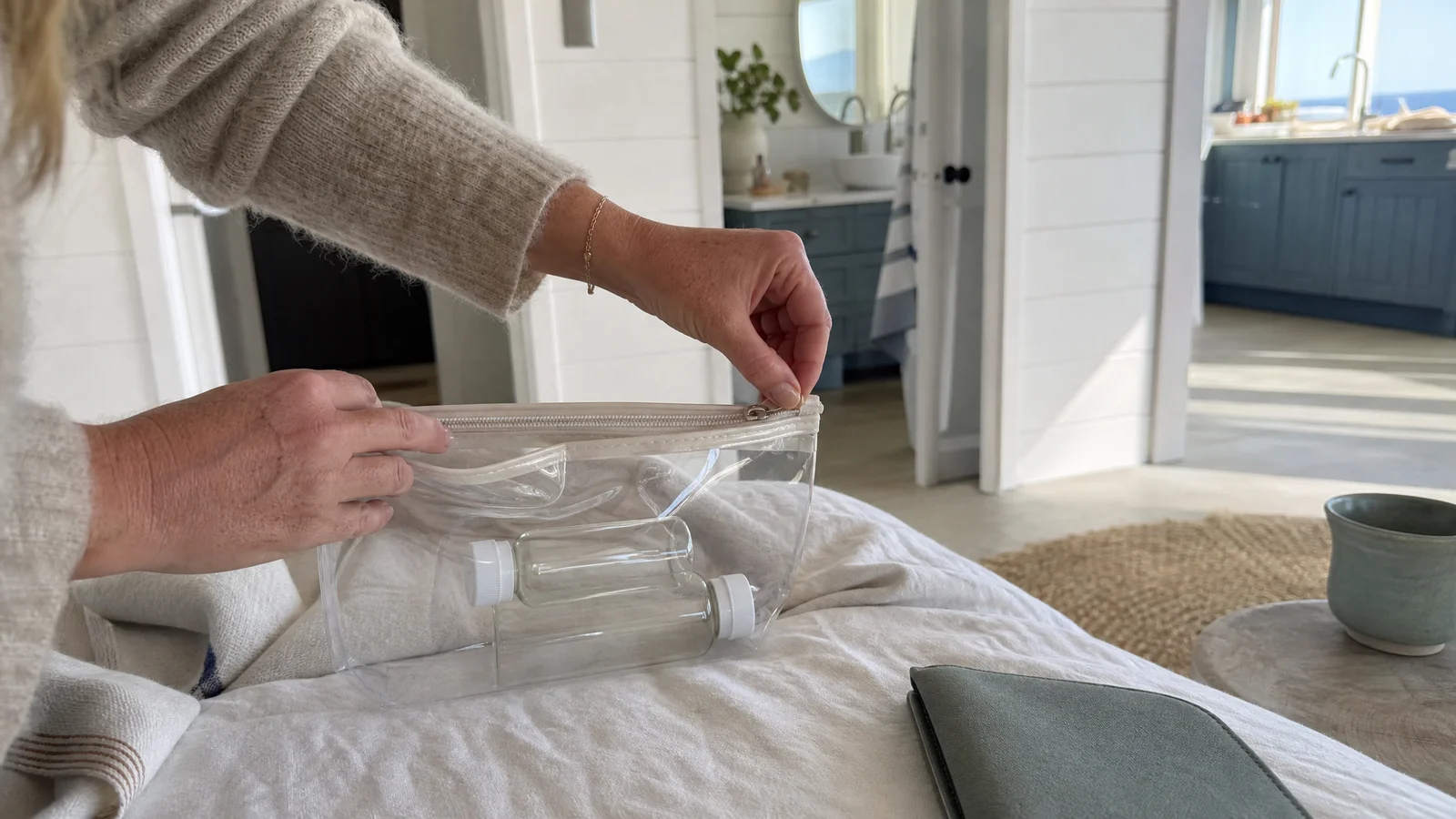
TSA also says to keep the bag separate from the rest of your carry-on to speed screening.
How TSA describes the checked-bag limit
On its bug-repellent page, TSA passes along FAA limits for restricted toiletry-type articles, including aerosols, in checked bags. "The total aggregate quantity per person cannot exceed 2 kg (70 ounces) or 2 L (68 fluid ounces)," and each container is capped at 0.5 kg (18 ounces) or 500 ml (17 fluid ounces). That aggregate counts all your toiletries, so a family packing sunscreen, hairspray, deodorant and repellent in one bag can reach it faster than expected.
Practical consequences:
- One 6-ounce can of aerosol skin repellent is well within the per-container cap.
- If you have several aerosols, add up the container sizes against the 70-ounce aggregate.
- Keep the cap on and consider a sealed bag for leaks. That is our suggestion, not a TSA rule.
Where people go wrong
- Assuming "bug spray" is one category. TSA lists skin repellents and aerosol insecticides on separate pages with separate rules. A can that says it kills insects on contact is not the same as a repellent for skin.
- Forgetting the quart bag is shared. Your repellent competes for space with shampoo, sunscreen and toothpaste. Pick the smallest bottle that covers the trip.
- Assuming TSA rules are the whole story. TSA's pages are for U.S. screening. Foreign airports and your airline may differ, which matters if you are flying onward or home internationally. TSA's liquids page also explains special handling for duty-free liquids on inbound international flights.
- Treating the 2023 date as a guarantee. We confirmed the wording in October 2026, but TSA can revise it. Check again on the day you pack.
Choosing what to bring
If the flight is the start of a trip to somewhere with serious mosquito-borne disease risk, the repellent matters more than the packing rule. CDC's Travelers' Health page recommends an EPA-registered repellent with one of six active ingredients: DEET, picaridin, IR3535, oil of lemon eucalyptus (OLE), para-menthane-diol (PMD) or 2-undecanone, with sunscreen applied before repellent. Our travel guide for malaria, Zika and dengue areas walks through the layers that go with it. We sell none of these repellents, so we cannot recommend a brand. To compare actives, see insect repellent ingredients compared and lemon eucalyptus spray vs lotion, which also covers which formats are easier to pack.
One age rule to carry with you: CDC says not to use products containing OLE or PMD on children under 3.
What about essential oil in your luggage?
We sell lemon eucalyptus essential oil, and the question comes up for anyone who takes a fragrance oil on a trip. We could not open a TSA page specific to essential oils, so we do not quote one. TSA's liquids rule applies to liquids generally, so a small bottle at or under 3.4 ounces fits the same carry-on logic and a larger one goes in checked baggage. That is our reading of the general rule, not a TSA statement about essential oils. Our smallest sizes are 0.5 oz, 1 oz and 2 oz, which are within 100 ml, and our 4 oz size, at roughly 118 ml, is not. Check your airline's rules on hazardous-material or flammable liquids if you are packing a bottle in checked baggage.
It bears repeating: our oil is a fragrance. It is not a registered repellent and we do not recommend it for bite protection. CDC says: "We do not know the effectiveness of non-EPA registered insect repellents, including some natural repellents." If you want it for a hotel room diffuser, our shop page lists the sizes. For the difference between the oil and registered OLE, read our guide to oil of lemon eucalyptus.
Pack for the destination, not just the checkpoint
Clearing security is only the first step. A repellent that fits the carry-on rule still has to suit where you are going. CDC says to choose products with an EPA registration number and one of the six listed actives, to check the label for age limits, and to reapply as directed. If you are flying with children, remember that OLE and PMD products are not for children under 3, per CDC.
Think too about whether a small bottle will last. A 3.4-ounce travel bottle may run out on a long trip, and buying repellent at your destination is possible but may not give you the same registered product or the same label. If you plan to use one product the whole trip, check how much you expect to use and put a larger container in checked baggage, within the FAA limits TSA lists. If a trip takes you where mosquito-borne illness is a concern, a travel clinic can advise on the full plan; our travel guide describes the questions to bring.
A packing routine
- Read the label to confirm the product is for skin, not for spraying at insects or into the air.
- Decide carry-on or checked. If carry-on, check the container size, not the contents.
- Put it in the quart-sized bag, or in checked baggage if it is larger than 3.4 ounces.
- Protect the nozzle with its cap.
- Check TSA's What Can I Bring? tool and the airline on the day before you fly.
Frequently asked questions
Can I bring aerosol bug spray in a carry-on?
Only a skin repellent in a container of 3.4 ounces (100 ml) or less, inside your quart-sized bag. Larger cans go in checked baggage, within the FAA limits TSA lists. Sprays meant for air or insects are not allowed in either bag.
Can I bring bug spray in checked luggage?
Skin repellents, yes. TSA quotes a 70-ounce aggregate cap for restricted toiletry-type articles per person and 18 ounces per container. Aerosol insecticides are allowed in checked bags only if not labeled HAZMAT.
Does TSA limit the number of liquids I can bring?
TSA's liquids page describes a single quart-sized bag, and does not give a separate item count. The size of the bag is what limits you.
Does the rule differ for repellent wipes or sticks?
TSA's pages that we opened do not address wipes or solid sticks by name. We will not guess; ask TSA through its What Can I Bring? tool or your airline.
Where is the official source?
TSA's bug-repellent and liquids pages, linked below. If TSA and a blog, including ours, disagree, trust TSA and the officer at the checkpoint.
Lemon Eucalyptus Essential Oil
Lemon Eucalyptus Essential Oil from our own shop, in sizes from 0.5 oz to bulk.
From $9.99
Shop Now →Sources & Further Reading
- TSA: Bug Repellent (What Can I Bring?) (page dated March 29, 2023)
- TSA: Aerosol Insecticide (last updated April 9, 2020)
- TSA: Liquids rule
- CDC Travelers' Health: Avoid Bug Bites
- CDC: Preventing Mosquito Bites