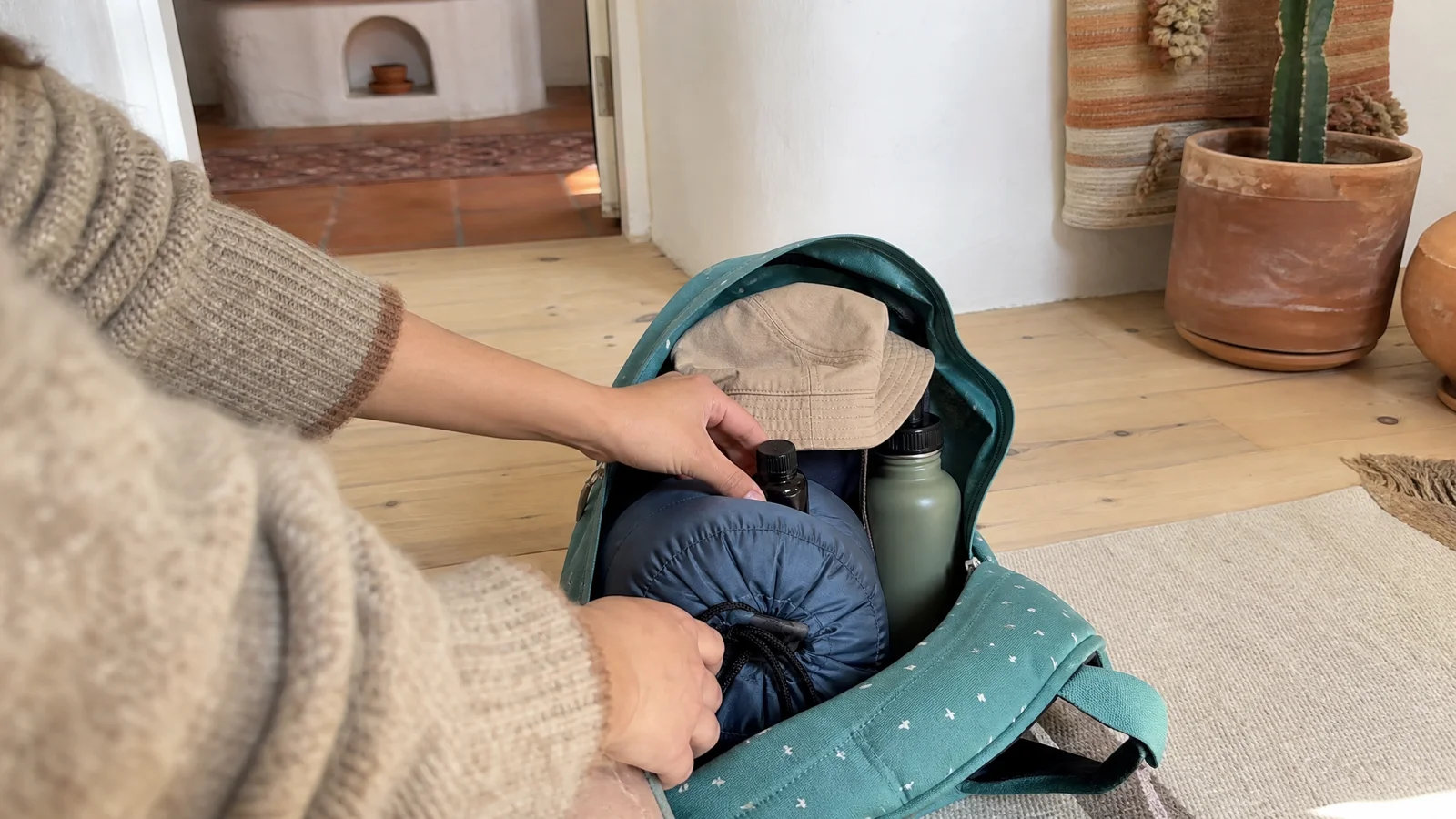
Bug Spray for Summer Camp: A Packing Checklist
Pack an EPA-registered repellent whose label fits your child's age, long lightweight clothing, and a plan for who applies it. CDC and the American Academy of Pediatrics say not to use oil of lemon eucalyptus or PMD products on children under 3. Ask the camp about its medication and product rules before you buy anything.

Lemon Eucalyptus Essential Oil
Our own Lemon Eucalyptus Essential Oil, in sizes from 0.5 oz to bulk.
From $9.99
Shop Now →Last reviewed: October 2026. This is a sourced packing guide, not medical advice. Your pediatrician or the camp's health staff decide what is right for an individual child. We sell lemon eucalyptus essential oil, which is not a registered repellent, and we do not suggest it for kids at camp.
Start with the camp, not the store
The usual camp packing list says "bug spray" and moves on. The first question we would ask is who will apply it, and whether the camp lets campers carry it. We have no documented camp policies to quote, so ask these before you shop:
- Do campers keep repellent in their own bags, or do staff hold it?
- Does the camp require medication or health forms for products used on skin?
- Are aerosol cans allowed, or only pumps, lotions or wipes?
- Does the camp provide a repellent, and which product and active ingredient is it?
- What is the tick-check routine, and who does it?
- Poison Control (poison.org)
The answers change what is worth packing. A camp that lets eight-year-olds spray themselves unsupervised needs a different product from one where counselors apply it.
Step 1: match the product to the child's age
CDC lists six EPA-registered active ingredients: DEET, picaridin, IR3535, oil of lemon eucalyptus (OLE), para-menthane-diol (PMD) and 2-undecanone. The age limit is the one that trips parents up. CDC: "Do not use products containing OLE or PMD on children under 3 years old." The American Academy of Pediatrics says the same, "younger than 3 years old." EPA adds that some OLE labels restrict use under three and that DEET has no age restriction on its labels.
| Child's age | OLE or PMD products | What to do |
|---|---|---|
| Under 3 | Do not use (CDC, AAP) | Choose clothing and nets first; ask a pediatrician about other registered products and their labels. |
| 3 and over | Allowed by CDC's age rule, if the label permits | Read the label for age, directions and reapplication. A label can be stricter than CDC. |
| Any age | Label always rules | EPA: the label "is your guide to using these products safely and effectively." |
Camp-age children are usually past the under-3 line, so a registered OLE or PMD product is not ruled out by age. It also is not our recommendation by default. Our side-by-side of lemon eucalyptus vs DEET and our deeper child-specific piece, is lemon eucalyptus safe for kids, explain the trade-offs. We sell none of these products and have no affiliation with any brand.
Step 2: how repellent goes on a child
These rules come from EPA and the AAP, and they apply to any registered product.
- Not on hands. EPA's suggested label wording is "do not apply to children's hands." Apply it to your own hands first, then put it on the child. AAP adds not to spray directly on the face; spray your hands, then rub it on, avoiding eyes and mouth.
- Exposed skin and outside of clothing only. Not under clothing (EPA, AAP).
- Sunscreen first, repellent second. CDC's order. AAP advises against combination sunscreen-repellent products because sunscreen needs more frequent reapplication, which could mean too much repellent.
- Wash it off. When the child comes indoors, wash treated skin and clothes with soap and water, or bathe (EPA, AAP).
- Do not apply to cuts or irritated skin. CDC.
- Poison Control (poison.org)
At camp the weak point is step one: a camper in a cabin in a hurry, a can and no supervision. Cover that in the camp call. If counselors cannot apply it, ask whether a roll-on, wipe or lotion fits the camp's rules better than a spray. We compare formats in lemon eucalyptus spray vs lotion.
Step 3: the clothing and ticks side
Camp usually means woods, fields and lake edges, and for ticks, clothing does more than a bottle. CDC advises pretreated clothing or treating boots, clothes and gear with 0.5 percent permethrin, walking in the center of trails, checking after coming indoors, tumbling clothes on high heat for 10 minutes, showering within two hours and doing a full-body check, including children. CDC says never apply permethrin directly to skin. If you want permethrin-pretreated camp clothing, buy it pretreated at the factory and follow the label's wash instructions, and ask a pediatrician if you have questions about use on young children. Our longer checklist is how to prevent tick bites.
Ask the camp whether tick checks happen daily. CDC says a tick must be attached for more than 24 hours before the Lyme bacterium can be transmitted, so a daily check is the point of the whole routine. Write down in the packing list that you want to be told if a tick is found.
The packing checklist
| Item | Notes | Check before you pack |
|---|---|---|
| EPA-registered repellent, one or two small bottles | Label shows an EPA registration number and one of CDC's six actives. | Age on label, camp rules on aerosols, who applies it. |
| Long-sleeved shirts and long pants | Lightweight, breathable; socks that cover ankles. | Whether the camp dress code allows long sleeves. |
| Permethrin-pretreated clothing (optional) | Buy factory-pretreated; do not put permethrin on skin (CDC). | Label directions; ask a pediatrician if unsure. |
| Sunscreen | Goes on first; keep it separate from the repellent (AAP). | Whether the camp stores sunscreen or lets campers carry it. |
| Hat with brim | Easy tick check on hair and scalp. | None. |
| Name-labeled bottles and a written note | Child's name, product and who may apply it, if the camp allows. | Camp health form. |
| Soap and a laundry bag for worn clothing | EPA and AAP say to wash skin and clothes after repellent use. | Laundry access at camp. |
| Contact information for the child's clinician | For tick bites, rashes or reactions. | Camp health form. |
A short note for the parent doing the form
Camp health forms usually ask about allergies and medications. If your child has had a skin reaction to a repellent, a sunscreen or a fragrance, write it down and tell the camp health staff, and take the product label with you to a pediatrician or dermatologist if the reaction was more than mild. We cannot judge a reaction from here. Stop use and wash the skin if irritation appears, and seek medical care for anything severe; a poison-control specialist is reachable at 1-800-222-1222 if a child swallows or gets repellent in the eyes, and the camp should have that number too.
Also decide with your child, in advance, what they will do if they find a tick: tell a counselor or nurse, do not pick at it alone. CDC says transmission of the Lyme bacterium needs more than 24 hours of attachment, so speed and a clean removal matter, and the camp nurse or your clinician is the right person to handle it.
What not to pack
- Homemade sprays. There is no label, registration or tested concentration. Ours is a fragrance oil, and we do not give a recipe.
- Essential oil as a repellent. CDC says: "We do not know the effectiveness of non-EPA registered insect repellents, including some natural repellents." Our bottle is for fragrance, away from children and pets. Keep it at home.
- Combined sunscreen and repellent products, per AAP.
- Poison Control (poison.org)
Mosquito bites versus tick bites at camp
Parents tend to pack for mosquitoes and forget ticks. The two call for different habits. Mosquitoes are a dusk and dawn nuisance near water and shaded areas, and repellent plus clothing is the answer. Ticks are a field and wood-edge problem that clothing and an end-of-day check handle better than any spray. Our season-by-region calendar shows when each is likely to be active, and an early-season camp in a wooded area needs more attention on ticks than a late-summer camp on a lake.
Frequently asked questions
Can my camper use a lemon eucalyptus repellent?
Only a registered product, and only if the child is 3 or older and the label allows it. CDC and AAP say not under 3. A bottle of lemon eucalyptus essential oil is not a registered repellent.
Who should apply the repellent?
Adults for young children, and supervised older children for themselves. EPA says not to let children handle the product and not to apply it to their hands; AAP says to help young children and supervise older ones.
Is permethrin clothing safe for kids?
We are not able to answer that for an individual child. CDC recommends pretreated clothing for tick protection and says never to apply permethrin directly to skin. Ask your pediatrician and follow the garment's label.
What if the camp provides its own repellent?
Ask which product and active ingredient it is, and compare it against your child's age and any known skin sensitivities. If you have concerns, the National Pesticide Information Center, 1-800-858-7378, is the contact EPA lists.
If you are also shopping for the scent of the season, our oil is on the shop page, as a fragrance only. For hiking and camp kit more broadly, see bug protection for hiking and camping.
Lemon Eucalyptus Essential Oil
Lemon Eucalyptus Essential Oil from our own shop, in sizes from 0.5 oz to bulk.
From $9.99
Shop Now →