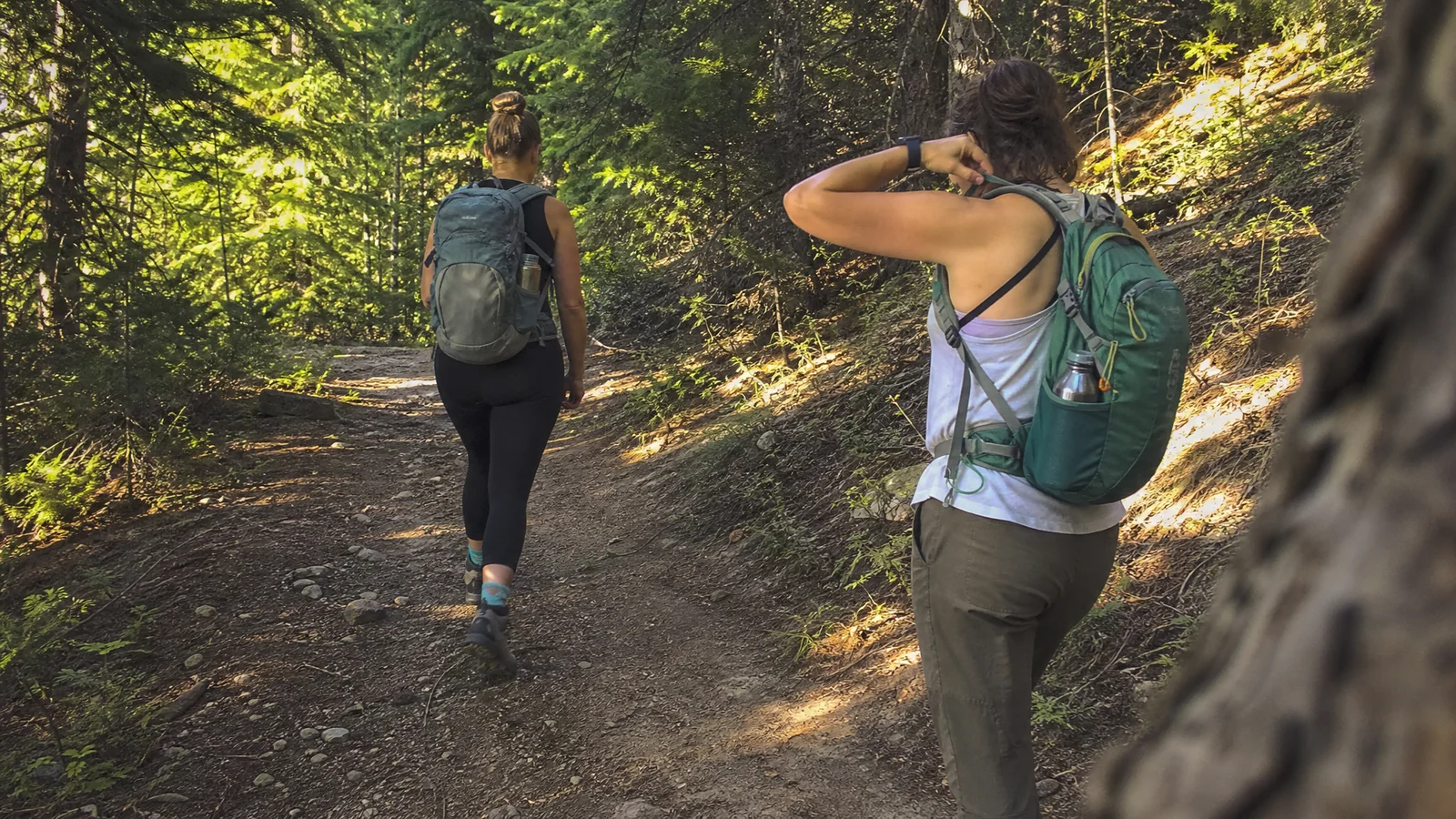
Bug Protection for Hiking and Camping
Build it in layers: pretreated or permethrin-treated clothing and gear, long sleeves and pants, an EPA-registered repellent on exposed skin, and a body check when you are done. CDC recommends this combination for ticks. Lemon eucalyptus essential oil, which we sell, is not a registered repellent and is not part of this kit.

Lemon Eucalyptus Essential Oil
Our own Lemon Eucalyptus Essential Oil, in sizes from 0.5 oz to bulk.
From $9.99
Shop Now →Last reviewed: October 2026. This is a sourced kit plan assembled from CDC and EPA guidance. We have no trail test data of our own and say so where it matters. For disease questions, a physician or your local health department is the person to ask.
Why the kit comes before the product
Most "best bug spray for hiking" pages begin with a spray. We would begin with the situation, because what bites you on a trail is not what bites you at a campsite at dusk. On the trail the common problem is ticks brushing off grass and leaf litter; at camp it is mosquitoes and biting flies, usually near water and at dawn and dusk. A spray is useful for both, but it is the weakest layer for ticks and the one you will forget to reapply at the end of a long day. Clothing does the heavy lifting.
That order, clothing first, is also CDC's. Its tick-prevention page opens with gear: "Treat boots, clothing, and camping gear with permethrin (0.5%), or buy pretreated items." The repellent bullet comes after.
The kit, in the order we would pack it
| Layer | What to carry | Why, and the source |
|---|---|---|
| 1. Clothing | Long-sleeved shirt, long pants, socks and closed shoes; tuck shirt into pants and pants into socks. | EPA's mosquito tips: "long-sleeved shirts, long pants, and socks," tucked to close gaps. |
| 2. Permethrin-pretreated items | Factory-pretreated shirts, pants and socks, or boots and gear you treat yourself at 0.5% as the product's label directs. | CDC: pretreated items stay protective through several washings. CDC says never apply permethrin products directly to skin. |
| 3. Registered repellent | A product with an EPA registration number and one of the six active ingredients CDC lists (DEET, picaridin, IR3535, OLE, PMD, 2-undecanone). | CDC tick and mosquito pages. Sunscreen goes on first, repellent second. |
| 4. Sleeping gear | A tent with intact mesh, or a net where there are no screens; a permethrin-pretreated net where mosquitoes are heavy. | CDC Travelers' Health: pretreated nets provide more protection than untreated ones. |
| 5. Physical barrier (optional) | A head net for dense mosquito or fly areas. | Our reasoning: it blocks insects without anything on skin. We cite no study for it. |
| 6. Check tools | A small mirror and a fine-tipped tick remover. | CDC advises a full-body check with a mirror after coming indoors. |
If you are comparing the permethrin layer with a skin product, our lemon eucalyptus vs permethrin piece explains why they are complements, not rivals.
Where we would spend money, and where we would not
Spend on pretreated clothing. It is the one layer that works while you are not paying attention. CDC's guidance is permethrin on clothing, never on skin. Follow the product label for how to apply to gear and how it behaves in wash cycles, and keep treated items away from pets until the label says they are safe. If you have a cat, ask your veterinarian before using permethrin products at home.
Choose a registered repellent with a label you have read. Our buyer's guide to choosing a lemon eucalyptus repellent and our walk-through of how to read a repellent label cover registration numbers, active percentages and age limits. The big caution: CDC says not to use OLE or PMD products on children under 3.
Do not rely on essential oil you carry in a pocket. CDC says: "We do not know the effectiveness of non-EPA registered insect repellents, including some natural repellents." We sell a lemon eucalyptus essential oil and we say plainly that it is not a registered repellent. We will not suggest you rub it on skin or clothes for this purpose. On a backcountry trip a failure is not an inconvenience; a tick that bites you at mile eight is still attached tonight.
Trail rules that cost nothing
- Walk in the center of the trail. CDC advises avoiding wooded and brushy areas with high grass and leaf litter, and walking in the center of trails.
- Stop for checks at breaks, not just at the end. This is our recommendation, not a CDC rule: a tick found in an hour is easier to deal with than one found at camp.
- Keep your pack off the grass. CDC notes that ticks can hitch a ride on daypacks, so check them after you come in.
- Plan your timing. Our mosquito and tick season by region page sorts CDC's timing statements. Adult blacklegged ticks are most active in early spring and fall, nymphs from April through July.
At camp
EPA recommends emptying standing water at least once a week around the home. At a campsite you cannot control the water, but you can choose where you sleep. Pitch away from stagnant pools, and treat dawn and dusk as the hours when you cover up, zip the mesh and reapply the way the label says. CDC's repellent guidance for mosquitoes is blunt: "Reapply repellent as directed." We have no field bite logs to give you a number, and an invented interval would be worse than none.
Smoke and scent are a separate question. A citrus candle or a diffuser at the picnic table can make the evening nicer, and we sell the oil for exactly that, as we describe in lemon eucalyptus for the porch, picnic and campsite. It is ambiance. It does not replace the layers above, and open flames and fuel have rules of their own in the park or forest you are visiting.
After the hike
- Check clothing, daypacks and any pets, and remove ticks you find.
- Tumble clothes on high heat for 10 minutes to kill ticks. CDC says damp clothes may need longer, and that cold and medium wash water will not kill ticks, so use hot water if you wash first.
- Shower within two hours of coming indoors.
- Do a full-body check: under the arms, in and around the ears and hair, in the belly button, behind the knees, between the legs and around the waist.
CDC says a tick must be attached for more than 24 hours before the Lyme disease bacterium can be transmitted, which is why daily checks matter. If you find an attached tick, or you become ill after a trip, contact a clinician and mention your outdoor time. For the full checklist, see how to prevent tick bites and does lemon eucalyptus repel ticks.
Matching the kit to the trip
| Trip | Main bug problem | Where to put the effort |
|---|---|---|
| Day hike through grass or woods | Ticks | Pretreated pants and socks, center of the trail, check and shower afterward (CDC). |
| Overnight near a lake or marsh | Mosquitoes at dawn and dusk | Mesh on the tent, covering clothing, registered repellent on exposed skin. |
| Multi-day trek in unfamiliar country | Depends on region; may include disease risk | Check destination guidance with a travel clinic; see our travel mosquito guide. |
| Fall hunting or leaf-peeping | Adult ticks | CDC says adult blacklegged ticks are most active in fall. |
The table is our synthesis of CDC's statements, not a rule book. If you hike in a region we have not covered, your local health department or Cooperative Extension office can tell you which ticks and mosquitoes are active there, and when.
Who should not follow this kit unchanged
- Children. Do not use OLE or PMD products on children under 3 (CDC). Camp planning for kids is in bug spray for summer camp.
- Pregnant or breastfeeding hikers. CDC says EPA-registered repellents are safe when used as directed, even for pregnant and breastfeeding women. Ask your obstetric provider about your own situation.
- Anyone with skin conditions or known sensitivities. Read the label and talk to a dermatologist or pharmacist.
Frequently asked questions
Do I need permethrin gear if I use a repellent?
CDC lists both, because they protect different surfaces: pretreated clothing and gear, and repellent on exposed skin. Most CDC guidance reads as a layered approach, not a choice.
Is lemon eucalyptus essential oil enough for a camping trip?
No. It is not an EPA-registered repellent and CDC says the effectiveness of non-registered natural repellents is not known. Choose a registered product with one of CDC's six actives.
When should I reapply?
As the label of your specific product directs. CDC says the same, in those words. Intervals vary by product and active ingredient.
Can I still enjoy lemon eucalyptus scent at camp?
Yes, as a fragrance in a candle or a diffuser, with the usual care around flame and pets. Our oil is on the shop page; it is for ambiance only.
Lemon Eucalyptus Essential Oil
Lemon Eucalyptus Essential Oil from our own shop, in sizes from 0.5 oz to bulk.
From $9.99
Shop Now →