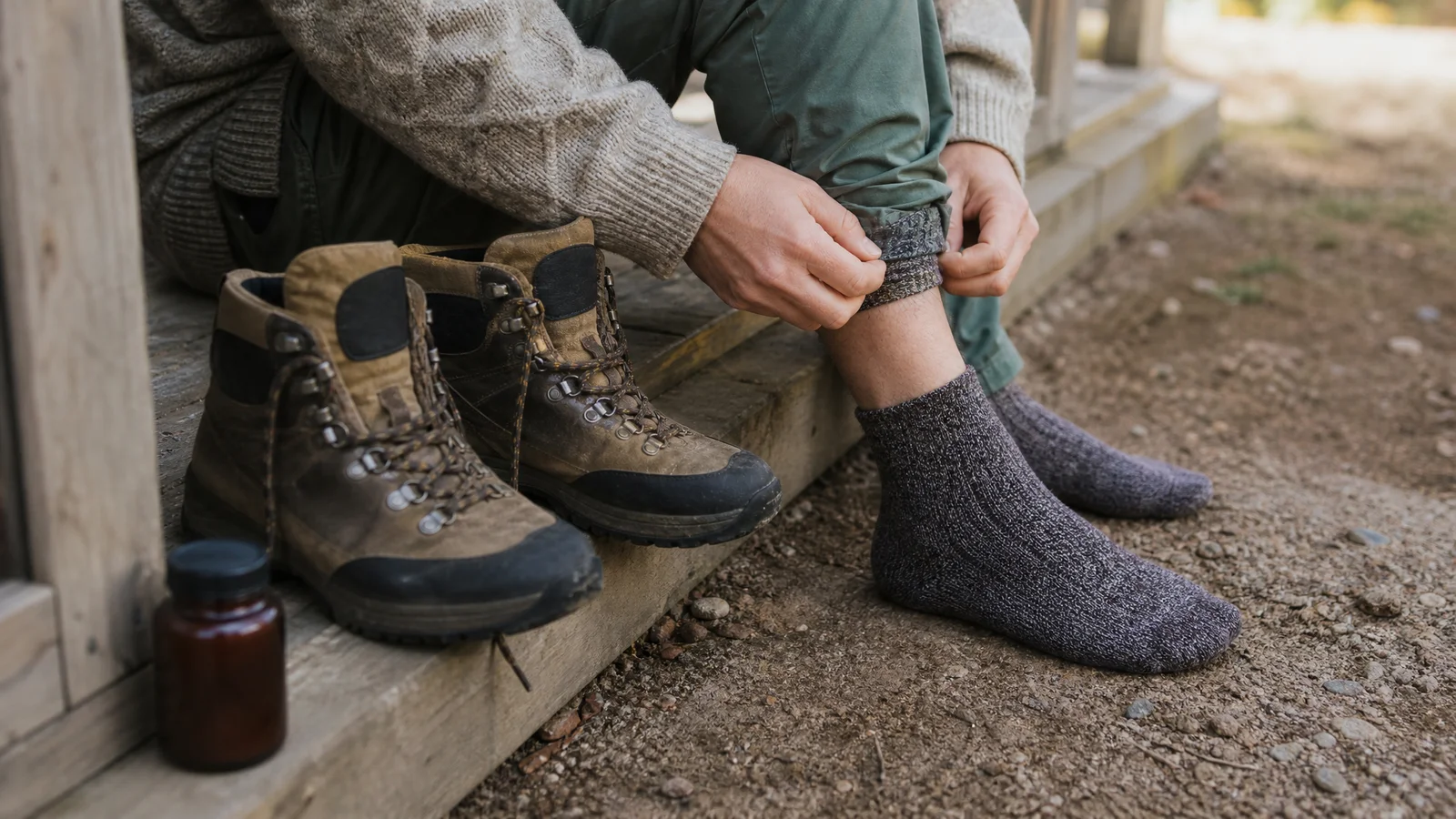
How to Prevent Tick Bites: A Complete Checklist
To prevent tick bites, avoid tick habitat, wear permethrin-pretreated clothing, use an EPA-registered repellent, then check your body, gear and pets after being outdoors, shower within two hours, and dry clothes on high heat for 10 minutes. CDC lists all of these steps. No single step is complete protection, so use several.

Lemon Eucalyptus Essential Oil
Our own Lemon Eucalyptus Essential Oil, in sizes from 0.5 oz to bulk.
From $9.99
Shop Now →This checklist follows the order you would actually use it: before you go out, while you are out, when you come in, and around your home. It is built from CDC guidance. We sell lemon eucalyptus essential oil, which is not an EPA-registered repellent, so it does not appear in the checklist as a bug-protection step. The registered oil of lemon eucalyptus products that CDC mentions are separate products made by other companies; our guide to lemon eucalyptus and ticks explains the difference and how to read their labels.
Last reviewed: October 2026. This is general information from public health sources, not medical advice. Talk to your physician about tick bites, symptoms, or high-risk exposure.
Why a checklist and not one product
Ticks do not behave like flying insects. CDC describes them "questing" on grasses and shrubs, waiting to climb onto a passing host. A repellent on your forearms does nothing for a tick that has reached your waistband. That is why CDC's advice is a set of habits, and why the steps after you come inside are as important as the spray you applied beforehand.
If you only remember one thing, remember the tick check. Everything before it lowers the chance that a tick reaches you. The check is what catches the ones that do, and CDC advises removing attached ticks as soon as possible. Our position is that anyone who spends time in grass, brush or woods in tick country should treat the check as non-negotiable and the repellent as optional extra margin, not the other way around.
The checklist
| When | Step | CDC detail |
|---|---|---|
| Before | Pick your route | Avoid wooded and brushy areas with high grass and leaf litter; walk in the center of trails |
| Before | Dress for it | Long-sleeved shirts and pants, or permethrin-pretreated clothing and gear |
| Before | Pretreat gear | Products containing 0.5% permethrin can be used on boots, clothing and camping gear and stay protective through several washings |
| Before | Apply repellent | EPA-registered product with DEET, picaridin, IR3535, oil of lemon eucalyptus, PMD or 2-undecanone; sunscreen first, repellent second |
| After | Shower | Within two hours of coming indoors |
| After | Dry clothes | Tumble dry on high heat for 10 minutes; cold and medium water will not kill ticks |
| After | Check body, gear, pets | Under the arms, in and around ears and hair, inside the belly button, behind the knees, between the legs, around the waist |
| Home | Shape the yard | See yard section below |
Before you go: route, clothing, repellent
Route. CDC says to avoid wooded and brushy areas with high grass and leaf litter and to walk in the center of trails. In practice that means staying off the edge where vegetation brushes your legs. If your activity is hunting, hiking or camping, we have separate pages: tick protection for hunting and fall tick season and bug protection for hiking and camping.
Clothing. CDC recommends long-sleeved shirts and pants, or clothing and gear pretreated with 0.5% permethrin. You can buy factory-pretreated items or apply a permethrin product to your own boots, clothing and camping gear, following its label. CDC's mosquito guidance adds that permethrin should not be applied directly to skin. The American Association of Feline Practitioners warns that cats are very sensitive to permethrin (AAFP), so read our note in lemon eucalyptus vs permethrin if cats live with you.
Repellent. Look for an EPA registration number on the label, then check that the label lists ticks, not just mosquitoes. EPA's search tool can filter by ticks. CDC says not to use products containing OLE or PMD on children under 3 years old. For a deeper look at how to apply, see how to apply lemon eucalyptus repellent correctly.
The oil we sell, bottled 100% pure and undiluted, is not part of this step. CDC says the effectiveness of non-EPA-registered repellents, including some natural ones, is unknown.
When you come in: the order that works
- Do not sit down first. Check your clothing and gear at the door. Ticks can hitch a ride on pets, coats and daypacks, CDC notes, so look at those too.
- Put clothes in the dryer. CDC advises tumbling clothes on high heat for 10 minutes to kill ticks on dry clothing. If clothes need washing, use hot water, because CDC says cold and medium temperature water will not kill ticks.
- Shower. CDC says showering within two hours of coming indoors has been shown to reduce the risk of Lyme disease, and it gives you a chance to do the tick check.
- Do a full body check with a mirror. CDC names the spots: under the arms, in and around the ears and hair, inside the belly button, behind the knees, between the legs, and around the waist. Check children the same way.
- Check pets. CDC advises checking pets daily if they go outdoors.
If you find a tick
CDC's instructions are specific. Grasp the tick as close to the skin's surface as possible with clean fine-tipped tweezers. Pull straight out with steady pressure. Do not twist or jerk it. Dispose of a live tick by sealing it in a container, wrapping it tightly in tape, putting it in alcohol, or flushing it. Do not crush it with your fingers. Clean the bite area and your hands with soap and water, rubbing alcohol, or hand sanitizer.
CDC also advises against petroleum jelly, heat, nail polish or other substances to try to make the tick detach, and says not to wait for a healthcare provider to remove it, because delay could raise your risk. Do not send the tick for testing, according to CDC's page, because results cannot reliably guide care. Afterward, watch for a rash or fever within several weeks and see your doctor if either appears, telling them about the bite, when it happened, and where you likely picked up the tick (CDC). What CDC says about timing and antibiotics is on our page about bug spray and Lyme disease.
Around your home
CDC's yard advice is mostly about removing hiding places and putting distance between the lawn and the woods.
- Remove leaf litter, clear tall grass and brush, and mow often.
- Place a 3-foot-wide barrier of wood chips or gravel between lawns and wooded areas.
- Stack firewood in a dry spot.
- Keep play equipment, decks and patios away from yard edges and trees.
- Remove old furniture, mattresses and trash where ticks could hide.
- Fence out deer and other animals where practical.
On pesticides, CDC says yard sprays can reduce ticks in the treated areas but you should not rely on spraying alone, and you should follow label instructions and check local rules first. We take that at face value: a yard that stays shady, leafy and unmown will still shelter ticks.
Pets. CDC says to use a tick preventive on your dog as your veterinarian recommends and check pets daily if they go outside. For cats, it says not to apply any tick prevention products to cats without first asking your veterinarian, because cats are sensitive to many chemicals. We go deeper in is lemon eucalyptus safe for cats. Note that ticks you find on pets can move to people.
Which ticks and where
CDC notes that many U.S. tick species exist but only a few bite people and spread disease, and that a tick's presence in an area does not necessarily mean it transmits a specific disease there. The blacklegged tick is widespread in the eastern U.S. and spreads Lyme disease; the lone star tick lives in the Northeast, South and Midwest; the western blacklegged tick is found along the Pacific coast (CDC). For seasonal timing, see mosquito and tick season by region.
Frequently asked questions
How soon after being outdoors should I check for ticks?
CDC advises checking after being outdoors and showering within two hours of coming indoors. Do the check as soon as you are inside.
Do I need permethrin if I use repellent?
CDC lists them as separate steps. Repellent goes on skin; permethrin is for clothing and gear. Using both is the layered approach that CDC's guidance describes.
Can I wash tick-pretreated clothes?
CDC says permethrin on boots, clothing and gear can remain protective through several washings. Check your product label for the exact number.
Are essential oils a substitute?
CDC says the effectiveness of non-EPA-registered repellents, including some natural ones, is unknown. Use an EPA-registered product, and see does lemon eucalyptus repel mosquitoes for how registered products differ from essential oil.
When should I see a doctor after a tick bite?
CDC says to see your doctor if you develop a rash or fever within several weeks of removing a tick. Call your physician sooner if you are unsure.
Lemon Eucalyptus Essential Oil
Lemon Eucalyptus Essential Oil from our own shop, in sizes from 0.5 oz to bulk.
From $9.99
Shop Now →