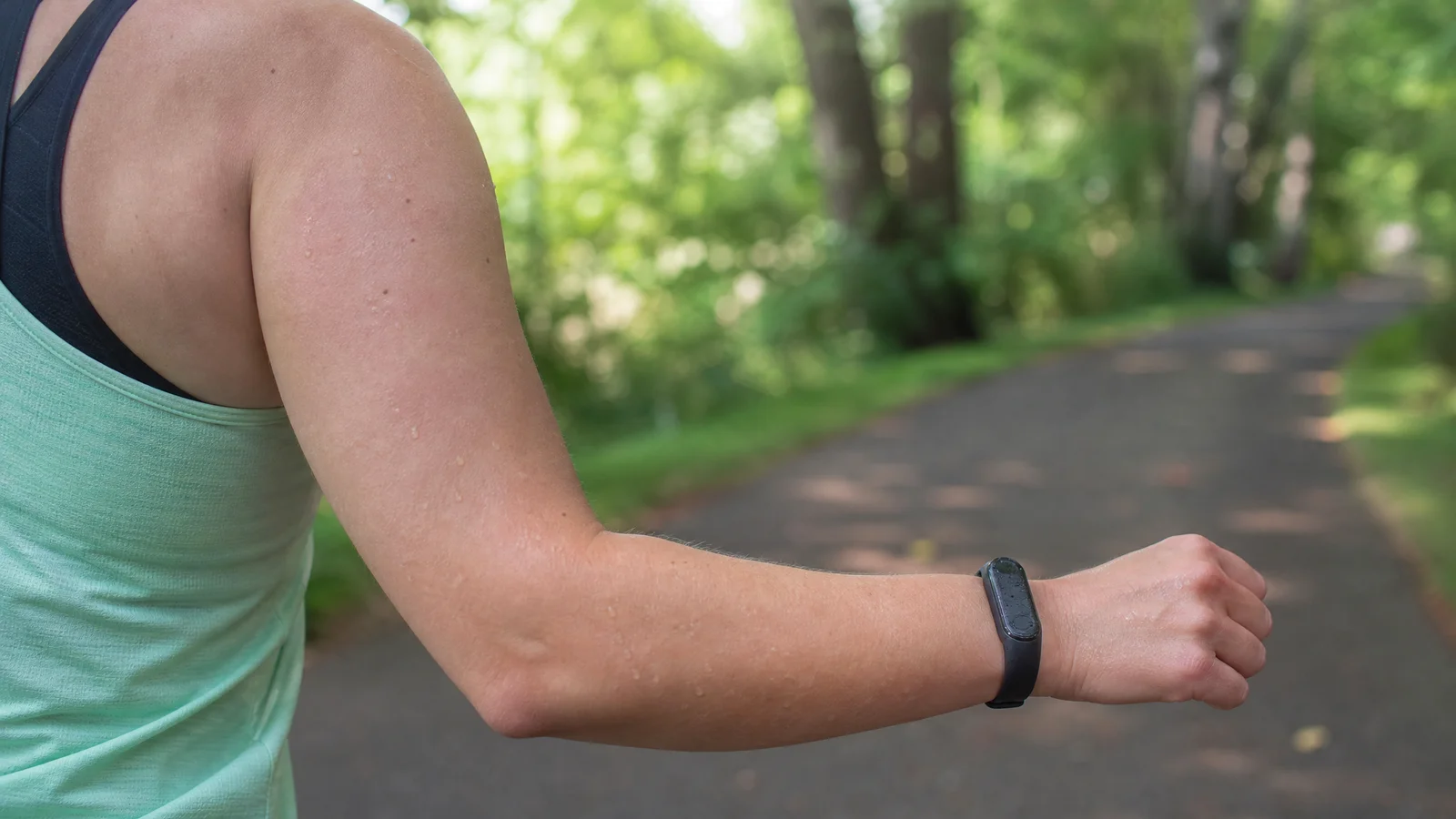
Does Bug Spray Wash Off With Sweat or Swimming?
Yes, protection shortens with sweat, water and rubbing, but no source we opened gives wash-off times for lemon eucalyptus repellent. A CDC-framed summary says perspiration, water exposure and abrasion markedly affect duration, and EPA says to reapply according to the label. The labels we read cap lemon eucalyptus use at two applications a day.

Lemon Eucalyptus Essential Oil
Our own Lemon Eucalyptus Essential Oil, in sizes from 0.5 oz to bulk.
From $9.99
Shop Now →Last reviewed: October 2026
First, which product are we talking about?
This page concerns EPA-registered repellents made by other companies, including those whose active ingredient is oil of lemon eucalyptus (OLE). We sell none of them. Our bottle is Lemon Eucalyptus Essential Oil, which is not a registered repellent, and nothing here describes how it would behave on skin in the rain or the pool. If you have been wondering whether to rub our oil on instead, the answer is no; see what OLE actually is.
What the sources actually say about sweat and water
Here is the whole evidence base we could verify:
- A mosquito and vector control district page, which describes itself as a CDC evaluation of peer-reviewed literature and EPA data, says published data indicate repellent efficacy and duration "vary considerably among products" and "are markedly affected by ambient temperature, amount of perspiration, exposure to water, abrasive removal, and other factors." It then says: reapply the repellent according to the label instructions if bites begin.
- Penn State Extension's safe-use page says the length of time protection lasts depends on several factors, including the degree to which a person has perspired. It adds that a single application is usually enough and warns against prolonged or excessive use.
- EPA's safe-use page says to apply and re-apply according to the label.
- The University of Wisconsin mosquito site lists temperature, which might increase sweat, among the factors in choosing a repellent.
What none of them provides: a number of minutes lost per swim, a sweat rate, or a comparison between OLE and DEET after immersion. We searched for one and did not find a primary study we could open. Anyone offering a precise wash-off time for OLE should show the study.
The label is the limit, and it is tighter than people think
The lemon eucalyptus labels we opened are explicit. The 2012 Repel Plant-Based Lemon Eucalyptus label (EPA Reg. No. 305-62) says: "Reapply once as needed. Do not apply more than twice per day." The 2003 lotion master label for Repel Essential (EPA Reg. No. 305-56) says the same. A Murphy's Naturals product page repeats the wording. The labels we read do not make a water-resistance or sweat-proof claim; we saw none.
That has a consequence the generic advice skips. The popular rule of "reapply every couple of hours, and after every swim" cannot be squared with a label that allows two applications a day. For a product like that, the label wording means a second application after sweating or swimming uses your last allowed one. Federal law, the same labels say, makes it a violation to use the product inconsistently with its labeling. So we recommend you plan the day around the label rather than around folk rules, and if you expect to need more, choose a different registered product whose label allows it, or add physical barriers (long sleeves, a head net, timing). Ask a pharmacist if you are unsure.
Labeled hours are another variable. The OLE labels we read say "up to 6 hours" for mosquitoes, and Penn State Extension lists 2 to 5 hours. EPA's repellency awareness graphic page calls the labeled figure a "typical" protection time. See how long lemon eucalyptus repellent lasts for the full comparison.
Reapply decision chart
This chart is built from the label wording and sources above. It is our reasoning, not a tested protocol.
| Situation | What the sources and labels support | What we would do |
|---|---|---|
| Light sweat, short outing, no bites | Penn State: a single application is usually enough | Do not reapply "just in case." |
| Heavy sweat or hot day, bites starting | District page: reapply per label if bites begin | Reapply once if the label allows; wipe off sweat first so the new layer is not applied over dripping skin (our practical step, not a sourced one). |
| You swam, rinsed or toweled off hard | Water exposure and abrasion are named as factors; no wash-off figures exist in what we read | Treat the old application as gone. Reapply once if the label allows, and apply sunscreen first if you use it, per CDC. |
| You already used two applications today | Label: no more than twice per day | Stop. Use shade, sleeves, a net, or a different registered product whose label permits more. |
| Rash or irritation after reapplying | Label: discontinue if irritation or rash appears | Wash with soap and water and stop. See a dermatologist if it persists. |
| Child 3 or older | Adult applies; not on a child's hands; label age rules | Follow the label and ask a pediatrician before extra reapplications. |
Sunscreen, swimming and the order of operations
If you swim, you will probably reapply sunscreen. CDC's Yellow Book says repellents used according to label instructions can be used with sunscreen with no reduction in repellent activity, and that you should use separate products, applying sunscreen first and repellent second. CDC also says that DEET repellents applied over sunscreen decrease the sun protection factor by about one third; that finding is about DEET, and we are not saying the same of OLE. Penn State Extension notes that CDC advises against combination products because sunscreen usually needs reapplication more often than a repellent. In practice: sunscreen first, repellent after, each according to its own label. Detail is in how to apply lemon eucalyptus repellent.
Does format change how it holds up?
We found no evidence either way. Sprays and lotions carry the same two-per-day wording on the labels we read, and the strength you pick still matters: CDC says higher concentrations give longer protection. Our spray versus lotion guide covers the practical differences, and the concentration guide explains why 30% OLE is typical.
When sweat and water make OLE a poor fit
If your day is a long, hot, wet one, a product whose label allows only two applications is a constraint. Penn State's table lists picaridin at 3 to 10 hours and DEET at 2 to 8 hours against OLE at 2 to 5, which suggests other actives may cover a longer day, though those are ranges across different studies and products. Compare the labels themselves and see the ingredients comparison. For disease-risk travel, ask a travel-medicine clinic.
Three folk rules, checked
| What people say | What we found |
|---|---|
| "Reapply every two hours." | No source we opened gives a universal interval. The labels say reapply once as needed, up to twice per day. CDC's Yellow Book says higher concentrations give longer protection; it gives no OLE interval. |
| "Natural sprays wash off faster." | We found no study comparing wash-off by ingredient. Penn State Extension lists OLE at 2 to 5 hours against DEET at 2 to 8, which concerns duration, not water. |
| "Heavier application lasts longer." | Penn State Extension says to use only enough to lightly cover exposed skin and never saturate it, and warns against excessive use. The labels also say how often, not how thickly. |
A plan for one long hot day, within a two-application cap
This is our reasoning from the label wording, not a tested schedule. Apply once at the start, spreading evenly as the label directs and covering ears, neck and the backs of hands. Keep your second application in reserve for when bites actually begin or after a swim. Between the two, lean on things that do not use up the cap: shade, long sleeves, a head net if biting pests are heavy, and timing. If you reach the cap and bites continue, that is a signal to stop and change the plan, not to keep adding. A pharmacist can talk you through other registered products whose labels allow more frequent use.
After you come indoors
EPA says to wash the skin and clothes you applied repellent to with soap and water after returning indoors; the Repel label says to wash product from all exposed skin. Do not leave repellent on overnight as a habit, and do not apply it under clothing.
FAQ
How long after a swim should I reapply?
No source we opened gives a time. Treat the earlier application as unreliable, and reapply only as the label allows.
Is lemon eucalyptus spray waterproof?
The labels we read make no water-resistance claim. We would not assume it.
Can I reapply every hour if I am sweating a lot?
Not on the lemon eucalyptus labels we read, which cap use at twice per day. Pick a different plan or product.
Can I use our essential oil for reapplication or as a backup?
No. It is not a registered repellent and we do not recommend it for that. It suits scent and crafts; see the shop.
Who should I ask?
A pharmacist or physician for general safety, a pediatrician for children, an OB-GYN or midwife in pregnancy. After swallowing or an eye exposure, call Poison Help at 1-800-222-1222.
Lemon Eucalyptus Essential Oil
Lemon Eucalyptus Essential Oil from our own shop, in sizes from 0.5 oz to bulk.
From $9.99
Shop Now →Sources & Further Reading
- Mosquito and vector control district page summarizing CDC evaluation of repellents on skin and clothing
- Penn State Extension: Using Insect and Tick Repellents Safely
- Penn State Extension: Tick and Mosquito Repellent Guide
- EPA: Using insect repellents safely and effectively
- EPA: Repellency Awareness Graphic
- CDC Yellow Book: Mosquitoes, Ticks, and Other Arthropods
- University of Wisconsin: Repellents for application to skin
- Repel Plant-Based Lemon Eucalyptus label, EPA Reg. No. 305-62 (2012 version, retailer-hosted)
- EPA label record: Repel Essential lotion master label, 305-56 (2003)
- Murphy's Naturals product page (manufacturer)