Lemon Eucalyptus Oil for Cleaning: What It Can and Can't Claim
Lemon eucalyptus oil can add a fresh lemony scent to a household cleaner. It cannot honestly be sold or described as a disinfectant, sanitizer or germ-killer: under EPA's rules those are pesticide claims that need a registered product. Use it as fragrance, clean with a real cleaning agent, and keep your wording to dirt and smell.
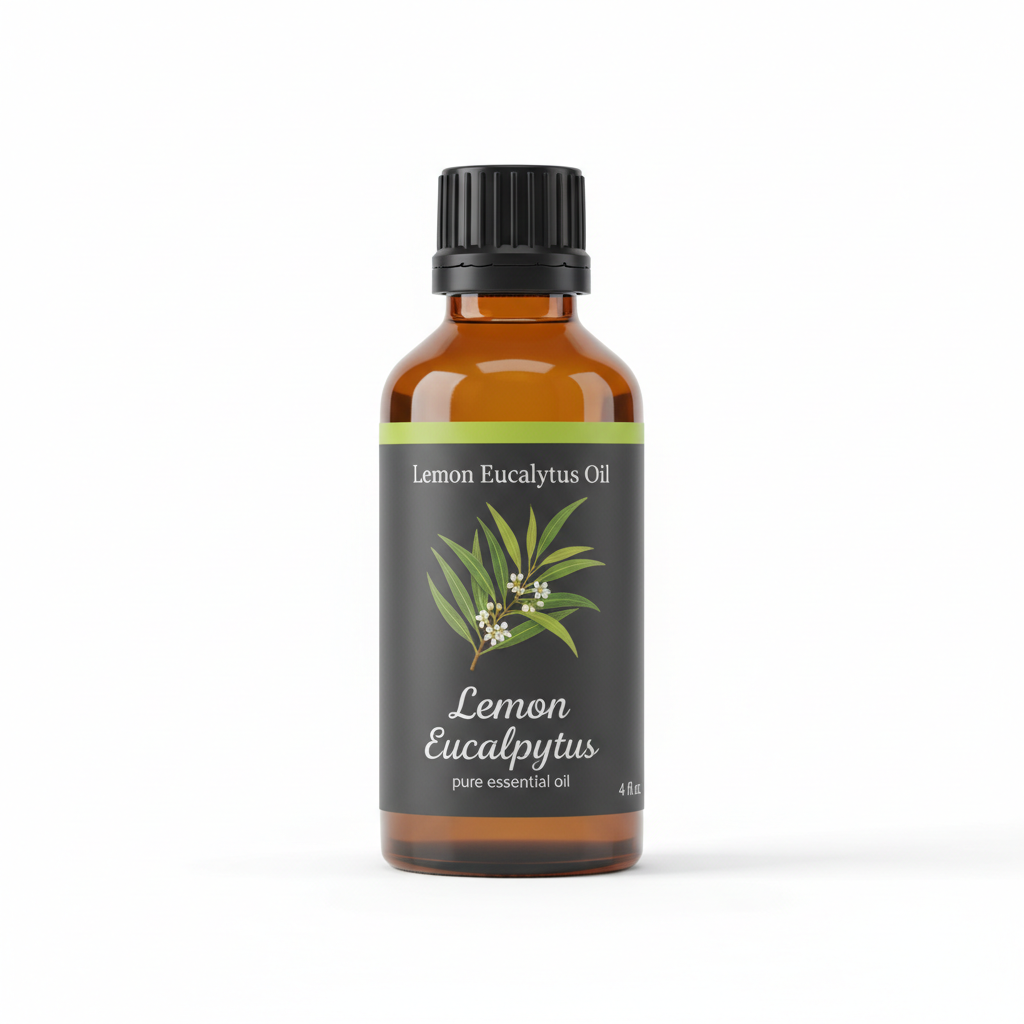
Lemon Eucalyptus Essential Oil
Our own Lemon Eucalyptus Essential Oil, in sizes from 0.5 oz to bulk.
From $9.99
Shop Now →Search for "natural all-purpose cleaner" and you will find recipes that call essential oils "disinfecting" or "germ-fighting". Those words are not decoration. They change what a product legally is. This guide explains where the line sits, what the oil can do for a cleaner, and where we think scent-based cleaners go wrong for ordinary households and for people who make them to sell.
A short statement of what we sell: lemon eucalyptus essential oil from Corymbia citriodora leaf, steam distilled and bottled 100% pure and undiluted. It is a fragrance material. It is not an EPA-registered disinfectant, and as our stance page says about repellents, we do not imply registered status the product does not have. The same discipline applies here. We are not offering legal advice, and anyone selling a cleaner should speak to a qualified attorney or their state pesticide agency.
The rule in plain English
EPA's page "Determining If a Cleaning Product Is a Pesticide Under FIFRA" explains that once a label includes any claim of pest mitigation, the product becomes subject to registration under the federal pesticide law. It lists "cleans or removes dirt, soil, dust, debris" as an ordinary cleaning claim, and lists "sanitizes, disinfects or sterilizes" as an example of a claim the agency considers pesticidal. Claims about algae, mold, mildew and other non-public-health organisms are generally not pesticidal under the same page.
For essential oils there is a second route. EPA's page on conditions for minimum risk pesticides says that products exempt from registration must not state or imply that they control organisms that pose a threat to human health, and it lists "sterilize", "disinfect" and "sanitize", along with a claim to destroy germs, as examples of microorganism claims that cannot be made. Another example on the same page: a label may say a product "controls ticks" but not "controls ticks that carry Lyme disease".
| What you want to say | Where it lands under the EPA pages above |
|---|---|
| "Cleans countertops", "removes dirt and grime" | Ordinary cleaning claim |
| "Leaves a fresh lemon scent" | Fragrance claim, not pesticidal |
| "Helps remove mildew stains" (non-public-health organisms) | Generally not pesticidal, per the EPA cleaning page, but read it yourself |
| "Disinfects", "sanitizes", or any claim to destroy germs | Pesticidal claim; needs EPA registration |
We have no standing to rule on any particular sentence. The table shows how the two EPA pages sort the examples they give, and the safe course is to stay in the first two rows.
What the oil can actually do in a cleaner
This is the part where we have to be careful not to overclaim. What we can document is the oil's aroma: lemony, fresh and green, a top note, with high natural citronellal. Those are properties of smell. A scented cleaner smells clean to many people, because lemon and citrus fragrances are widely associated with cleaning products, but that association is cultural and says nothing about whether surfaces are free of microbes.
That distinction is the main thing we want a reader to take away. "Smells clean" and "is clean" are different statements, and a germ-destroying claim is a third that needs registration. If you want a cleaner that does the job, the cleaning is done by whatever surfactant, soap or mechanical wiping you are already using. The oil is the part you smell afterward.
One more thing, from the seller's chair. A buyer who asks us whether lemon eucalyptus oil will make their cleaner "stronger" is asking a fair question and deserves a plain answer: no, we have no evidence that it will, and scent is the only change we can describe. We would rather lose that sale than make the cleaner sound like a different product.
Our recommendations
1. Start from a cleaner you trust and add scent last
If you have a mild all-purpose cleaner you already use, scent it rather than replacing it. The more of the work you ask of the oil, the more likely you are to end up making a claim you cannot support.
2. Do not publish a ratio we cannot support
Many recipes give drop counts for cleaning sprays. We do not, because we have no tested figures for our oil in any cleaner base, and we would not like to make one up. Our shop page documents one number, a dilution of 0.5% to 2% in a carrier oil for topical use, and that is for skin, not for surfaces. Our wider piece on diluting lemon eucalyptus oil shows the arithmetic for percentages, and the same arithmetic works for any base, but it does not tell you what is safe for a given surface.
3. Remember that oil and water separate
A plain mix of essential oil and water will separate, so a spray bottle needs shaking and the oil can land on a surface in droplets. That is a physical property, not a documented behavior of our oil specifically, but it is a good reason to keep amounts small and wipe surfaces after use.
Surfaces and situations to avoid
We have no spot-test photos and no surface trials, so this section is caution rather than a tested list. Concentrated essential oils can mark or soften some finishes. Before using any scented cleaner on a surface you care about, test a hidden area and read the surface manufacturer's care instructions. Be especially careful with:
- Finished wood, varnished furniture and floors.
- Natural stone, where the manufacturer's care sheet matters more than any recipe.
- Painted surfaces, plastics and coated electronics.
- Fabrics you plan to wear against skin, where our room and linen spray piece takes a more careful approach: room and linen spray.
Pets and the cleaning cupboard
ASPCA says that in concentrated form (100%) essential oils can absolutely be a danger for pets, and ASPCApro says oral and dermal exposure are generally more concerning than inhalation, with cats, rabbits, guinea pigs and hamsters possibly more sensitive to dermal exposure. Floors are where animals walk and then groom. Our reasoning from that statement is that a scented floor cleaner leaves a residue that a cat can pick up on its paws. If you have pets, a veterinarian is the right person to ask before using essential oils on floors or surfaces pets touch. Our shop page says to keep the oil away from children and pets. The diffusing guide covers the air side of the same question.
Keep the bottle and any mixed spray out of reach of children, and never label a spray bottle in a way that a child could mistake it for a drink. Our shop page also says not to take the oil internally. If someone swallows it, call Poison Help at 1-800-222-1222.
If you make cleaners to sell
A minimum risk product still has conditions to meet, as the EPA page above lays out. Our reading, which a professional should confirm, is that a claim lives everywhere you speak: the label, the product page, your social posts, the description on a marketplace listing, even a caption. We would audit all of them before launch. Specifically:
- Strip every germ-related word, including "germ-fighting", "sanitizing" and "disinfecting", from everything.
- Describe the scent and the cleaning job: "lemon-scented all-purpose cleaner for countertops."
- Ask your state pesticide agency or an attorney whether your product, ingredients and wording are covered; states can have their own rules.
That list is our caution for makers, not a legal checklist. It is the same line we draw for ourselves on every page of this site: we describe the oil as a fragrance material and leave claims we cannot support unsaid. Our wider guide, lemon eucalyptus essential oil uses, applies the same test to repellent, health and cleaning claims together.
Where our oil actually fits
If you want to scent a cleaner, a linen spray or a candle, our oil is a fragrance material for that, and you can see sizes in the shop. Cleaning is done by the cleaner. The scent is just the scent.
Frequently asked questions
Is lemon eucalyptus oil a natural disinfectant?
We do not sell it as one and make no such claim. EPA lists "sanitizes, disinfects or sterilizes" as claims it considers pesticidal, which means they need a registered product.
Can I use it to scent my all-purpose cleaner?
Yes, as fragrance, with care for the surface and for pets. Test a hidden area first and keep your wording to dirt and scent.
Can I describe my homemade cleaner as germ-fighting?
Under the EPA pages we read, germ-destroying claims are pesticidal claims. Ask a qualified attorney or your state pesticide agency before using such words.
Last reviewed: October 2026
Lemon Eucalyptus Essential Oil
Lemon Eucalyptus Essential Oil from our own shop, in sizes from 0.5 oz to bulk.
From $9.99
Shop Now →