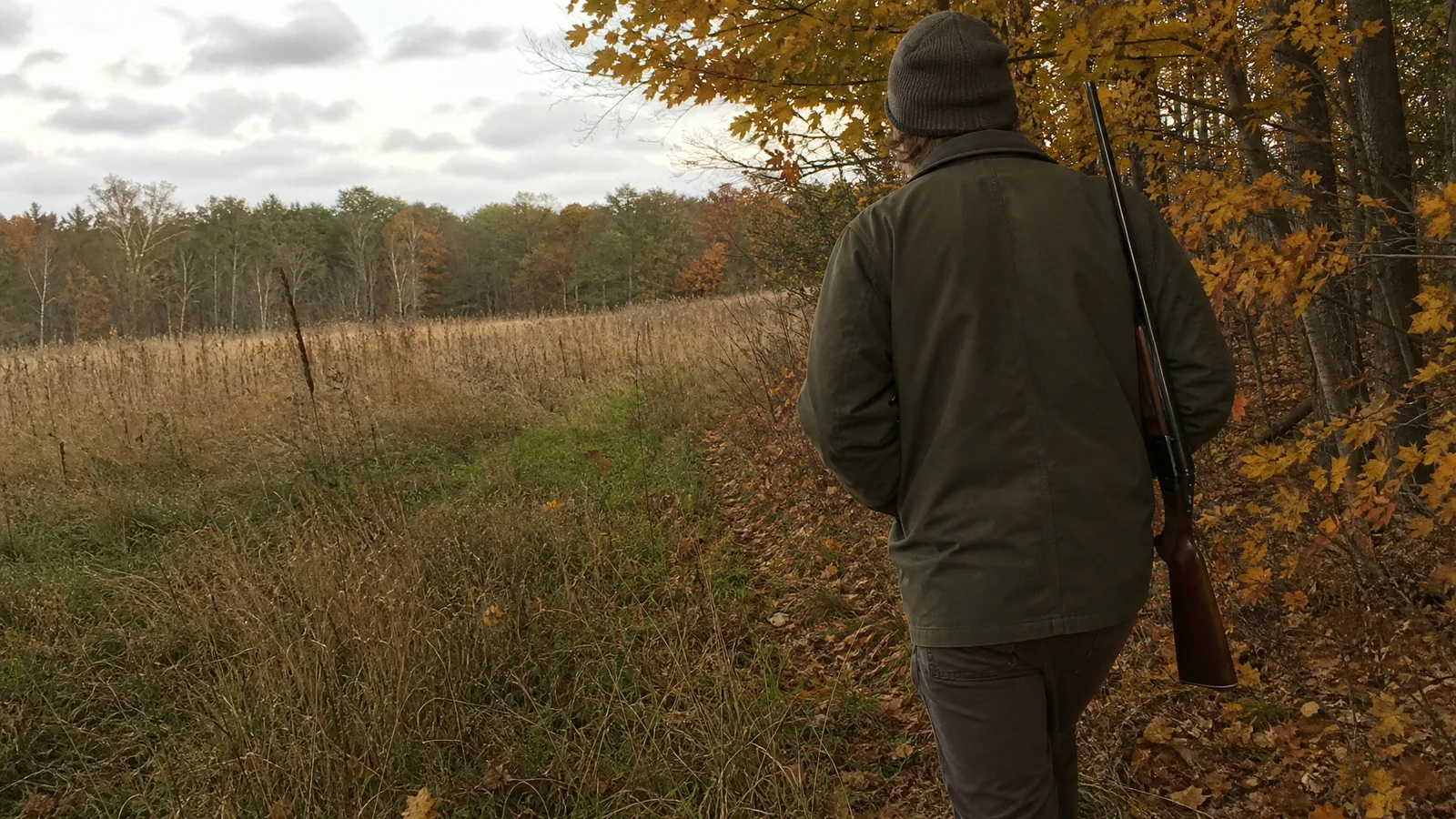
Tick Protection for Hunting and Fall Tick Season
Fall is not tick-free. CDC says adult blacklegged ticks are most active in early spring and fall, and Penn State Extension says they look for a host in October and November, which is peak hunting season. Hunters should rely on pretreated clothing, an EPA-registered repellent whose label lists ticks, and a careful tick check afterward.

Lemon Eucalyptus Essential Oil
Our own Lemon Eucalyptus Essential Oil, in sizes from 0.5 oz to bulk.
From $9.99
Shop Now →Many hunters assume ticks are a summer problem and stop thinking about them when the first frost is forecast. The sources we read say otherwise, and a day in the woods in October brings you into contact with leaf litter, brush and animals, all at once. This guide lays out what to do before, during and after a hunt, in the order a hunter would actually do it.
A word on what we sell, since "lemon eucalyptus" shows up in tick advice. Oil of lemon eucalyptus (OLE) is a refined, EPA-registered repellent ingredient found in products made by other companies. Lemon eucalyptus essential oil, which is what we sell, is a different material and is not a registered repellent. We have no affiliation with any repellent brand. Our stance page says we do not imply otherwise, and the longer explanation is in OLE versus lemon eucalyptus essential oil. Please do not put our oil on skin or clothing for ticks.
What the fall calendar actually looks like
CDC's page on how Lyme disease spreads says that from April through July nymphs are actively questing for hosts, and that in early spring and fall adults are most active. It describes adults as about the size of a sesame seed and nymphs as about the size of a poppy seed. Penn State Extension says adult blacklegged ticks can be found in October and November looking for an animal on which to feed.
| Season | Active stage (blacklegged tick) | Size, per CDC | Source |
|---|---|---|---|
| April to July | Nymphs questing for hosts | About a poppy seed | CDC |
| Early spring and fall | Adults most active | About a sesame seed | CDC |
| October and November | Adults looking for an animal to feed on | Same | Penn State Extension |
One consequence is worth saying plainly. Adults are larger than nymphs, which makes them easier to spot, but a sesame seed on a camouflage pattern in low light is still easy to miss. That is a reason to do tick checks under good light, not a reason to relax.
Our scope is limited. These sources describe the blacklegged tick, which is the main concern in the eastern and upper-midwestern US. Other ticks, such as the lone star tick, have different seasons and ranges, and we did not verify them for this article. Check your state health department or extension service for the species where you hunt.
Before the hunt: gear and clothing
CDC recommends products containing 0.5% permethrin for boots, clothing and camping gear. Penn State Extension adds the same warning, that permethrin should not be applied directly to skin. In practice:
- Choose either factory-pretreated gear or a permethrin product made for clothing. Read the label for which fabrics it suits and how long it lasts.
- Apply it to the outside of boots, socks, pants and jacket cuffs, because ticks climb up from the ground. That placement is our reasoning from CDC's emphasis on boots and clothing.
- Follow the label for drying time and pet precautions before bringing the gear home. Permethrin carries pet warnings; if you have cats, read them.
- Tuck pants into socks or boots so that ticks have to crawl over fabric.
We explain how skin and clothing products fit together in lemon eucalyptus versus permethrin. The short version is that they do different jobs, and one does not replace the other.
In the field: where ticks wait
CDC's advice is to avoid contact with ticks by steering clear of tall grass and leaf litter and walking in the center of trails. For a hunter, that advice collides with reality, because brush edges, field margins and leaf piles are where game moves. Our recommendation is to be honest about it and plan for contact rather than hope to avoid it:
- Choose stand and blind sites with clear ground around them where you can.
- Clear a patch before you sit, if the land rules allow it.
- Do not set a pack, jacket or gloves in leaf litter. Hang them or place them on a tarp, then shake the tarp out.
- After dragging or handling game, check your clothes and hands.
These are reasoned habits. We have no hunter field data and are not quoting a hunter. They follow from CDC's advice about leaf litter and from the plain fact that dragging an animal brings you into contact with ground and brush.
Repellent: what the label must say
CDC says to choose a repellent with an EPA registration number on the label and to use EPA-registered products as directed. Its mosquito page lists the recommended actives as DEET, picaridin, IR3535, oil of lemon eucalyptus (OLE), para-menthane-diol (PMD) and 2-undecanone. Two limits are worth stating:
- A registration does not mean every product works on every pest. EPA says the registration number reflects review for mosquitoes and/or ticks, so you need the label to name ticks. A product that lists only mosquitoes is not made for this job.
- CDC says not to use OLE or PMD products on children under 3. A hunter who takes a very young child on a walk should ask a pediatrician about other protection.
If you are comparing an OLE product with a DEET or picaridin one for a tick-heavy hunt, our comparison of lemon eucalyptus and ticks goes through what labels claim and where we are cautious. We do not give a head-to-head ranking here, because we could not verify a primary study for every active, and a ranking built from marketing copy would be exactly the commodity content we try to avoid.
The scent question hunters ask
Hunters often ask whether repellents or permethrin interfere with scent control. We cannot answer that, because we found no source we could open that tests it. What we can say is that a product's label is the only place its directions are set out, and you should read it for any statement about use in the field. We also would not bring an essential oil, ours or anyone else's, into a stand as a cover scent or a tick measure. A strongly lemon-scented material is the opposite of what a scent-conscious hunter is trying to carry, and our oil has no tick claim to support it. That is reasoning, not a test.
After the hunt: the part that actually does the most
CDC says to check your body for ticks after being outdoors, with attention to the hairline, armpits and behind the knees. It also says to tumble-dry clothes on high heat for 10 minutes, wash them in hot water first if needed because cold water does not kill ticks, and check pets and outerwear because ticks can ride into the home on clothing and pets. If you hunt with a dog, include the dog in the check, and ask your veterinarian about tick products made for animals. Check any product's label before using it on an animal.
CDC also says that in most cases a tick must be attached for more than 24 hours before the Lyme disease bacterium can be transmitted. That timing is why a same-evening check matters, and it is not a reason to skip the check. If you find an attached tick, or develop a fever, rash or other symptoms after a bite, contact a physician. Our longer pieces on preventing tick bites and on what CDC says about repellents and Lyme disease go into the checklist and the evidence.
| Stage | Do this | Basis |
|---|---|---|
| Before | Pretreated clothing; permethrin on gear only; label-checked repellent that names ticks | CDC, EPA, Penn State Extension |
| In the field | Avoid leaf litter and tall grass where you can; tuck pants into socks | CDC; our reasoning |
| After | Full-body check; hot-dry clothes 10 minutes; check the dog | CDC |
| Next days | Watch for fever, rash or illness and call a physician | Physician advice |
Where our oil actually fits
Our oil is a fragrance material for candles, soap and diffusers, and you can see sizes in the shop. It has no place in a tick plan.
Frequently asked questions
Are ticks still out after the first frost?
CDC says adult blacklegged ticks are most active in early spring and fall. Penn State Extension says they can be found in October and November.
Does permethrin go on skin?
No. CDC recommends it for boots, clothing and gear, and Penn State Extension warns not to apply it directly to skin.
Is lemon eucalyptus enough for a deer hunt?
An EPA-registered OLE product is one of CDC's listed repellents, but only if its label names ticks. Our essential oil is not a registered repellent and should not be used for this.
Last reviewed: October 2026
Lemon Eucalyptus Essential Oil
Lemon Eucalyptus Essential Oil from our own shop, in sizes from 0.5 oz to bulk.
From $9.99
Shop Now →Sources & Further Reading
- CDC: How Lyme Disease Spreads (Sept. 24, 2024)
- CDC: Preventing Tick Bites
- Penn State Extension: Preventing Tick Bites in the Fall (updated January 19, 2024)
- CDC: Preventing Mosquito Bites (listed repellent actives; updated Aug. 28, 2024)
- US EPA: Find the Repellent that is Right for You