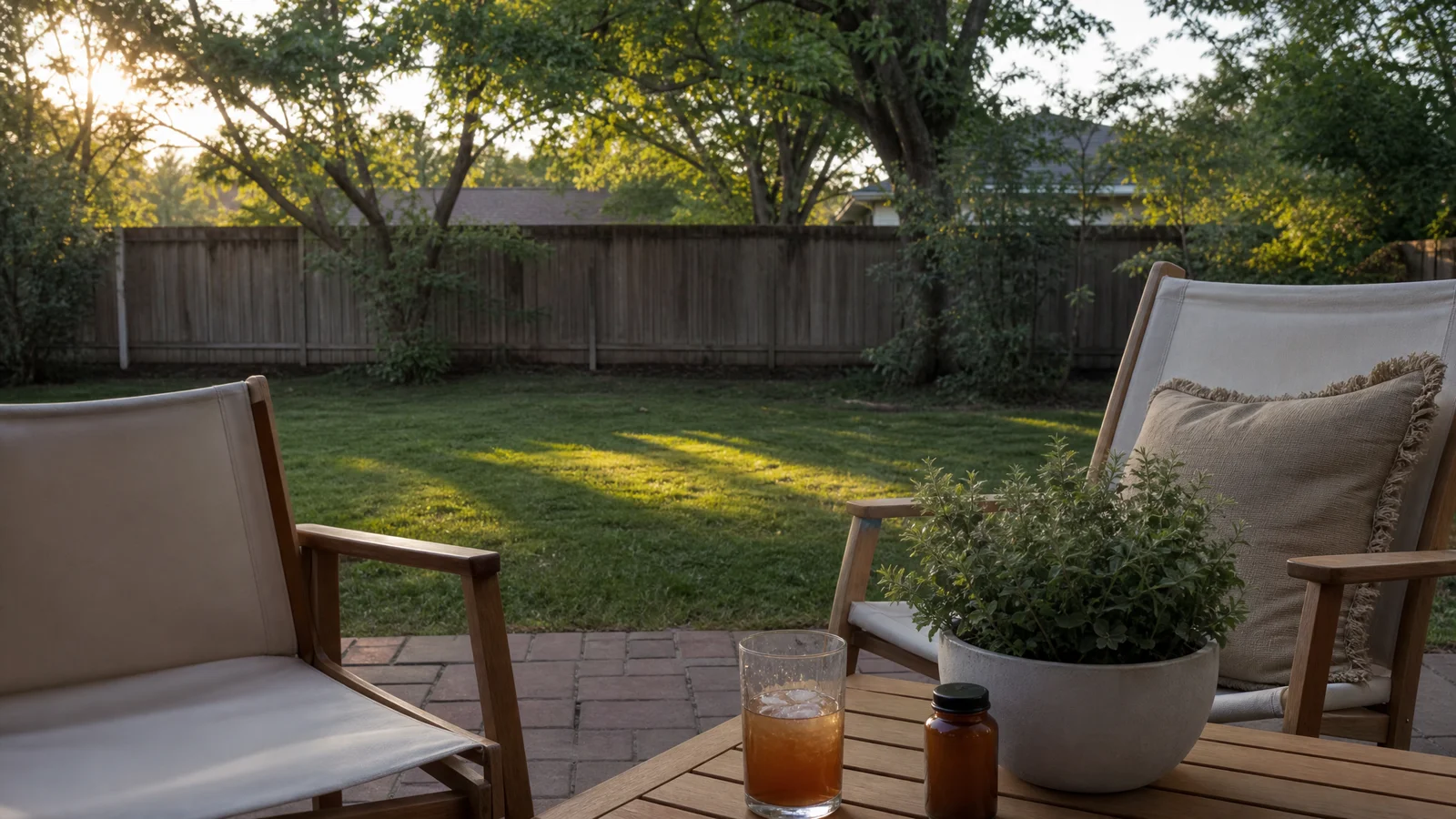
How to Keep Mosquitoes Away in the Backyard
Start with water, not sprays. CDC says to empty and scrub, turn over, cover or throw out anything that holds water once a week, and EPA says mosquitoes can breed in places as small as a bottle cap. Then add screens, covering clothing and a registered repellent. Scented candles and oils are atmosphere, not protection.
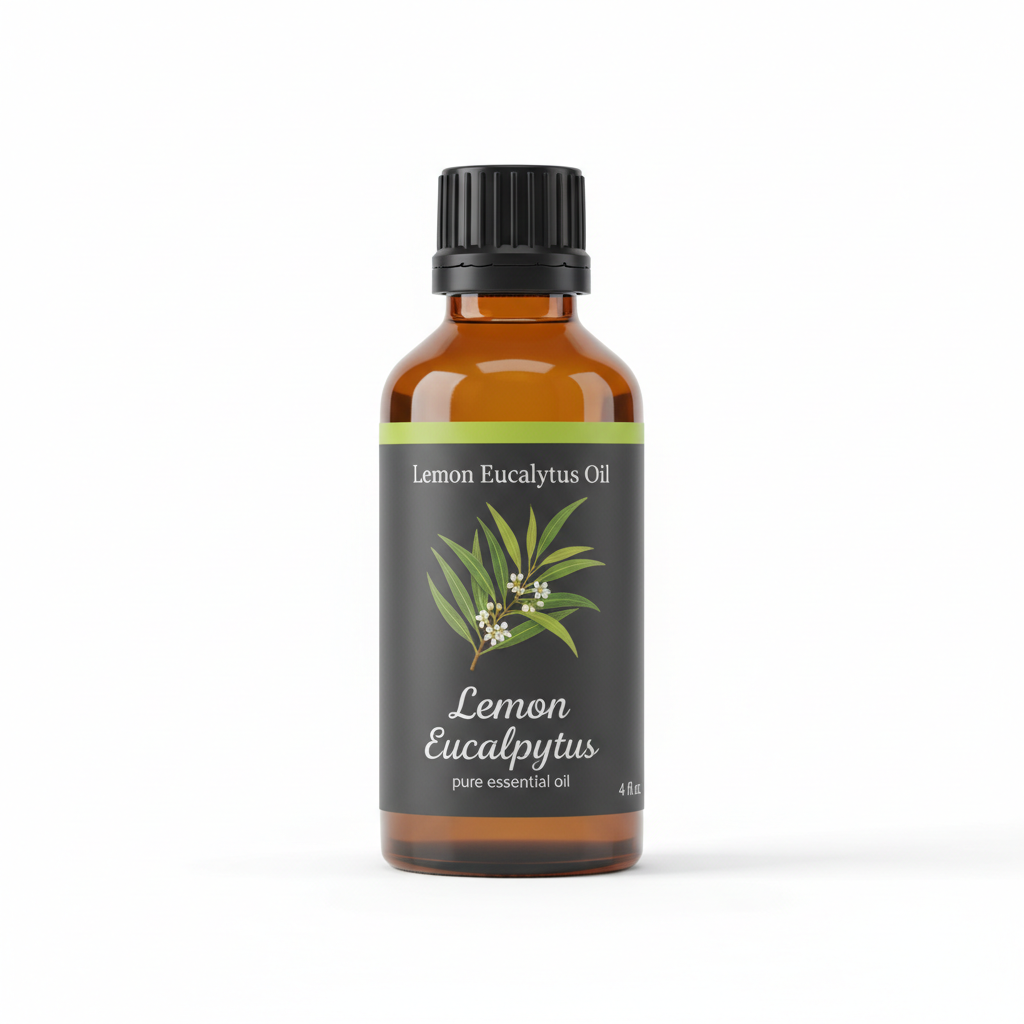
Lemon Eucalyptus Essential Oil
Our own Lemon Eucalyptus Essential Oil, in sizes from 0.5 oz to bulk.
From $9.99
Shop Now →Last reviewed: October 2026. We sell lemon eucalyptus essential oil for fragrance, and we do not claim it repels mosquitoes. Everything below that is about mosquito control comes from CDC and EPA pages we opened.
Where most backyard advice starts in the wrong place
Search results for this topic are mostly product lists: candles, zappers, sprays, plants. They start with how to chase mosquitoes away from where you are sitting. The sourced answer works the other way. Mosquitoes in a yard are usually born in the yard, in standing water, so the biggest lever is the one that stops them being born. CDC's home guidance leads with exactly this: "Once a week, empty and scrub, turn over, cover, or throw out any items that hold water," with tires, buckets and planters as examples.
That matters for a practical reason. A repellent protects one person for a limited time. Removing a breeding site removes mosquitoes from the whole yard, and from the neighbor's too if you are generous with the advice.
Step 1: do a yard audit
EPA says some species lay eggs in places "as small as bottle caps," and lists tree holes, old tires, buckets, toys and plastic covers or tarpaulins. CDC's page on the Aedes mosquitoes that live in many areas of the United States says the females lay eggs on the inner walls of containers holding water, just above the waterline, and need only a small amount of water. That means bowls, cups, tires, barrels and vases all qualify. Walk the yard with that list in mind.
| Where to look | What CDC or EPA says to do | How often |
|---|---|---|
| Buckets, toys, tires, planter saucers, trash containers | Empty and scrub, turn over, cover or throw out (CDC) | Once a week |
| Bird baths, fountains, wading pools, rain barrels | Empty and change the water (EPA) | At least once a week |
| Water storage containers | Cover tightly so mosquitoes cannot get in; use wire mesh with holes smaller than an adult mosquito if there is no lid (CDC) | Check at each use |
| Gutters and low spots | Eliminate standing water (EPA) | After rain |
| Window and door screens | Install or repair and use them (CDC); keep them in good working order (EPA) | Start of season, then spot-check |
| Items you do not use | Throw out anything that holds water | Once, then keep clear |
One caveat we would give you: this list will not remove mosquitoes that fly in from elsewhere. CDC says the Aedes species it describes "will only fly a few blocks" over their lifetime, so your own yard and your immediate neighbors matter most for them. Other species travel differently, and CDC's pages do not give one distance for all of them. The weekly routine therefore helps a lot with container breeders and less with species that breed in larger water bodies. If you suspect a neighbor's pool or a marsh is the source, your local mosquito-control district or health department is the right call.
Step 2: shut them out of where you sit
Screens are the cheapest barrier at the back door. Repair holes, check the corners where the frame meets the wall, and keep screen doors shut. If you have a screened porch or a net-covered seating area, it protects without anything on skin.
Covering clothing is next. EPA says long sleeves, long pants and socks, tucked in to close gaps, keep mosquitoes off skin. In a hot backyard this is not glamorous, but a thin long-sleeved shirt is more dependable than a fragrance.
Step 3: choose a repellent properly
When you are out at dusk and screens and shirts are not enough, CDC and EPA recommend EPA-registered repellents. CDC lists six active ingredients: DEET, picaridin, IR3535, oil of lemon eucalyptus (OLE), para-menthane-diol (PMD) and 2-undecanone. CDC says to apply sunscreen first and repellent second, to reapply as directed, and not to use OLE or PMD products on children under 3. If you are choosing between them, see lemon eucalyptus vs DEET.
We have to be straight about our own shelf. The bottle we sell is lemon eucalyptus essential oil, steam distilled from Corymbia citriodora leaf. It is not an EPA-registered repellent. CDC says: "We do not know the effectiveness of non-EPA registered insect repellents, including some natural repellents." If your question is "what should I spray on my arms before the barbecue," our bottle is the wrong purchase, and our guide to oil of lemon eucalyptus explains why the registered product is different.
A weekly routine that actually gets done
We would not ask anyone to remember eight tasks. Choose a single day, walk a short loop and answer four questions. This routine is our own synthesis of the CDC and EPA items above.
- Is anything holding water that does not need to? Empty it, scrub it, turn it over or throw it out.
- Are the bird bath, fountain and rain barrel emptied or changed, or the barrel covered?
- Do the screens have holes, and do the doors close?
- After rain, did water settle anywhere new, such as a tarp, toy or low spot?
Ten minutes on a Saturday is a modest ask against a season that, per CDC, runs from June to October for West Nile transmission. You may find that the stubborn problem is one item: a clogged gutter, a dish under a planter, a tarp over the woodpile. Fix that one and the rest is maintenance.
What about candles, zappers and area devices?
This is the part most backyard articles overclaim. CDC's page on mosquito control at home covers water removal, screens, larvicides and outdoor adulticides, and it says nothing about citronella candles, bug zappers or other gadgets. We would therefore not tell you they work, and we would not tell you they do not, without a study to point to. Our separate comparison of repellent spray vs mosquito devices looks at what is known, and the citronella question is in lemon eucalyptus vs citronella.
What we do say: if you light a candle for the mood, enjoy the mood. We make no mosquito claim for lemon eucalyptus fragrance, and our guide to a lemon eucalyptus outdoor candle for patio evenings is about scent only. Treat the screens, water and shirt as the protection.
Step 4: use the calendar
CDC says West Nile infection happens during mosquito season, typically June through October, and the number of people diagnosed usually peaks in late August and early September. Timing your evening around that window is our suggestion, and it is not a full answer: CDC's dengue page says mosquitoes can bite during the day and night. Our mosquito and tick season by region page has the rest of the timing, and mosquito-borne diseases in the US covers what is at stake.
Who should get extra care
If young children or pregnant family members will be in the yard, read the label of any repellent first. CDC says not to use OLE or PMD products on children under 3, and says EPA-registered repellents used as directed are safe even for pregnant and breastfeeding women. Our safety guide covers the groups in more detail, and a pediatrician or obstetric provider can answer questions about an individual.
When to call someone else
- A neighbor's or public water source breeding mosquitoes: your local mosquito-control district or health department.
- Pesticide products for the yard: follow the label and check local rules; EPA and CDC both discuss larvicides and outdoor sprays but we are not giving product advice.
- Bites that become infected, or illness with fever after bites: a physician.
Frequently asked questions
How often should I empty standing water?
At least once a week, per CDC and EPA. Picking a fixed day each week makes the routine easier to keep, which is our suggestion rather than a CDC instruction.
Do essential oils keep mosquitoes away from a patio?
We cannot source that claim, and we do not make it for our oil. CDC says the effectiveness of non-registered natural repellents is not known. For protection, use screens, clothing and a registered repellent.
Can a bottle cap really breed mosquitoes?
EPA lists breeding sites "as small as bottle caps." Pick up loose caps, toys and cups after rain.
Can I enjoy lemon eucalyptus scent in the yard anyway?
Yes, for ambiance, in a candle or diffuser used safely. Our shop sells the oil; it is not a bug barrier.
Lemon Eucalyptus Essential Oil
Lemon Eucalyptus Essential Oil from our own shop, in sizes from 0.5 oz to bulk.
From $9.99
Shop Now →