Repellent Spray vs Mosquito Devices: Bracelets, Ultrasonic Repellers, Area Repellers
An EPA-registered skin repellent is the only category here whose effectiveness a regulator has reviewed. Repellent wristbands and ultrasonic repellers have no credible evidence behind them. Area repellers that release an insecticide can reduce mosquitoes close to the unit, but they are a different tool with a small zone, not a substitute for a spray.

Lemon Eucalyptus Essential Oil
Our own Lemon Eucalyptus Essential Oil, in sizes from 0.5 oz to bulk.
From $9.99
Shop Now →Start by sorting the product into one of three categories
Most confusion comes from lumping everything sold for mosquitoes into one shelf. The useful split is by where the product acts and what a regulator checked before it was sold.
- Skin or clothing repellents are applied to you (the active ingredients are compared in our ingredient comparison). In the US, the ones with a registration number on the label have gone through EPA review. The EPA says that number "means the company provided EPA with technical information on the effectiveness of the product."
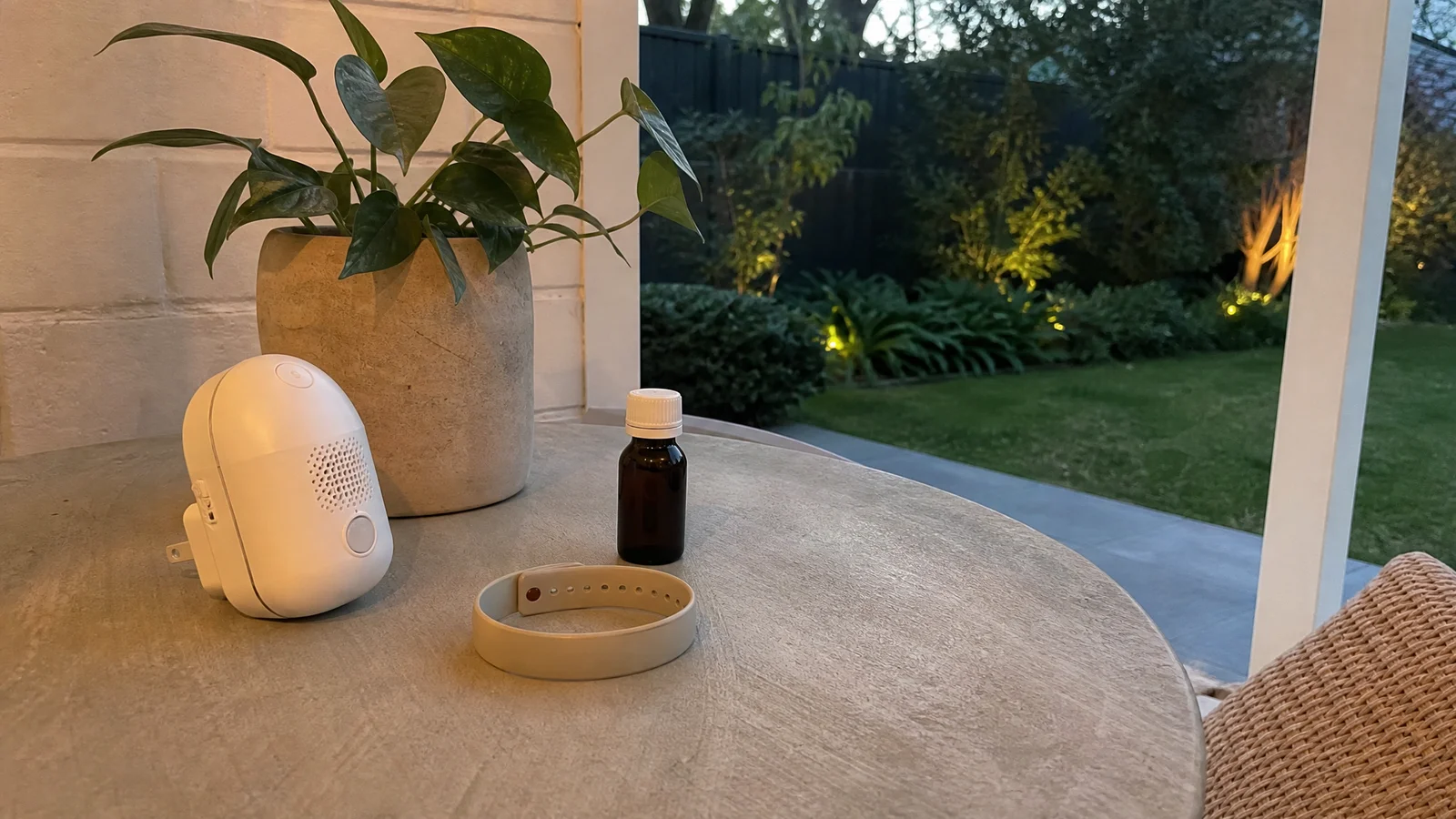
- Wearable devices (wristbands, clip-ons, sonic buttons) are worn and claim to protect the person wearing them.
- Area devices (ultrasonic plug-ins, candles, zappers, emanators) claim to protect a patch of room, patio or yard.
The second and third groups can be sold under a very different rulebook. EPA's consumer guide to pesticide devices says there is "no required premarket review" for devices, that sellers do not submit efficacy data to EPA, and that the establishment number on the box "does NOT indicate that the product has been reviewed." A registration number and an establishment number look alike on a package. They mean opposite things about who checked the claim. Our fuller walk-through of this is in the mosquito repellent myths scorecard.
| Category | Regulator review of effectiveness | Best evidence we found | Our verdict |
|---|---|---|---|
| EPA-registered skin repellent | Yes, before sale | Lab and field studies; CDC and EPA recommend them | Use this first |
| Repellent wristband | None required | No effect in a 2002 NEJM lab trial and a 2017 wind-tunnel study | Skip |
| Ultrasonic repeller | None required | AMCA: "these devices just do not work" | Skip |
| Citronella candle | Varies | No significant effect in a 2017 study; AMCA calls the effect mild | Atmosphere, not protection |
| Metofluthrin emanator or clip-on | Registered insecticide, label-specific | Lab reduction in attraction; pooled field and semi-field reviews show partial reductions | Situational add-on |
Wristbands: the evidence is consistent and old
Fradin and Day tested 15 volunteers in a controlled lab and published in the New England Journal of Medicine in 2002. Among their conclusions, the repellent-impregnated wristbands offered no protection. Fifteen years later, a New Mexico State University team put three bracelets in a wind tunnel against Aedes aegypti. With a human bait 1 m upwind, 88.82 percent of mosquitoes were attracted in the untreated control. The bracelets, which contained geraniol-based oils, drew 84.00, 87.54 and 91.31 percent, none significantly different from the control. The authors reported that many of the products they tested "do not reduce mosquito attraction to humans."
Regulators have acted on the claims as well. In 2016 the FTC announced that the marketers of Mosquito Shield Bands would pay $300,000 after being accused of claiming, without scientific support, a "vapor barrier" within five feet and 96 to 120 hours of protection. That is the pattern to watch for: a precise radius and a precise number of hours with no test behind them.
The same lab study tested a battery-powered sonic button with no active ingredient. Attraction was 91.17 percent, again not different from the control.
Ultrasonic repellers and candles
The American Mosquito Control Association's FAQ is blunt: "The fact is that these devices just do not work." It cites work in which ultrasound in the 20 to 70 kHz range did not change how female mosquitoes oriented in flight (AMCA). EPA's consumer guide lists "high frequency (ultrasonic) sound generators" as a device type, which explains why they reach shelves without an efficacy file at EPA.
Citronella candles are a more honest case. AMCA says they "have a mild repellent effect" but little more than other smoke-producing candles. The 2017 wind-tunnel study found no significant effect from a 3 percent citronella candle at 1 m (90.95 percent attracted). Our comparison of citronella and lemon eucalyptus for biting insects, Lemon Eucalyptus vs Citronella, goes through that evidence in more detail. Bug zappers fare no better: AMCA reports that yards with and without zappers showed no significant difference in mosquito counts, and that most of what a zapper kills is not mosquitoes.
Area repellers: the one device category with real data
Metofluthrin emanators and clip-on units are different. They release a volatile pyrethroid insecticide into the air. In the 2017 wind-tunnel study, the only wearable that worked was a metofluthrin clip-on: 27.14 percent of mosquitoes were attracted at 1 m against 88.82 percent in the control, and the authors noted it killed every mosquito in each replicate. At 3 m its effect weakened (46.89 percent attracted, against a 91.25 percent control).
A 2025 systematic review and meta-analysis in eBioMedicine pooled volatile pyrethroid spatial repellents. It reported an average 56 percent protective efficacy against bites (95% CI 50 to 62) across 58 publications, and 52 percent in the pooled individual-level analysis. It also flagged limits that matter for a backyard buyer:
- Heterogeneity was extreme (I-squared of 99.84 percent), so the average hides wide swings between products and settings.
- Commercial passive devices came in lower, at 37 percent (95% CI 16 to 57).
- Most data are semi-field, and several authors are affiliated with companies that make these products.
Our reading: an emanator is a reasonable add-on for a seated patio gathering with little wind, because the protection zone is small and air movement carries the active away. It is a poor choice as your only protection on a hike, where you move and the air moves. It also answers a different question than a spray does. A skin repellent follows you. An emanator protects a spot. Read the label for the area it claims and the temperature and wind it expects.
Where lemon eucalyptus oil fits, and where it does not
We sell Lemon Eucalyptus Essential Oil, not a mosquito product of any kind. It is not an EPA-registered repellent, and it is not any of the devices above. Our stance page says the same. A candle or diffuser scented with the oil is a scent product, and we make no claim that it keeps mosquitoes away. If you want to use the oil for fragrance on a patio, we explain candle and diffuser use in our outdoor candle article, and the bottles are on the shop page. The refined, registered oil-of-lemon-eucalyptus repellents sold by other companies are covered in our OLE guide.
What to do instead: a priority order
| If your goal is... | Do this first | Then consider |
|---|---|---|
| Not getting bitten while walking, hiking, gardening | An EPA-registered repellent used to the label, plus long sleeves and pants | Nothing in the device aisle changes this |
| Sitting on a patio or deck | Screens, standing-water removal, a registered repellent if bites matter | A metofluthrin emanator within its labeled zone |
| Sleeping or eating indoors | Window and door screens, air conditioning | Repair holes in screens |
| A disease-risk area or trip | A registered repellent, advice from a travel-medicine clinic | Do not rely on bracelets or sound devices |
The CDC's guidance for the US lists the same basics: "Use proven EPA-registered insect repellents," wear loose, long-sleeved shirts and pants, use screens and air conditioning, and once a week empty, scrub, turn over, cover or throw out items that hold water such as buckets, tires, birdbaths and flowerpot saucers (CDC). Source reduction is the one thing no device does, and it is the subject of our backyard guide. The CDC also says: "We do not know the effectiveness of non-EPA registered insect repellents, including some natural repellents."
Five red flags on a device package
- A radius or hour count with no study cited ("5-foot barrier", "120 hours").
- An establishment number presented like approval. For devices it is not approval.
- Disease claims such as Zika or malaria on a product no regulator has reviewed for effectiveness.
- No active ingredient listed, only a "frequency" or "technology".
- Reviews that describe less biting but no comparison with an untreated arm or a registered product.
FAQ
Do mosquito bracelets work?
The two controlled studies we opened found no protection from repellent-impregnated wristbands. Neither one is a field trial, but they agree, and no study we found shows a wristband beating an untreated arm.
Can I use a device and a repellent together?
Yes, for different jobs. A registered repellent covers your skin. An emanator within its labeled zone may lower mosquitoes near a seating area. Follow each label, and check each label for flammability warnings.
Are metofluthrin devices safe?
They are insecticide products with their own labels, and the right authority is the label and the EPA product page. Ask a pharmacist or your health care provider if you have a specific concern, and call Poison Help at 1-800-222-1222 after any unintended exposure.
Why do bracelet reviews still sound positive?
Fewer bites on a wrist covered by a plastic band is not the same as protection for the rest of the body. Without an untreated comparison and a count, a good review is an impression, not a result.
Last reviewed: October 2026
Lemon Eucalyptus Essential Oil
Lemon Eucalyptus Essential Oil from our own shop, in sizes from 0.5 oz to bulk.
From $9.99
Shop Now →Sources & Further Reading
- EPA: Pesticide Devices, a Guide for Consumers
- EPA: Find the Repellent that is Right for You
- CDC: Preventing Mosquito Bites
- Rodriguez SD et al. (2017), Journal of Insect Science 17(1):24
- Fradin MS, Day JF (2002), New England Journal of Medicine 347(1):13-18
- Chen I et al. (2025), eBioMedicine 119:105891, spatial repellent meta-analysis
- FTC (May 24, 2016): Mosquito Shield Bands settlement
- American Mosquito Control Association: FAQ