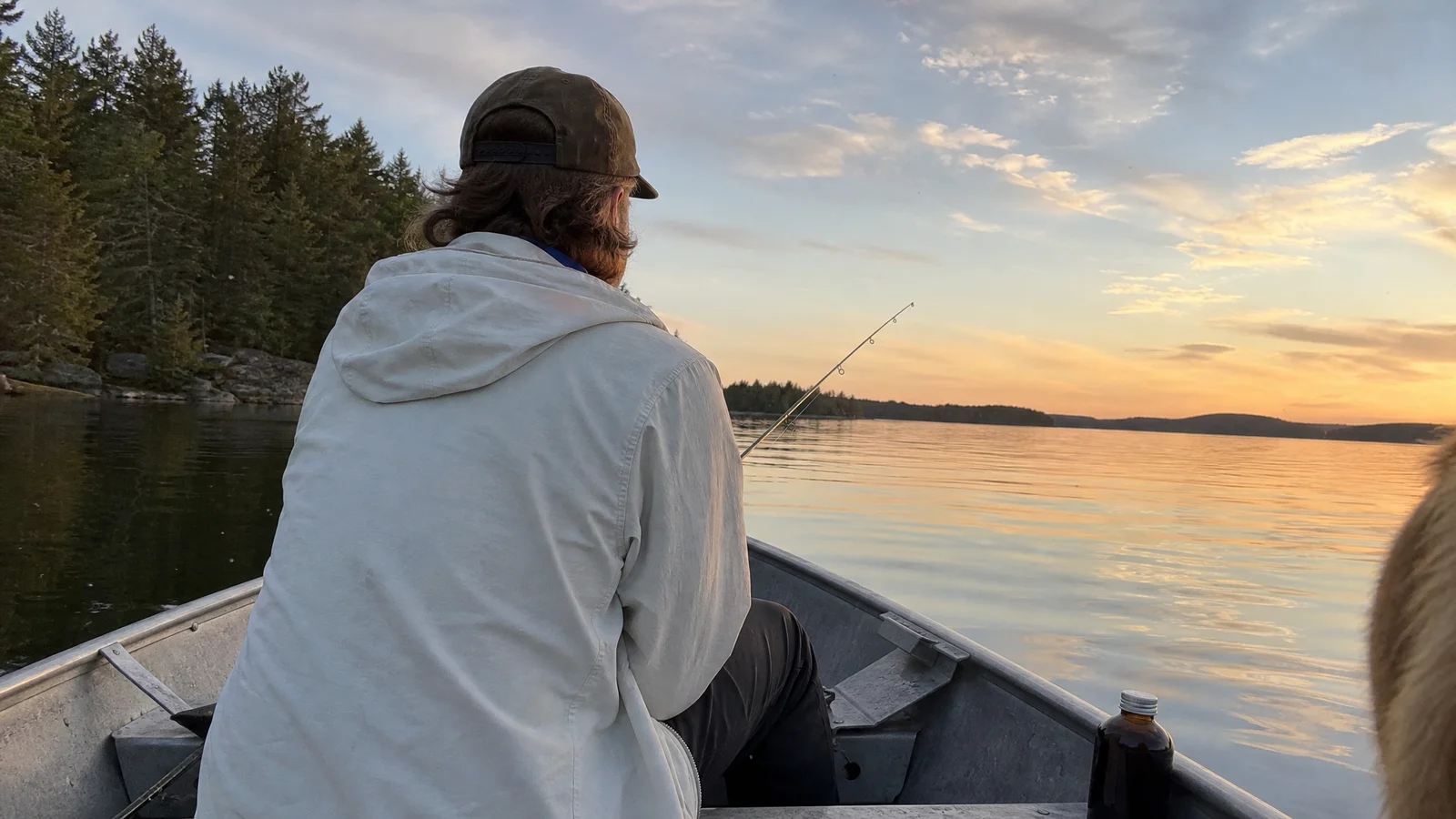
Bug Protection for Fishing and Boating: Mosquitoes, Biting Flies and Midges
On the water, the best fishing hours are also peak mosquito hours, and biting flies add their own problem by day. Plan around clothing, location and an EPA-registered repellent with a label that names the pests you meet. Our lemon eucalyptus essential oil is not a registered repellent and is not part of this plan.

Lemon Eucalyptus Essential Oil
Our own Lemon Eucalyptus Essential Oil, in sizes from 0.5 oz to bulk.
From $9.99
Shop Now →Anglers and boaters get a particular mix of insects: mosquitoes at the shoreline in the early morning and evening, small biting midges around calm, sheltered water, and larger biting flies in the heat of the day. No single product handles all three equally well, and some of them are not handled by repellents at all. This guide sorts the problem into pieces so you can pack for the trip you are actually taking.
A word on what we sell, because "lemon eucalyptus" is all over this subject. Oil of lemon eucalyptus (OLE) is a refined, EPA-registered repellent ingredient found in products from other companies. Lemon eucalyptus essential oil, which is what we sell, is a different material with no EPA repellent registration. We have no affiliation with any repellent brand and sell none. Our stance page says we do not imply otherwise, and OLE versus lemon eucalyptus essential oil explains the difference in detail. Please do not put our oil on your skin, line or gear to keep bugs away.
Start with the schedule: your best fishing hours are the worst bug hours
The Virginia Department of Health says mosquitoes are most active at dusk and dawn, and that the majority of species are active at night. Dawn and dusk are also when many people choose to fish, because that is when they expect fish to feed. That overlap is a trade-off we would state plainly: if you fish at first light and last light, you are scheduling yourself into peak mosquito time, so dress and apply repellent for it before you leave the truck, not after the first bites.
The same Virginia page adds that the Asian tiger mosquito (Aedes albopictus) is also active during the day, so a midday trip is not automatically clear in regions where it lives.
Know your three pests
| Pest | Where you meet it | What the source says | Practical plan |
|---|---|---|---|
| Mosquitoes | Shoreline, backwaters, launch ramps, mostly dusk to dawn | CDC: use an EPA-registered repellent, wear long sleeves and pants | Registered repellent plus clothing; push off into open water if the shore is thick with them (our reasoning) |
| Biting midges ("no-see-ums") | Calm, sheltered water and marsh edges | UNH Cooperative Extension (2009): DEET and picaridin both work on biting midges | Choose a repellent whose label names midges or no-see-ums |
| Deer flies, horse flies | Daytime, around water | Same factsheet: DEET does not work well on them and "no repellents really work on those groups" | Clothing, a hat, and changing location |
That last row is the honest surprise for many anglers. If big flies are the problem, repellent shopping will not solve it, and a product that promises to is making a claim that the extension entomologist we read did not support. The factsheet is from February 2009 and is the only source we opened on fly-by-fly performance, so use it as a caution, not as the last word. We covered pest-by-pest label claims in what bugs lemon eucalyptus repels.
Dress for the water
EPA recommends long-sleeved shirts, long pants and socks to keep mosquitoes off exposed skin, and CDC recommends loose-fitting long sleeves and pants. On a boat in summer that advice meets a real problem, which is heat. Our reasoned compromise is lightweight, loose, long-sleeved fishing shirts, a brimmed hat, and a neck gaiter or buff that can cover the back of the neck. None of those is a tested recommendation from a source; they are the ordinary way to apply the CDC and EPA principle to a hot day.
CDC also recommends clothing and gear pretreated with permethrin. Penn State Extension warns that permethrin should not be applied directly to skin. If you are tempted to buy pretreated fishing apparel, read the garment tag and the product label for what it covers and how many washes it lasts.
Applying repellent when your hands live in water
A repellent label is a legal document, and the UNH factsheet makes the same point: it says products may not be used in a manner inconsistent with their labeling. Four rules from CDC and EPA apply directly to a fishing trip:
- If you use sunscreen, put on sunscreen first and repellent second (CDC). On open water you will likely need both.
- Do not apply repellent on skin under clothing (CDC).
- Use as directed and reapply as directed on the label (CDC).
- Look for an EPA registration number on the label (EPA).
Here is where we have to say what we do not know. Wading, splashing, wiping sweat and handling bait all affect a product, and we have no verified, product-independent figure for how long a repellent lasts on a wet angler. The label is the authority, and some labels carry a repellency awareness graphic, which EPA says communicates repellency time for mosquitoes and ticks and which manufacturers use voluntarily. The wash-off question is handled in does bug spray wash off with sweat or swimming.
Keep the repellent off fish you plan to eat and off bait you are handling. That is a hygiene caution from us, not something we can quote from a regulator, so check what your own product's label says about food and water.
Gear: what repellent can do to your equipment
The UNH factsheet says DEET is greasy and dissolves some plastics and finishes, and says picaridin appears not to, while noting that picaridin was relatively new when it was written. For anglers and boaters that is worth knowing, because rods, reels, sunglasses, electronics and fishing line are plastic or coated, and spray lands on hands first and then on everything you touch. We could not find a source that tests OLE-based products on fishing gear, so we make no claim either way. Read the product's label for a warning on plastics and finishes, and spray away from the boat and gear rather than over them.
On the boat itself
- Standing water on board. CDC says to empty, scrub, turn over, cover or throw out items that hold water once a week. A bucket in the bow or a bait container that has sat since last weekend qualifies. Dump it before you trailer the boat home.
- Shoreline stops. If you step ashore to land a fish or stretch your legs, you step into the zone where mosquitoes rest. CDC notes they rest in dark, humid areas, and shoreline vegetation fits that description by our reasoning.
- Tick exposure on the bank. Walking through tall grass to reach a fishing spot is a tick risk. CDC advises avoiding tall grass and leaf litter, checking your body for ticks after being outdoors, and tumbling dry clothes on high heat for 10 minutes. For a fuller plan see how to prevent tick bites.
What a registered OLE product can and cannot do for you
CDC lists oil of lemon eucalyptus (OLE) and PMD among EPA-registered active ingredients, next to DEET, picaridin, IR3535 and 2-undecanone. It also says not to use OLE or PMD products on children under 3. If you are fishing with a toddler, that rules out OLE and PMD products, and a pediatrician is the right person to ask about alternatives.
The same CDC page says it does not know the effectiveness of non-EPA-registered repellents, including some natural ones. That is the sentence we ask readers to hold onto. A registered OLE product has been through EPA review. A bottle of essential oil has not. If you want to choose a registered product, our guide to choosing a lemon eucalyptus repellent walks through the label checks, and the pillar guide on bug protection for hiking and camping has a kit list that works for the bank as well.
A short pre-trip checklist
| Before leaving | On the water | When you get home |
|---|---|---|
| Check the label for the pests you expect (mosquitoes, midges, ticks) | Sunscreen first, repellent second | Empty water from buckets and bait containers |
| Pack long sleeves, hat and neck cover | Reapply as the label directs | Check yourself for ticks; dry clothes on high heat for 10 minutes |
| Decide whether young children are coming (no OLE or PMD under 3) | Keep repellent away from gear plastics and finishes | Wash hands before eating |
Where our oil actually fits
If you want a clean lemon scent for the cabin or the garage after the trip, our oil is a fragrance material for candles, soap and diffusers; you can see sizes in the shop. It does nothing in the plan above.
Frequently asked questions
Will repellent keep deer flies away?
Not reliably, according to the UNH Cooperative Extension factsheet we read. It says DEET does not work well on deer flies and horse flies. Clothing, a hat and moving to a different spot are more dependable.
Can I use a lemon eucalyptus product on a boat?
An EPA-registered OLE product is on CDC's list for people 3 and older. Check that its label names the pests you meet and read its warnings about plastics and finishes. Essential oil is not a registered repellent.
Is it safe to fish with a baby on board?
CDC says not to use OLE or PMD products on children under 3. Ask a pediatrician about nets, clothing and timing for any very young child.
Last reviewed: October 2026
Lemon Eucalyptus Essential Oil
Lemon Eucalyptus Essential Oil from our own shop, in sizes from 0.5 oz to bulk.
From $9.99
Shop Now →Sources & Further Reading
- Virginia Department of Health, Blue Ridge: Mosquitos
- UNH Cooperative Extension: Insect Repellents factsheet by Alan T. Eaton (2/2009, hosted by Maine DACF)
- CDC: Preventing Mosquito Bites (updated Aug. 28, 2024)
- CDC: Mosquito Control at Home (April 16, 2024)
- US EPA: Tips to Prevent Mosquito Bites
- US EPA: Find the Repellent that is Right for You
- CDC: Preventing Tick Bites
- Penn State Extension: Preventing Tick Bites in the Fall (updated January 19, 2024)