Lemon Eucalyptus Skin Irritation: Rash, Patch Tests and When to Stop
If skin turns red, itchy or swollen after a lemon eucalyptus product, gently wash it off and stop using it. Do not re-test on the same spot. Blisters, spreading rash, swelling of the face or lips, or any trouble breathing need medical care. Poison Help is 1-800-222-1222. A dermatologist can identify the cause.

Lemon Eucalyptus Essential Oil
Our own Lemon Eucalyptus Essential Oil, in sizes from 0.5 oz to bulk.
From $9.99
Shop Now →First, which product are you holding?
The word "lemon eucalyptus" appears on two different kinds of bottle, and the first aid starts from that answer.
- A registered repellent containing oil of lemon eucalyptus (OLE) or PMD, with an EPA registration number on the label. Follow the first aid text printed on that label. NPIC, the National Pesticide Information Center, says to "carefully follow the First Aid instructions on the product label" and to call 800-858-7378 or Poison Control at 800-222-1222 (NPIC). We do not sell these products. We cover how to judge one in our buyer's guide.
- Plain lemon eucalyptus essential oil, such as the oil we sell. It is not a registered repellent, and nothing on this page suggests using it as one.
Either one can irritate skin, and the broader picture is in our lemon eucalyptus safety guide. The difference is that the repellent has label directions written for skin. An essential oil is a concentrated aromatic material, and poison.org says that diluting essential oils "in a carrier oil is the best way to avoid a bad reaction from direct skin contact" (poison.org). Our own shop page gives the same range for topical fragrance use: 0.5% to 2% in a carrier oil, patch test first, and keep it away from eyes, children and pets.
Triage: what you see, what to do now
This table is a sorting aid, not a diagnosis. We are a shop, not a clinic, and we cannot tell you what a given rash is. Use it to decide how fast to act.
| What you notice | What it may be | Do now | Get help when |
|---|---|---|---|
| Redness, itching or mild swelling where it touched | Irritation or an allergic skin reaction | Wash off gently, stop the product, cool compress or petroleum jelly per AAD | It is severe or does not improve |
| Itchy rash that appears hours or days after use | Possible allergic contact dermatitis | Stop the product; keep its label | It spreads, blisters, or returns; see a dermatologist |
| Blisters, burning, large area, face or genitals | Possible significant reaction | Rinse skin with running water for at least 15 minutes, call Poison Help | Right away; poison center decides whether to go to urgent care |
| Oil in the eye | Eye exposure | Remove contacts, irrigate 15 to 20 minutes, then call 1-800-222-1222 | Pain, blurred vision or redness persists |
| Swelling of lips or face, wheeze, trouble breathing | Possible severe allergic reaction | Call 911 | Immediately |
| Swallowed any amount | Ingestion | Call Poison Help; see eyes and swallowing first aid | Do not wait for symptoms |
The sources behind the first-aid rows: poison.org says to "use lots of room temperature running water and rinse for at least 15 minutes" for skin, and to irrigate eyes "for at least 15 to 20 minutes", and that trouble breathing, collapse or seizure means "Call 911 IMMEDIATELY" (poison.org first aid). It also says "Any allergic reaction that includes difficulty breathing should be treated as a medical emergency." NPIC adds that oil of lemon eucalyptus "can cause significant eye damage" and that washing the eye immediately can reduce irritation.
Irritation and allergy are not the same thing
The American Academy of Dermatology describes contact dermatitis as skin that is either irritated or reacting allergically. Irritant reactions build with exposure: "With enough exposure, even everyday things that we touch can irritate the skin." An allergic rash "tends to appear hours or days after your skin touches what you're allergic to." The AAD also names fragrance as a common trigger (AAD).
That timing is why "I tested it for a minute and it was fine" is weak reassurance. An allergy to an ingredient can show up after the test window, and repeated exposure can irritate skin that tolerated the first use. If you reacted once, the safe assumption is that the product, not the day, was the cause.
Why a citronellal-rich oil deserves a patch test
Our shop page lists the oil as high in natural citronellal. We have no lab report on the site and will not quote a percentage. Here is the reasoning we can support. Citronellal as a pure chemical carries a self-classification in the REACH registration data of skin irritant category 2, skin sensitizer category 1B and eye irritant category 2 (NextSDS summary of registration C&L). That is the classification of the isolated chemical, not a measurement of any essential oil, and it is a registrant's self-classification rather than a harmonized EU entry. It is still a fair reason to treat a citronellal-rich oil as capable of irritating or sensitizing skin when used undiluted.
We did not find a human patch-test study on Corymbia citriodora oil itself, and Tisserand Institute's article on eucalyptus species does not address sensitization for this oil. It does mention using the oil "at up to 5%" in a context we are not recommending. Our shop page says 0.5% to 2%, and when two figures differ the cautious one is the one we cite. For the practical dilution arithmetic, see how to dilute lemon eucalyptus oil.
A patch test you can describe honestly
There are two things people call a patch test, and they answer different questions.
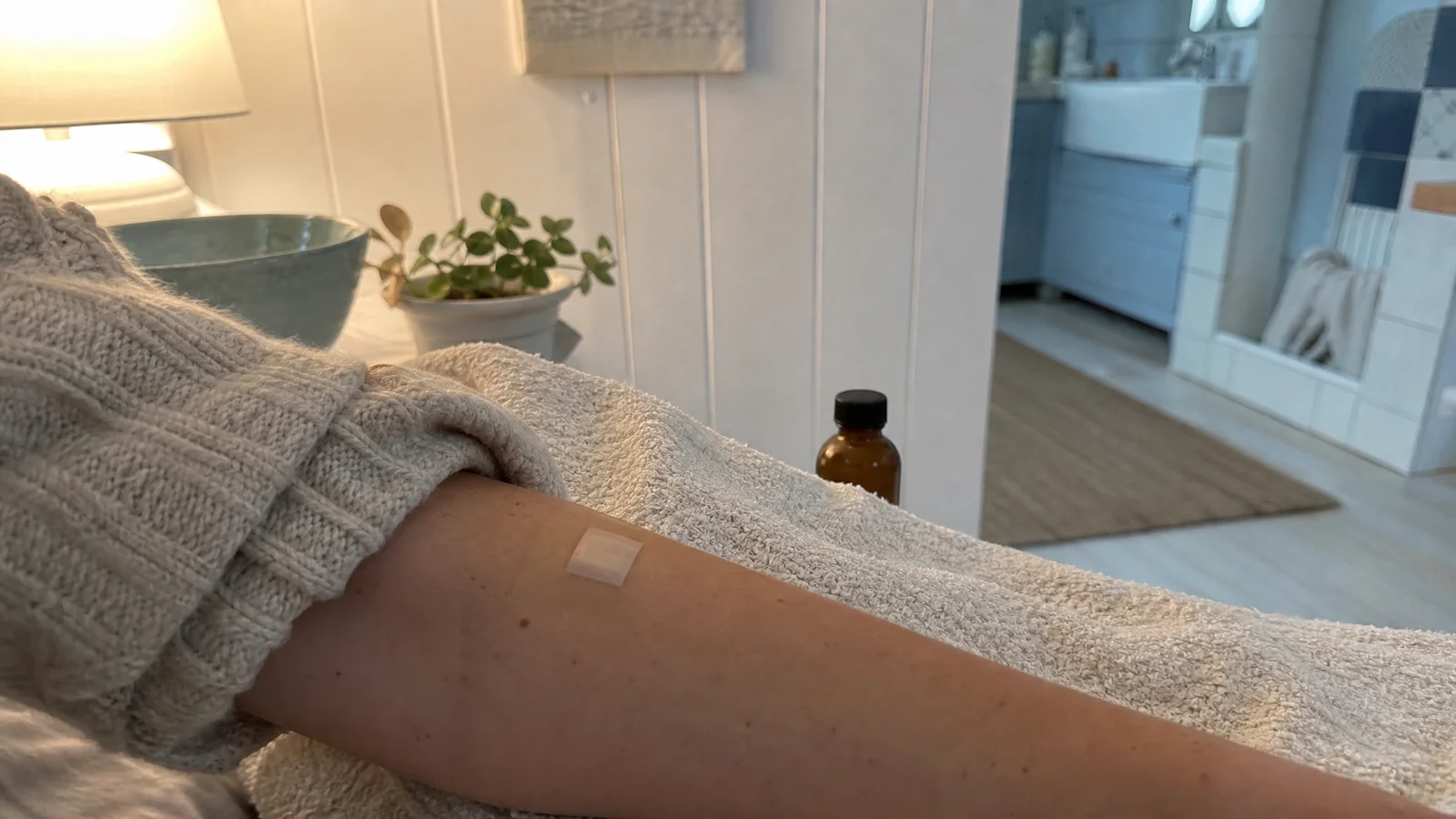
- A home product test, which is what the AAD describes for skin care: apply a quarter-sized amount twice daily for 7 to 10 days to a spot such as the underside of your arm or inner elbow, where it will not be rubbed off, using the amount you would normally use (AAD). If you see "red, itchy, or swollen skin", wash it off gently, stop, and use a cool compress or petroleum jelly. See a dermatologist if it is severe and does not improve.
- A dermatologist's allergy patch test, where small amounts of allergens are placed under patches, usually on the back. The patches stay on for 48 hours and you return 4 to 7 days later because reactions can take time to appear (AAD). This is a clinic procedure, not a home method.
A short 24-hour forearm test is common online, but we could not find the AAD recommending it for consumers, so we do not present it as the standard. If you want certainty about a specific ingredient, ask a dermatologist.
Two limits to be honest about. First, a home test with a diluted oil tells you about that dilution on that day. It does not clear an undiluted oil, a stronger dilution or a registered repellent. Second, it is no test at all for children. CDC says: "Do not use products containing OLE or PMD on children under 3 years old" (CDC), and our shop page says to keep the oil away from children.
Who should skip the experiment and call a professional first
- Anyone with a history of reacting to fragrance, eczema or broken, sunburned or irritated skin. Registered repellent labels also say not to use over cuts, wounds or irritated skin, per EPA (EPA).
- Anyone who has already had a reaction to a lemon eucalyptus product. See a dermatologist, and take the product, label and any ingredient list.
- Anyone pregnant, nursing or caring for an infant (see how to apply a registered repellent correctly for label rules). Ask a physician, midwife or pediatrician before using anything on skin.
What to bring to the appointment
Bring the product or a clear photo of the label, the EPA registration number if there is one, the date and place of the first use, how long it stayed on, and whether anything else touched the skin that day (sunscreen, fragrance, a new soap).
Where the essential oil fits, away from skin
Most of what people buy our oil for does not involve putting it on skin: candles, diffusers, linen sprays and soap. If you want that, the shop page lists the sizes. We do not suggest the oil for bug protection, and this page is not advice for using it that way. If you are weighing a plant-based product against a synthetic one on skin-safety grounds, natural vs synthetic repellents explains why "natural" does not settle that question. The skin-focused dilution notes are in our dilution article for perfumery and home.
FAQ
Can lemon eucalyptus oil cause a rash?
Essential oils in general can: poison.org says skin rash is the most common type of allergic reaction to them. Whether a particular person will react to a particular oil cannot be predicted from outside.
How long after use can an allergic rash show up?
The AAD says it tends to appear hours or days after contact. An irritant reaction can build with repeated exposure.
Is a stinging feeling normal?
We would not call it normal. Wash it off and stop. The AAD lists red, itchy or swollen skin as signs to stop a product.
Should I try a different product on the same spot?
Wait until the skin looks normal, and ask a pharmacist or dermatologist which ingredient to avoid.
Last reviewed: October 2026
Lemon Eucalyptus Essential Oil
Lemon Eucalyptus Essential Oil from our own shop, in sizes from 0.5 oz to bulk.
From $9.99
Shop Now →Sources & Further Reading
- poison.org: Essential oils, poisonous when misused
- poison.org: First aid for poisonings
- American Academy of Dermatology: Contact dermatitis
- American Academy of Dermatology: How to test skin care products
- American Academy of Dermatology: Patch testing
- NPIC: Insect Repellents Fact Sheet
- EPA: Using Insect Repellents Safely and Effectively
- CDC: Preventing Mosquito Bites
- NextSDS: citronellal registration classification summary
- Tisserand Institute: Types of eucalyptus, uses and safety