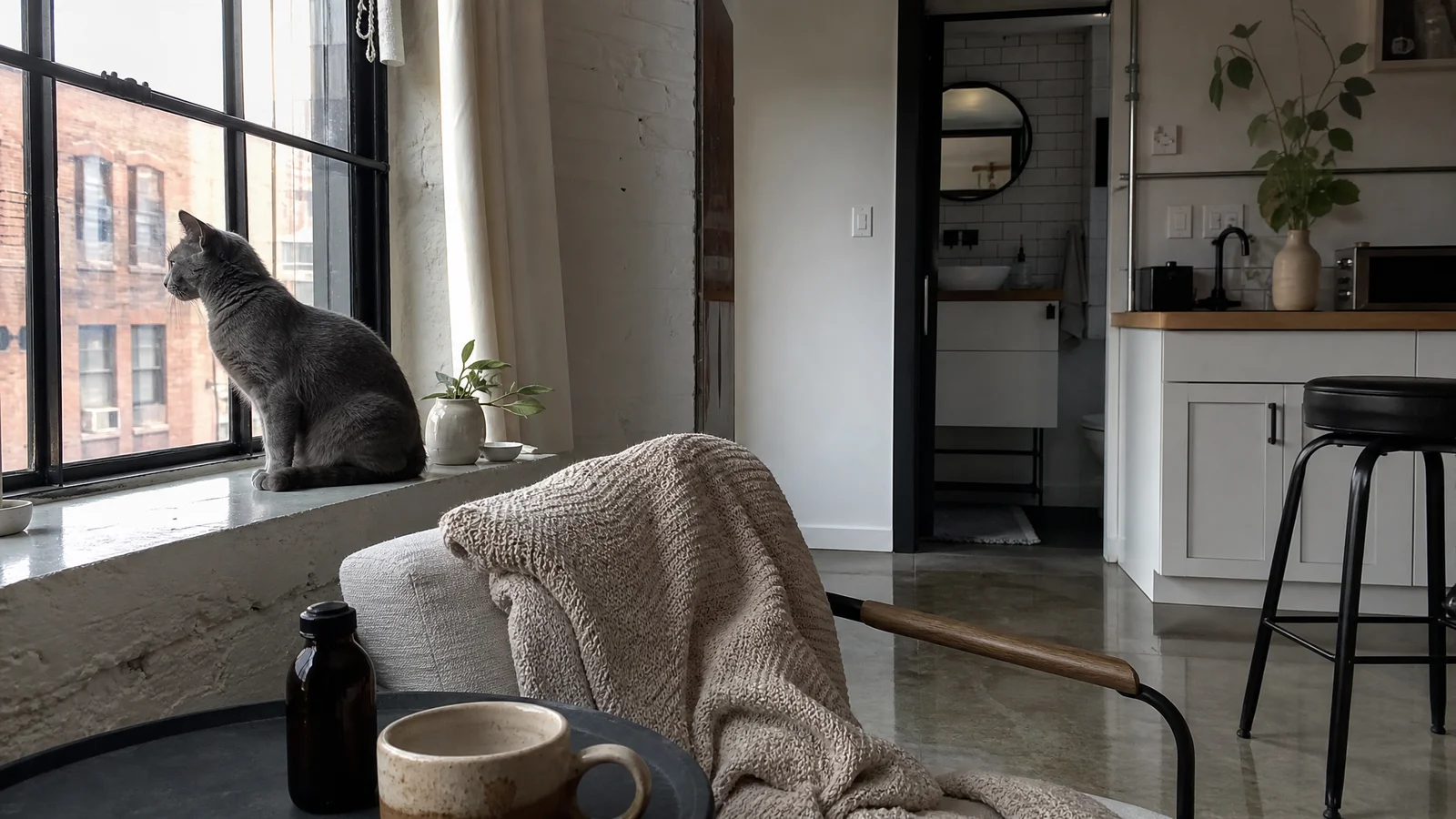
Is Lemon Eucalyptus Safe for Cats?
No, we would not call it safe for cats. ASPCA lists eucalyptus as toxic to cats, and Pet Poison Helpline names eucalyptus oil among essential oils that poison cats, warning that the higher the concentration, the greater the risk. Keep lemon eucalyptus oil, sprays and diffusers away from cats, and call a veterinarian if one is exposed.

Lemon Eucalyptus Essential Oil
Our own Lemon Eucalyptus Essential Oil, in sizes from 0.5 oz to bulk.
From $9.99
Shop Now →Why cats get their own page
Our article on lemon eucalyptus oil around dogs and cats treats both animals together, and the companion dog guide goes deeper on dogs. Cats deserve a separate page because the veterinary toxicology sources single them out. Pet Poison Helpline's page on essential oils and cats says cats lack an essential enzyme in the liver that makes it harder for them to process and clear certain compounds, and that oil settling on a cat's fur can be absorbed through the skin or swallowed when the cat grooms (Pet Poison Helpline).
We sell lemon eucalyptus essential oil, bottled 100% pure and undiluted. That detail matters here. The same Pet Poison Helpline page says "The higher the concentration of the essential oil (i.e. 100%), the greater the risk to the cat," and that concentrated oils should never be applied directly to cats. Our shop page already says to keep the oil away from pets. This article is the longer explanation of why, and what to do in a household with a cat. It is general information, not veterinary advice; your veterinarian knows your cat.
What the sources say
- ASPCA: the eucalyptus entry reads "Toxic to Dogs, Toxic to Cats," names "Essential oils: eucalyptol" as the toxic principle, and lists "Salivation, vomiting, diarrhea, depression, weakness" (ASPCA).
- Pet Poison Helpline, eucalyptus page: titled "Eucalyptus Is Toxic To Cats." Small ingestions of a few leaves or low-concentration oil cause minor nausea; highly concentrated oil "can result in severe signs including neurologic abnormalities and rarely, kidney impairment" (Pet Poison Helpline).
- Pet Poison Helpline, essential oils and cats: names eucalyptus oil in its list of oils toxic to cats, with signs including drooling, vomiting, tremors, wobbliness, respiratory distress, low heart rate, low body temperature and liver failure.
The same caveat as for dogs applies. These entries speak of "eucalyptus" without separating Corymbia citriodora, the lemon-scented gum our oil comes from. We know of no source that clears it, so we treat it as part of the cautioned group.
Household risk checklist
| Source in the home | Why it matters for a cat | What we would do |
|---|---|---|
| Active diffuser (ultrasonic or nebulizing) | Pet Poison Helpline: emits microdroplets that can land on a cat's fur, to be absorbed or licked off. | Do not run one where a cat lives. If you do anyway, see the diffusing guide for the precautions in that sourced list. |
| Passive diffuser, reed sticks, warmers, candles | Mainly breathing irritation unless oil reaches skin or is swallowed (Pet Poison Helpline). A tipped bottle changes that. | Place high and stable, in a room the cat cannot enter. |
| Open bottle or spill | 100% oil is the highest-risk form. | Cap tightly after every use; wipe spills immediately; store out of reach. |
| Cleaners, linen sprays, wax melts scented with the oil | Residue on floors and fabric can reach paws and fur, then the cat's mouth. | Keep scented products off surfaces cats use. This is our reasoning from the grooming statement, not a published test. |
| Human bug spray on skin or clothing | ASPCA: repellents can be toxic to pets unless made for animals. Cats groom and rub against people. | Let it dry, and keep the cat away from sprayed skin and clothes. |
| Dog flea or tick product containing permethrin | Pet Poison Helpline: cats do not tolerate permethrins and have been exposed through the family dog. | Ask your veterinarian before buying; keep animals completely separate until the product dries. |
| Permethrin-pretreated clothing or gear | We found no source on the cat risk of worn gear. Laundering and handling are label questions. | Read the label and ask your veterinarian. See lemon eucalyptus vs permethrin. |
The "never do" box
- Never apply lemon eucalyptus oil to a cat, diluted or not. We know of no source that gives a safe dilution for cats.
- Never use a human repellent, OLE or any other, on a cat.
- Never use a dog flea or tick product on a cat.
- Never confine a cat in a room with a running diffuser or open oil.
- Never wait to see whether signs get worse. Respiratory signs such as labored or fast breathing, coughing or wheezing are never normal in cats, per Pet Poison Helpline.
If your cat is exposed
- Move the cat to fresh air and away from the product. Pet Poison Helpline advises seeking veterinary help if signs do not resolve; a cat with breathing trouble that does not quickly improve in fresh air needs emergency veterinary care.
- Keep the container so you can give the exact product and concentration.
- Call your veterinarian, ASPCA Animal Poison Control at (888) 426-4435, or Pet Poison Helpline at (855) 764-7661 (it says it is staffed 24/7 and lists an incident fee).
- Do not bathe, induce vomiting or give anything by mouth unless the veterinarian or poison line tells you to. The right step depends on what the cat touched or swallowed.
If a person also had contact, call Poison Help at 1-800-222-1222; see our first-aid page. The wider overview is in Is lemon eucalyptus safe?
Where common advice goes wrong
Three pieces of advice circulate that the sources do not support. First, "it is fine if it is diluted": Pet Poison Helpline ties risk to concentration, which is not the same as saying a diluted oil is safe, and it still describes absorption and licking as the exposure routes. Second, "my cat is not bothered by the smell, so it is okay": a cat that does not flee is not evidence of safety, because the concern is what lands on fur and what the liver can clear, not whether the cat objects. Third, "natural oils are gentler than chemical products": for cats, ASPCA's and Pet Poison Helpline's lists include plant-derived oils alongside synthetic insecticides. Natural origin does not move an ingredient off the caution list.
What we can say with confidence is limited and we would rather keep it that way: eucalyptus is listed as toxic to cats, concentrated oil is the highest-risk form, grooming is a route of exposure, and a veterinarian should be the one to decide anything beyond avoidance. If you have an indoor-only cat, a kitten, a senior cat or a cat with a liver or breathing condition, the margin for error is smaller, and that is a conversation for the person who has examined the cat.
Our honest position for cat households
If you live with a cat and want a bug measure, the oil we sell is not the answer, for the usual reason (it is not a registered repellent) and a second one specific to cats (it is concentrated and cats are sensitive). If you want it for a candle, soap or fragrance project, make and store the finished goods where the cat does not go, and ask your veterinarian before scenting any room the cat uses. Some households will decide not to keep the oil at all, and that is a reasonable decision. Browse the shop only if your setup keeps the oil sealed and out of reach.
Questions to ask your veterinarian
- Given my cat's age and health, should I stop using any diffuser or scented product in the home?
- If I have a dog on a flea or tick product, how long should the animals stay apart?
- What signs should send me to an emergency clinic rather than a phone call?
- Is it safer to keep essential oils out of the home altogether?
- Does my cat's age, kitten stage or any liver or breathing condition change what you advise?
Frequently asked questions
Is lemon eucalyptus oil toxic to cats?
ASPCA lists eucalyptus as toxic to cats, and Pet Poison Helpline names eucalyptus oil among oils that poison cats. Neither entry separates lemon eucalyptus, so we treat it as included.
Is diffusing lemon eucalyptus around a cat safe?
Pet Poison Helpline describes active diffusers as the riskier type for cats because droplets can land on fur. We advise not diffusing where a cat lives without your veterinarian's input.
My cat licked a little diluted oil. What now?
Call your veterinarian or a poison line now rather than waiting for signs. Have the label and concentration ready.
Can I use an OLE bug spray on myself with a cat at home?
Let it dry before the cat contacts your skin or clothes, and ask your veterinarian. ASPCA warns that human repellents can be toxic to pets.
Last reviewed: October 2026. Not veterinary advice.
Lemon Eucalyptus Essential Oil
Lemon Eucalyptus Essential Oil from our own shop, in sizes from 0.5 oz to bulk.
From $9.99
Shop Now →