Garden Mosquito Control: Start With the Saucers
Ask a gardener where the mosquitoes come from and the honest answer is usually "from my own flowerpots." Between saucers, watering cans and a wheelbarrow that fills after every rain, a garden is generous with the small pools mosquitoes need. The good news is that the best defence is mostly tidying, timing and the right shirt.

Lemon Eucalyptus Essential Oil
Our own Lemon Eucalyptus Essential Oil, in sizes from 0.5 oz to bulk.
From $9.99
Shop Now →Start with the water you already have
CDC's advice is simple: once a week, empty and scrub, turn over, cover or throw out anything that holds water. Its list includes buckets, planters, birdbaths, flowerpot saucers, toys and trash containers, and a garden has all of them. EPA adds rain barrels and bird baths to refresh weekly. Walk the beds with that list and you will probably find a dozen candidates:
- plant saucers and nursery pots lying on their sides
- buckets, watering cans and wheelbarrows left upright
- birdbaths and shallow dishes for pollinators, which are best emptied and refilled with fresh water
- rain barrels, which need tight lids or fine screens
CDC also says mosquitoes rest in dark, humid places such as under patio furniture, carports and garages. For a gardener that points at the shed and the shrub corner. Our backyard guide carries the same thinking out to the whole yard. A repellent keeps a mosquito off you for a while; emptying a saucer stops that mosquito from ever hatching, which is why we would start there.
Move the long jobs to midday
The Virginia Department of Health says mosquitoes are most active around dusk and dawn, and that most species are active at night. Weeding, planting and pruning fit nicely into the middle of the day. Watering and picking, which many of us do in the evening, happen to line up with peak mosquito hours, so watering in the morning when you can makes sense.
The same page notes that the Asian tiger mosquito also bites during the day. If you are being bitten at noon beside the hedge, you may be dealing with that species, and the answer is the same as for evenings: cover up and look for small containers of water nearby.
Dress for the bed you are kneeling in
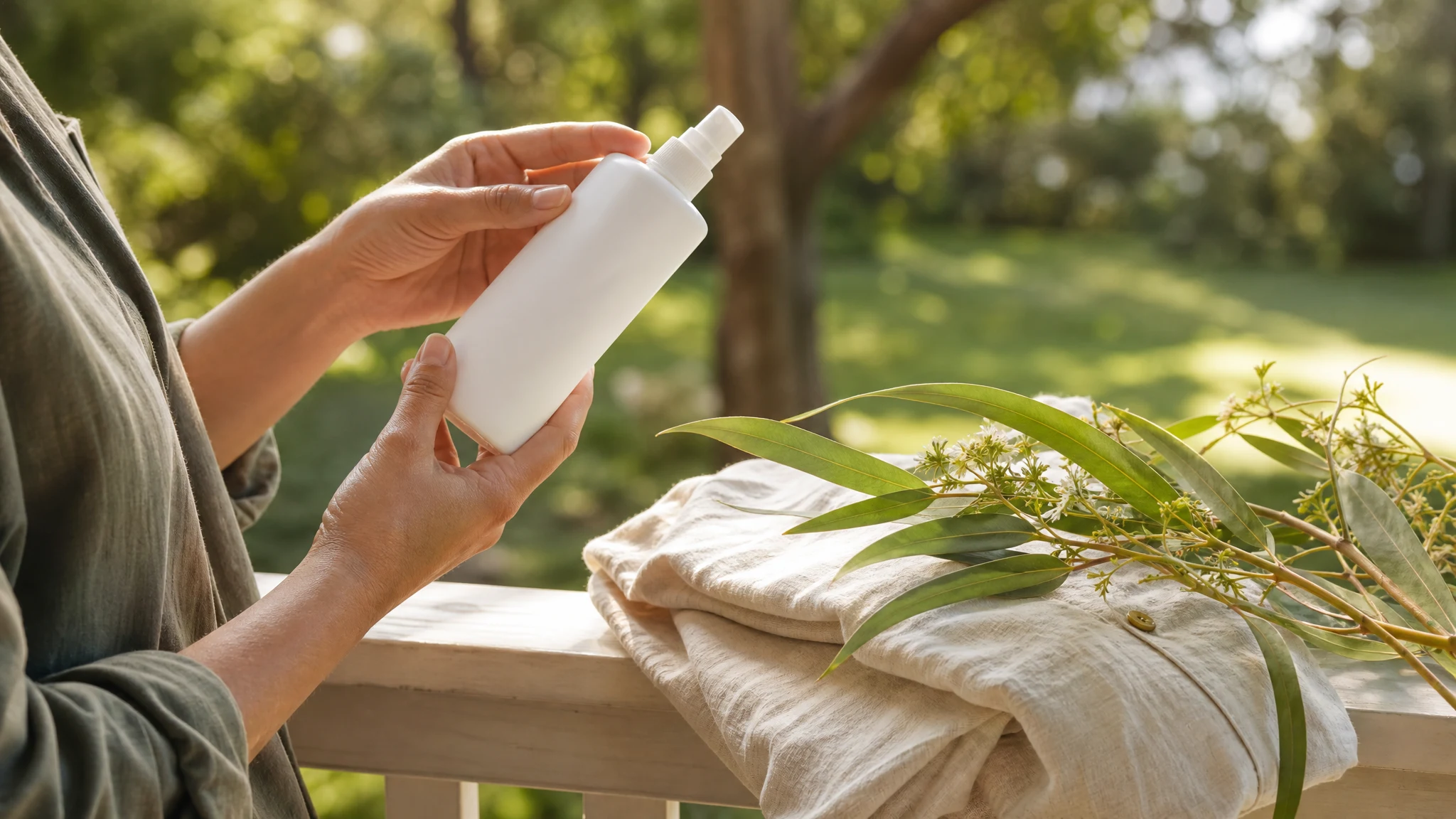
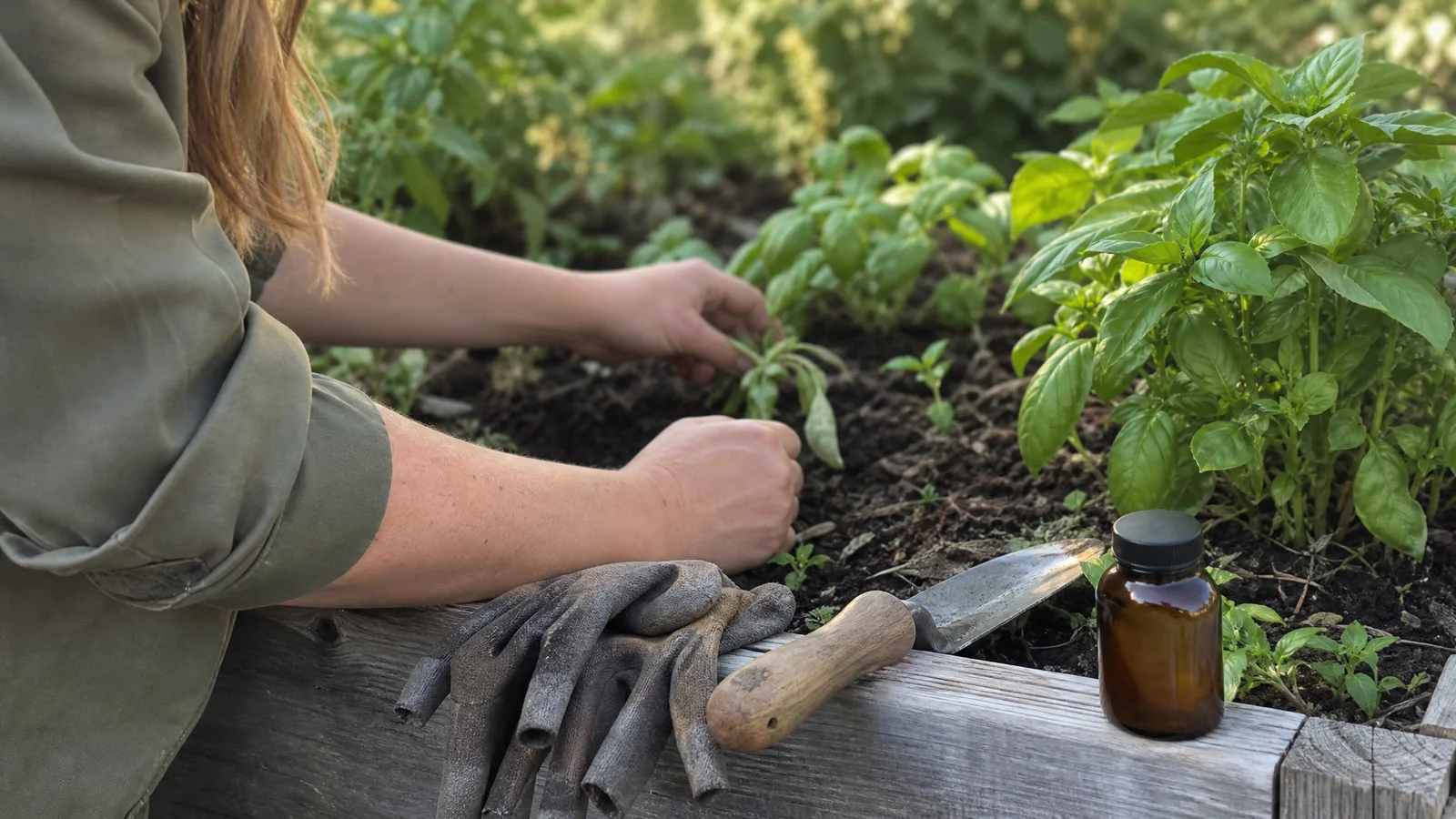
EPA suggests long sleeves, long pants and socks, with shirts tucked into pants and pants into socks. CDC suggests loose-fitting clothes, which leave a little air between cloth and skin. A pair of gloves and a straw hat finish the job nicely.
Ticks change the picture at the garden edge. CDC advises staying out of tall grass and leaf litter when you can, and that is exactly where you are when you rake under shrubs or cut back the base of a hedge. Pants tucked into socks keep ticks on the outside of your clothing, and CDC recommends checking your body for ticks after being outdoors and tumbling dry clothes on high heat for 10 minutes. Our tick prevention guide gives the whole routine.
CDC also lists clothing and gear treated with permethrin, and says permethrin products should not be applied directly to skin. If you have cats, read the pet precautions on the label before treating anything that will come inside.
Choosing a registered repellent for what is left
We sell lemon eucalyptus essential oil, which is a different material from the oil of lemon eucalyptus (OLE) found in some EPA-registered repellents made by other companies. Our oil is not a registered repellent, so for the garden we point you to a registered product from a pharmacy or garden centre. The guide to OLE and the essential oil sorts out the names.
CDC lists DEET, picaridin, IR3535, OLE, PMD and 2-undecanone as registered active ingredients and says it does not know how well non-registered products work, including some natural ones. A few practical points from CDC and EPA:
- Look for the EPA registration number and read which pests the label names. If your garden edge is tick country, choose a label that lists ticks, since EPA says registration reflects review for mosquitoes and ticks and its search tool can filter for either. That choice is our reasoning, but it follows from the label wording.
- If you use sunscreen, put it on first and repellent second.
- Do not use OLE or PMD products on children under 3 (CDC).
- Follow the label for reapplying. Sweaty, digging hands are the situation the label has to answer, and this piece on sweat and swimming explains how to read it.
Spray repellent away from the vegetable bed and wash your hands before you harvest. That is a handling habit rather than a label quotation, so check your product's directions as well.
A weekly water round
Pick one morning a week and make it the water round. Take a bucket, walk the beds, and tip out whatever has collected: saucers, the dish under the herb pots, the lid of the compost bin. It takes about as long as a cup of coffee, and soon you will know your garden's usual puddles by heart.
It helps to give the round some company. Pair it with deadheading or a quick look at the tomatoes, so it never feels like a separate chore. Any habit that rides along with something you already enjoy is a habit that lasts.
Choose where to sit
Since CDC points to dark, humid corners as places mosquitoes rest, it is worth thinking about where you put the chairs. A bench out in the open, where air and light reach it, is a nicer place to linger than one tucked behind dripping shrubs. Save the shady corner for the ferns.
A garden evening, thought through
Picture the routine this way: water the beds in the morning, tip out the saucers on Saturday, kneel in the beds at midday, and if you do go out at dusk, put on long sleeves first. If you live where mosquito-borne illness is a local concern, or you are pregnant or buying for a child, your physician, pediatrician or local health department can tell you more than any garden article can.
Do all that and the evening in the garden is mostly about the tomatoes.
Lemon Eucalyptus Essential Oil
Lemon Eucalyptus Essential Oil from our own shop, in sizes from 0.5 oz to bulk.
From $9.99
Shop Now →