Tick Bite Prevention: What to Do Before and After
Ticks do not fly, pounce or buzz. They climb. A tick waits on a grass blade or shrub, steps onto whatever brushes past, and then crawls upward looking for a spot to settle. That one fact explains the whole tick routine: the most useful steps are the ones that happen after you come indoors.

Lemon Eucalyptus Essential Oil
Our own Lemon Eucalyptus Essential Oil, in sizes from 0.5 oz to bulk.
From $9.99
Shop Now →Why the check beats the spray
Because a tick walks, a repellent on your forearms does nothing for one that has already reached your waistband. CDC's guidance is therefore a set of habits, not a single product. Our view is that anyone spending time in grass, brush or woods should treat the tick check as the step they never skip, with everything before it lowering the odds that a tick gets to you in the first place.
The timing supports that. CDC says transmission of the Lyme disease bacterium generally requires that a tick be attached for more than 24 hours, so finding and removing a tick early matters. Penn State Extension likewise says removing a tick before it has been attached for 24 hours lowers the risk of Lyme disease.
Make it a ritual
The tick check works best when it is boring. Pick a spot by the door and make it the place where shoes, hats and packs get shaken out and set down before anyone goes further inside. Hang a mirror in the hallway if you can. When the routine is the same every time, you do not have to remember it.
Families do well when the check becomes a habit rather than a chore. Take turns being the one who looks, and keep the tone matter-of-fact instead of worried.
Before you go out
Choose your path. Ticks like shade and tall shrubs, and Penn State notes that blacklegged ticks are most often found in forested areas with shade and tall shrubs. CDC advises avoiding grass and leaf litter where you can and walking in the center of trails, so brush is not sweeping your legs.
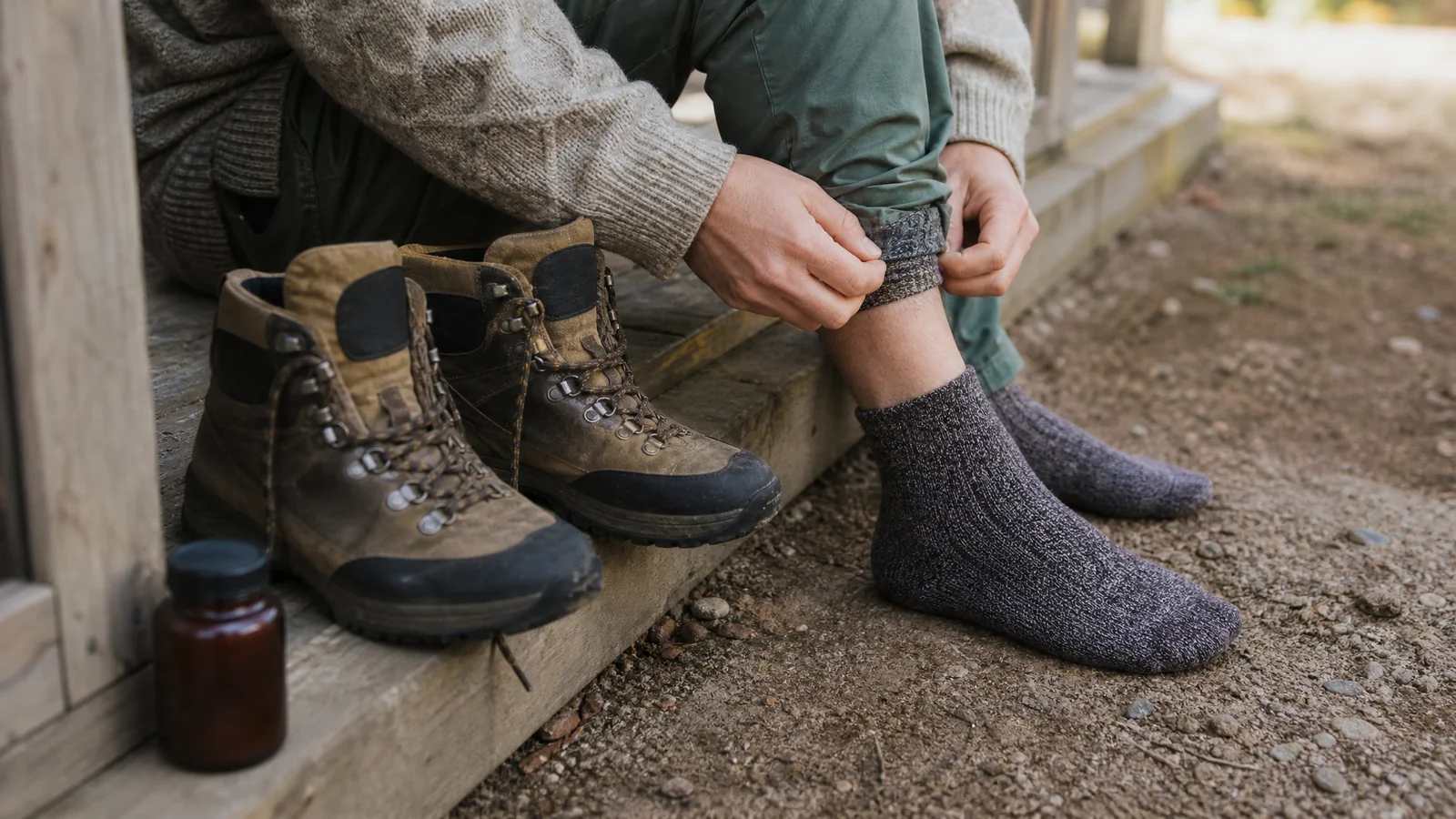
Dress the part. Ticks need skin to bite, so long pants, long socks and long sleeves help. CDC also recommends clothing and gear treated with 0.5% permethrin, which stays protective through several washings, and says you can buy pretreated clothing as well. Permethrin is for clothing, not skin: Penn State's wording is to follow label instructions and not apply it directly to skin, and since pets can be sensitive to permethrin, read the label's pet precautions. Our permethrin comparison explains how clothing treatments and skin repellents do different jobs.
Choose a registered repellent. CDC lists EPA-registered products containing DEET, picaridin, IR3535, oil of lemon eucalyptus (OLE), PMD or 2-undecanone, and says to look for the registration number, put sunscreen on first and repellent second, and avoid OLE or PMD products on children under 3. The label should name ticks, since registrations can cover mosquitoes, ticks or both. We sell lemon eucalyptus essential oil, which is not a registered repellent, so the registered OLE products CDC mentions are separate products made by other companies. Our article on lemon eucalyptus and ticks goes through the difference.
When you come inside
Here is the order that CDC describes, and it works best done right at the door:
- Check clothing, coats and daypacks. Ticks can ride indoors on gear and on pets and attach later. Check pets too, and ask your veterinarian about tick protection for them.
- Dry your clothes. Tumble dry on high heat for 10 minutes to kill ticks on dry clothing; damp clothes may need longer. If they need washing, use hot water, because CDC says cold and medium water will not kill ticks.
- Shower within two hours. CDC says this may reduce the risk of Lyme disease and other tickborne illness, and it is a natural moment for the check.
- Look carefully with a mirror. CDC names the spots: under the arms, in and around the ears, inside the belly button, behind the knees, in and around the hair, between the legs and around the waist. Penn State notes that ticks prefer covered, enclosed areas. Check children's bodies too.
If you find a tick, Penn State advises removing it promptly with tweezers. If a rash or fever turns up within several weeks, or you are unsure about a bite, your physician is the person to call.
Slow down for the hard-to-see places
Good light and a slow hand are your best tools. Run your fingertips over your scalp and behind the ears, because a small bump you can feel is easier to find than a small dot you can see. Ask a partner to look at your back, and take your time with children, whose hair and folds of skin can hide a lot.
If you are unsure what you are looking at, take a clear photo so you can show it to your clinician and do not guess.
Know the season
The calendar surprises people. CDC says nymphs, about the size of a poppy seed, are most active from April through July, and adult blacklegged ticks, about the size of a sesame seed, are most active in early spring and fall. Penn State says adults can be found looking for a host in October and November. Our pieces on fall tick season and mosquito and tick season by region add the regional picture. Species and seasons vary by state, so your state health department or extension service has the local answer.
None of these steps is complete protection on its own, which is why the habit of combining them is the point. Make the check automatic, and the rest gets easier.
Lemon Eucalyptus Essential Oil
Lemon Eucalyptus Essential Oil from our own shop, in sizes from 0.5 oz to bulk.
From $9.99
Shop Now →