How to Apply Insect Repellent: A Step-by-Step Routine
Most people put repellent on the way they put on lip balm: quickly, at the door, without a second thought. A few small habits make that routine safer and help the product do its job, and they come straight from EPA and CDC. This guide is about EPA-registered repellents, including registered oil of lemon eucalyptus (OLE) and PMD products. Our own essential oil is not one of them.

Lemon Eucalyptus Essential Oil
Our own Lemon Eucalyptus Essential Oil, in sizes from 0.5 oz to bulk.
From $9.99
Shop Now →Start with the label
EPA's advice is to read and follow the label directions to understand how much to apply, and its page on using repellents ends with a line worth remembering: the label is your guide to using these products safely and effectively. CDC says it more briefly: always follow the product label instructions. Everything below is general guidance, and your bottle may differ in its details, such as how often you can reapply.
The order of operations
- Sunscreen first, repellent second. CDC advises sunscreen first and repellent after, as separate products. The American Academy of Pediatrics advises against sunscreen and repellent combinations, since sunscreen needs reapplying more often.
- Exposed skin and outer clothing only. EPA says to apply repellents only to exposed skin and clothing, and not under clothing.
- Use enough to cover, no more. EPA advises applying the amount the label indicates and not overusing the product. If you skip the label directions, the product may not work as well as you expect.
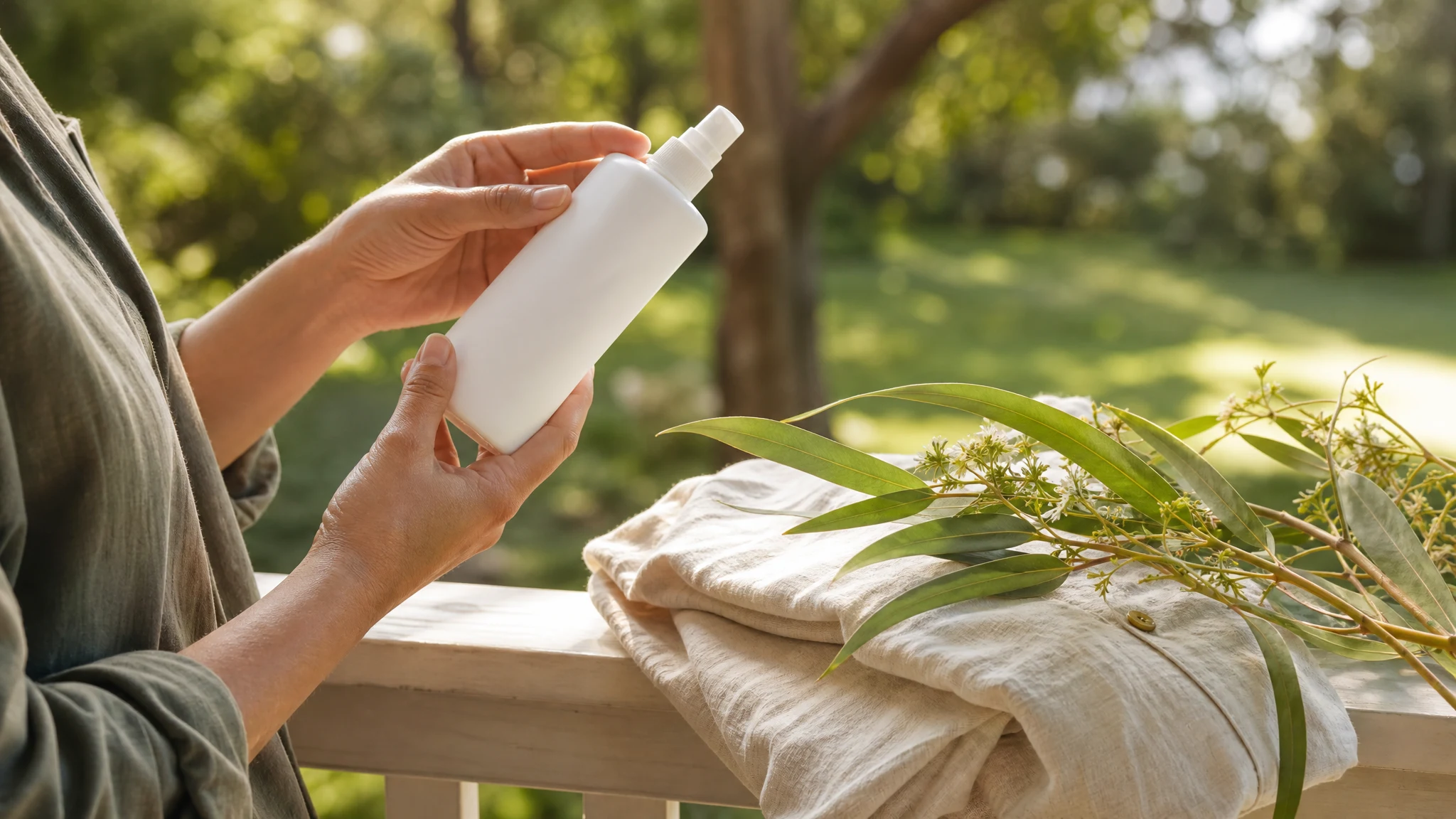
- Faces by hand. With a spray, do not spray directly onto your face. Spray onto your hands first, then apply, staying clear of the eyes and mouth and going lightly around the ears.
- Leave cuts alone. Never use repellent over cuts, wounds or irritated skin.
- Spray outdoors. EPA says not to spray in enclosed areas, to avoid breathing the spray and to keep it away from food.
- Reapply as the label directs. EPA says effectiveness can vary with physical activity and sweating, water exposure, air temperature, and the fact that every person is different to mosquitoes and ticks. The label's reapplication interval is the one to follow.
- Wash up. When you come inside, wash treated skin and clothes with soap and water.
There is one more line on many labels: check for flammability warnings. If there is one, do not use the product around open flames or lit cigarettes, which matters at a campfire or beside the grill.
Children
EPA recommends that repellent labels tell people not to let children handle the product and not to apply it to a child's hands. When using repellent on a child, put it on your own hands first and then onto the child. CDC adds not to apply to a child's eyes, mouth, cuts or irritated skin. Age rules deserve a careful look at the label. CDC's travel guidance says not to use OLE or PMD products on children under 3. EPA says some OLE labels carry that restriction, while certain products with OLE as the sole active ingredient at 30 percent or less have no age restriction. That is why the label, and a conversation with your pediatrician, should settle it. Our guide on lemon eucalyptus and children has more.
The thirty seconds, start to finish
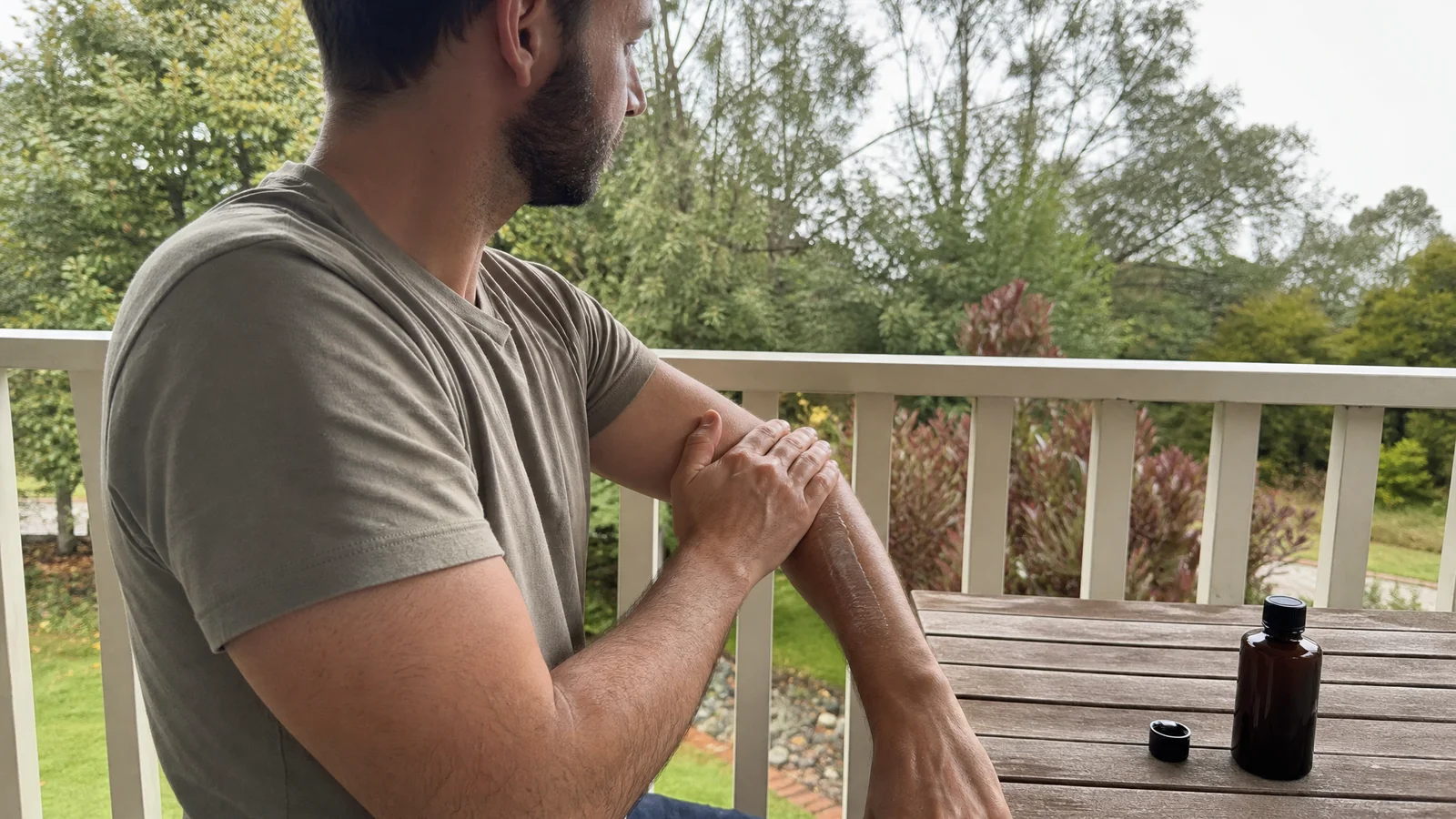
Here is how the routine looks when you put it together. Get dressed first, so you can see exactly which skin is showing. If you wear sunscreen, put it on and give it a moment. Then take the repellent outside, glance at the label again if the bottle is new to you, and spray or rub it onto your hands. Work it over arms, legs, neck and the backs of your hands, and use your hands again, lightly, for the face. Finish by washing your palms so nothing ends up in your eyes or on your sandwich.
Spots people forget
- The ankles and the gap between sock and trouser hem, which are easy to miss.
- The back of the neck and the tops of the ears.
- The time on the label: set a phone alarm if you will be out for a while.
Making the routine easy
A repellent that is easy to apply is a repellent that gets applied. A few ideas that come from the steps above: keep the bottle where you keep your shoes, so it is part of leaving the house; apply it after you are dressed, so you know which skin is exposed; and wash clothes that were treated before wearing them again. If you are comparing formats, our piece on sprays versus lotions covers the differences.
What our oil is, and is not
We sell one product: a steam-distilled lemon eucalyptus essential oil with a bright lemon scent. It is a fragrance oil and an essential oil, not a registered repellent, and CDC does not recommend using "pure" oil of lemon eucalyptus as a repellent because it has not undergone validated testing for safety and efficacy. For bite protection, choose a registered product from a pharmacy or outdoor shop and follow the steps above. For the difference between the two, read our guide to OLE versus the essential oil.
Repellent works best when it is part of a plan: sleeves, screens, a sensible hour for the walk. A thirty-second routine at the door is the easy part.
Lemon Eucalyptus Essential Oil
Lemon Eucalyptus Essential Oil from our own shop, in sizes from 0.5 oz to bulk.
From $9.99
Shop Now →