Choosing a Lemon Eucalyptus Repellent: Where to Start
"Which lemon eucalyptus repellent is best?" is a question we hear a lot in search form, and the honest answer is that it depends on where you are standing and who is with you. We can't hand you a winner, because we sell an essential oil and not a repellent. What we can do is show you how to narrow the field to two or three solid candidates in about ten minutes.

Lemon Eucalyptus Essential Oil
Our own Lemon Eucalyptus Essential Oil, in sizes from 0.5 oz to bulk.
From $9.99
Shop Now →Here is the whole routine in a sentence: filter, compare, then check the label on the bottle against what you found. Everything below is detail. Give yourself ten quiet minutes with a notepad and a cup of tea, and you will not be rushed into a decision at the shelf.
Start with the registered shelf
The word "lemon eucalyptus" turns up on very different products. The one health agencies point to is oil of lemon eucalyptus (OLE), or PMD, its synthesized version, in an EPA-registered product. CDC's Yellow Book lists both as repellents with long-lasting protection, and it does not recommend using "pure" oil of lemon eucalyptus, an essential oil that is not formulated, as a repellent. EPA describes OLE as containing PMD but regulated as a separate pesticide chemical. So the first filter is simple: only registered products go on the list.
EPA makes this easy with its repellent search tool, which lets you filter by mosquitoes, ticks or both, by protection time and by active ingredient. Filter to OLE or PMD and you will have a short list drawn from products that gave EPA safety and effectiveness information. One tip from the tool's own page: check the registration number on the bottle against the database, because one product can sell under several marketing names.
Then choose by what your day looks like
Here is where a shortlist becomes personal. Think about the situation first and the label second.
- A summer evening in the yard. You need a mosquito claim and a format you will actually spread evenly. A spray is quick; a lotion lets you see what you've covered. Spraying your hands first and then applying to your face is the EPA's way to avoid spraying near the eyes and mouth.
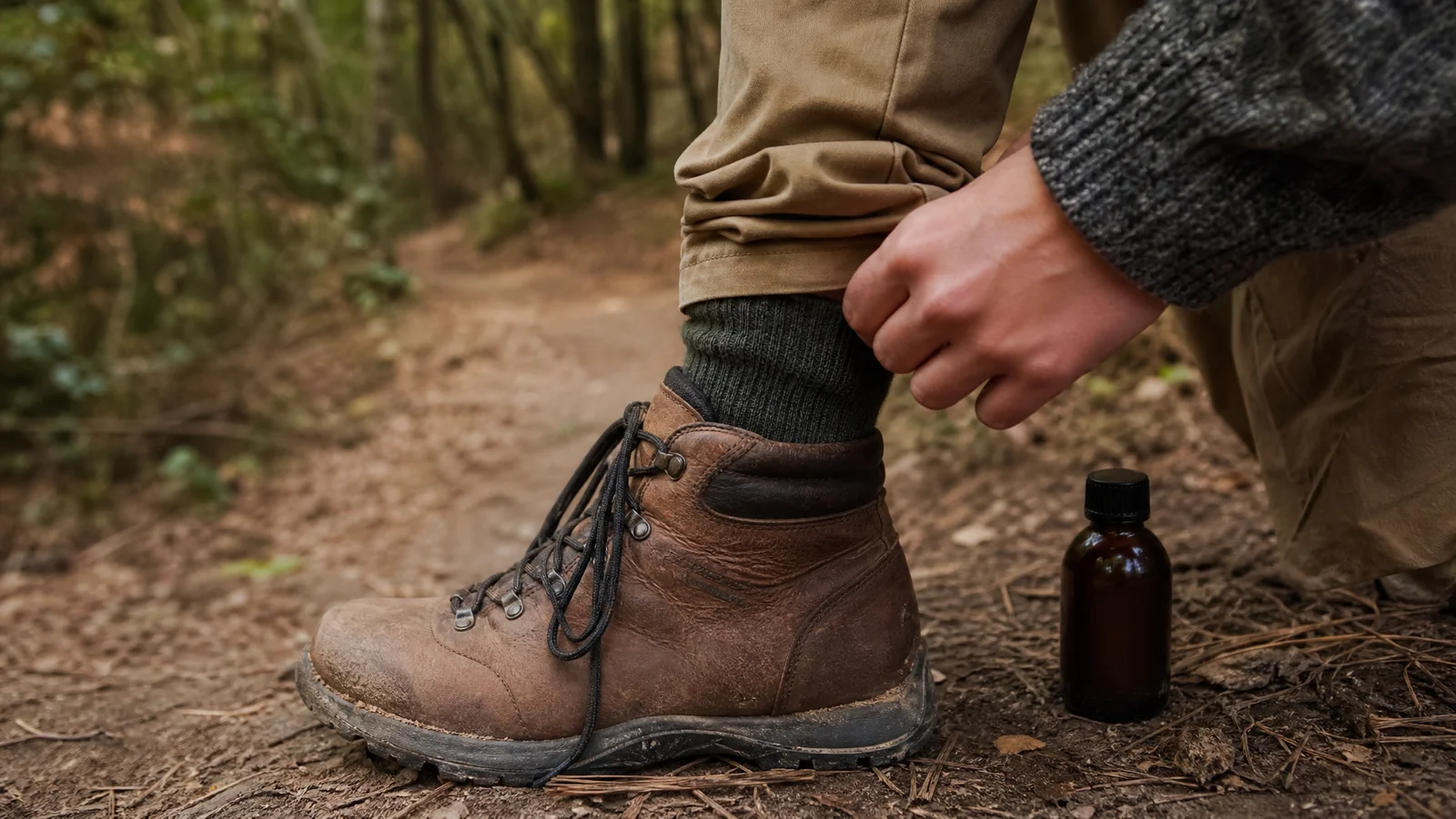
- A day on the trail. Read the pest list. A label that names ticks is a different claim from one that names mosquitoes alone, so don't assume one from the other. Our piece on lemon eucalyptus and ticks goes further.
- Kids along. This is the line to read twice. CDC advises against products containing OLE or PMD on children under 3, noting that certain OLE-only products at 30% or less can be used after reading the label. EPA adds that some OLE products shouldn't be used on children under three, and that children shouldn't handle repellent: put it on your own hands first, then on the child. A pediatrician is the right person for specific questions.
- A long, sweaty day. Compare the protection times printed on each label, then plan on reapplying according to the directions. EPA notes that sweat, water exposure and temperature can all affect performance, and that so can your own attractiveness to mosquitoes, which we explore in why mosquitoes favor some people.
- Travel to a region with mosquito-borne illness. Talk with a physician or travel clinic before you rely on any article, ours included.
Compare the fields that matter
Once two or three products are standing, lay their labels side by side: the registration number, the active ingredient and its percentage, the format and its directions, the pests named, the protection time claimed, and the age statement. Percentages only compare fairly within the same active. A figure for OLE, one for picaridin and one for DEET are three different measures, so use protection time and age rules to compare across them. If you are still deciding between ingredients altogether, our comparison with DEET and comparison with picaridin set out the trade-offs.
Labels get revised over time, so it pays to re-read the one on the bottle you are about to use, not the one you remember. A quick re-check at the start of each season takes a minute and keeps your shortlist honest.
Keep a note for next season
When you settle on a product, write down its name, registration number and the date you picked it up somewhere you will find it again; a note on your phone works. Next spring you will not need to start from scratch, and if a label has changed, you will spot it. Share the note with the people you travel and hike with, so everyone in the group is carrying something that suits them.
A pharmacist is a fine ally in all this. Take your short list in, or a photo of it, and ask them to read the labels with you. It costs nothing to ask.
Where our oil fits
Our bottle is a steam-distilled lemon eucalyptus leaf oil with a lemony, fresh and green aroma, and it earns its place in scent projects rather than on a repellent shelf. It is not a registered repellent, we make no repellent claim, and a mixed-at-home spray is not a stand-in for one; our article on DIY bug spray explains why. If bite protection is the goal, the right purchase is an EPA-registered product from a pharmacy or outdoor shop, chosen with the steps above.
Spend those ten minutes on the label, and the right product for your evening, your trail or your family tends to pick itself.
Lemon Eucalyptus Essential Oil
Lemon Eucalyptus Essential Oil from our own shop, in sizes from 0.5 oz to bulk.
From $9.99
Shop Now →Sources & Further Reading
- Find the Repellent that is Right for You, US EPA.
- Skin-Applied Repellent Ingredients, US EPA.
- Using Insect Repellents Safely and Effectively, US EPA.
- Mosquitoes, Ticks, and Other Arthropods, CDC Yellow Book.