How to Scent a Homemade Cleaner With Lemon Eucalyptus
Lemon and clean go together in most people's noses, which is exactly why lemon eucalyptus makes such a lovely scent for a household cleaner. Its aroma is lemony, fresh and green, with a lightly camphorous base, and it is a top note, so it greets you the moment the spray hits the counter. What matters is knowing what the scent does and what the cleaning does.

Lemon Eucalyptus Essential Oil
Our own Lemon Eucalyptus Essential Oil, in sizes from 0.5 oz to bulk.
From $9.99
Shop Now →What you will notice when you open the bottle
Our oil is typically a pale yellow to light amber and thin and free-flowing, a lot like water in how it pours. The aroma is the draw: bright lemon up front, then a crisp, green, lightly camphorous base that feels sunnier and more open than the classic eucalyptus smell.
Before you scent a whole bottle of cleaner, open the oil, wave it a few inches from your nose and decide whether that is a smell you want on your counters every day.
Scent and cleaning are two different jobs
The cleaning in an all-purpose cleaner comes from the cleaning agent and the wiping: soap or surfactant, water, a cloth. The oil is the part you smell afterwards. That is a perfectly good job, and a fresh scent is one of the pleasures of cleaning day. We describe the oil by its aroma, because aroma is what we can honestly point to.
It helps to know where the legal line sits, especially if you are thinking of making cleaners to sell. EPA explains that once a label makes any claim of pest mitigation, the product becomes a pesticide under federal law and needs registration. Words like "sanitizes", "disinfects" and "sterilizes" fall on the pesticide side. EPA also lists ordinary cleaning claims that are generally not pesticidal: removing dirt, stains, dust or soap scum, and deodorizing or eliminating odors.
That last one is good news for anyone who loves a scented cleaner. "Cleans countertops," "removes grime" and "leaves a fresh lemon scent" all sit on the ordinary side of the line.
Where the wording matters
For essential oil products that qualify as minimum risk pesticides, EPA's conditions say a label may not state or imply that the product controls organisms that threaten human health, and it names "sterilize," "disinfect" and "sanitize" as examples. It also notes that pest claims cannot be tied to a disease: a label may say "controls ticks" but not "controls ticks that carry Lyme disease." The cleaning page adds that context counts too, since even listing a cleaning product beside pesticides on a website can imply a pesticidal purpose.
If you make cleaners for sale, our suggestion is to look at every place your words appear (label, product page, social posts, marketplace listing) and keep them to dirt and scent. A qualified attorney or your state pesticide agency can tell you whether your exact product and wording are covered, because we cannot. We sell the oil, not legal advice.
Making a lightly scented cleaner at home
We do not give drop counts for sprays, because a cleaning base varies so much that any number would be a guess. What we can offer is some practical thinking:
- Start from a cleaner you already like and scent it lightly. A little of this oil goes a long way, and you can always add more scent after you have tried a small batch.
- Expect separation. Oil and water do not mix on their own, so a spray bottle needs a good shake before each use, and droplets can land on a surface. That is general chemistry, not a behaviour specific to our oil. Wipe the surface afterwards.
- Test a hidden spot. Concentrated essential oils can mark or soften some finishes. Try a small, out-of-sight patch on varnished wood, painted surfaces, plastics and coated electronics, and read the care instructions for natural stone before you scent a product for it.
- Keep it off skin you care about. Wear gloves for longer jobs. Our dilution guide explains the percentages we use when the oil is going on skin, which is a different matter from a cleaner.
Make a small batch first
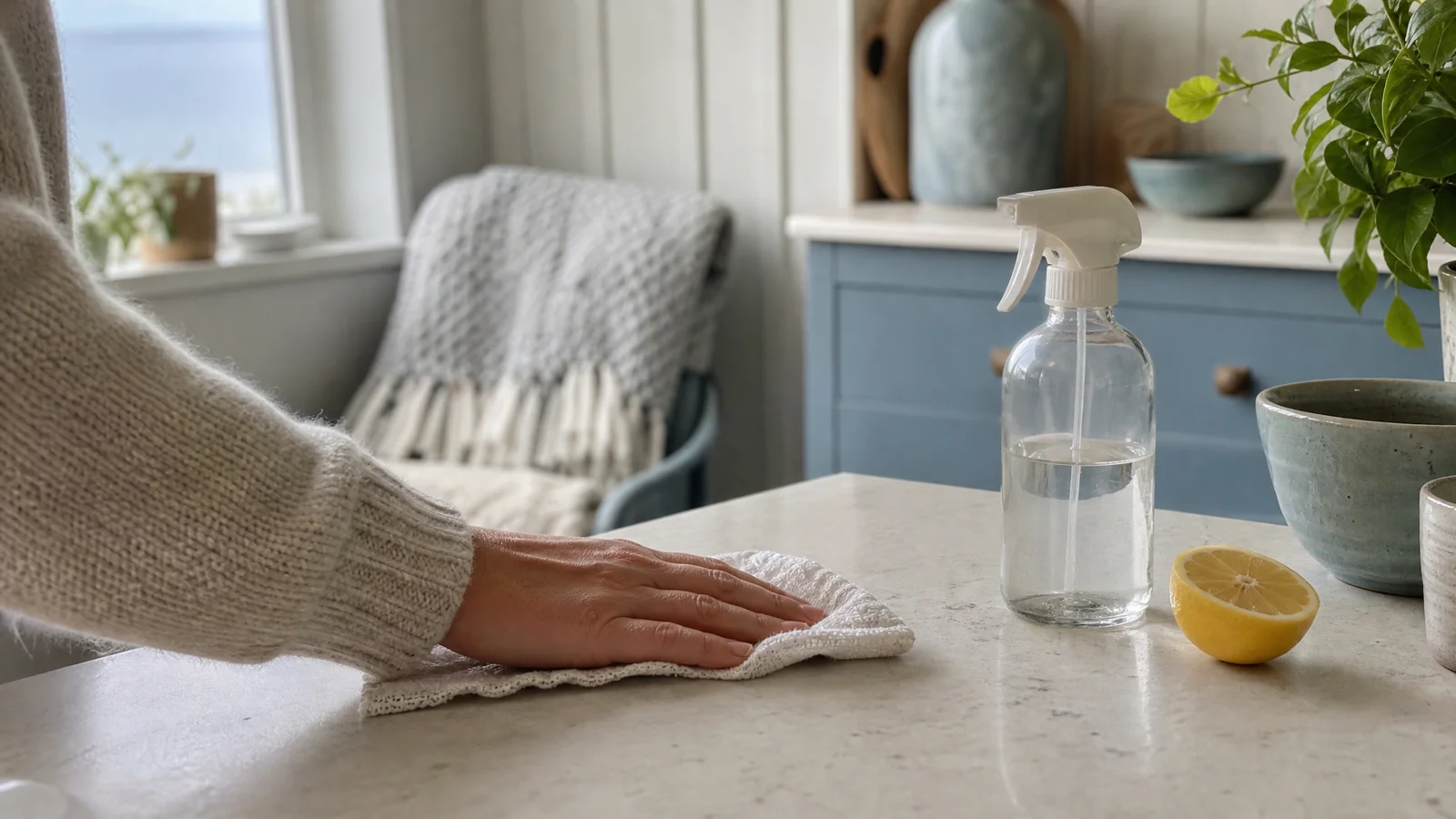
Start with a small spray bottle rather than a big jug. Use a clean bottle, scent it lightly, and write the date and what went in on a piece of tape. Leave it overnight and sniff it the next day, because a scent often reads differently once it has settled.
Keep notes in the same place you keep the bottle. When you land on a version you like, you will be glad you wrote down how you got there, and when you do not, you have lost very little.
Homes with pets and children
ASPCApro says oral and dermal exposure to essential oils are more concerning than inhalation, with birds and animals with respiratory problems as exceptions, and that cats, rabbits, guinea pigs and hamsters may be more sensitive to skin exposure because they can ingest oil while grooming. Floors are where animals walk and then groom, so reasoning from that, a scented floor cleaner is worth a conversation with your veterinarian first. Our diffusing guide covers the air side of the same question.
Keep the bottle and any mixed spray out of reach of children, label sprays clearly so nobody mistakes them for a drink, and never take the oil internally.
A scent that suits the task
Because lemon eucalyptus is a top note, it suits quick, bright jobs: a kitchen counter, a bathroom mirror, a linen spray. It tends to fade sooner than a woody oil would, and that is part of its charm in a cleaner, since the freshness arrives right when you want it. We think the nicest result is an honest one: a cleaner that cleans because it is a good cleaner, and smells wonderful because of the oil.
Lemon Eucalyptus Essential Oil
Lemon Eucalyptus Essential Oil from our own shop, in sizes from 0.5 oz to bulk.
From $9.99
Shop Now →