Lemon Eucalyptus for Kids: Why Under 3 Is Off Limits
It is dusk, there is a toddler on your hip, and a bottle labeled "lemon eucalyptus" is sitting in the cart. Before anything else, there is one rule worth knowing: CDC says not to use products containing oil of lemon eucalyptus (OLE) or PMD on children under 3 years old. Most of what follows is the reasoning around that rule and what to do instead.

Lemon Eucalyptus Essential Oil
Our own Lemon Eucalyptus Essential Oil, in sizes from 0.5 oz to bulk.
From $9.99
Shop Now →Two bottles, one name
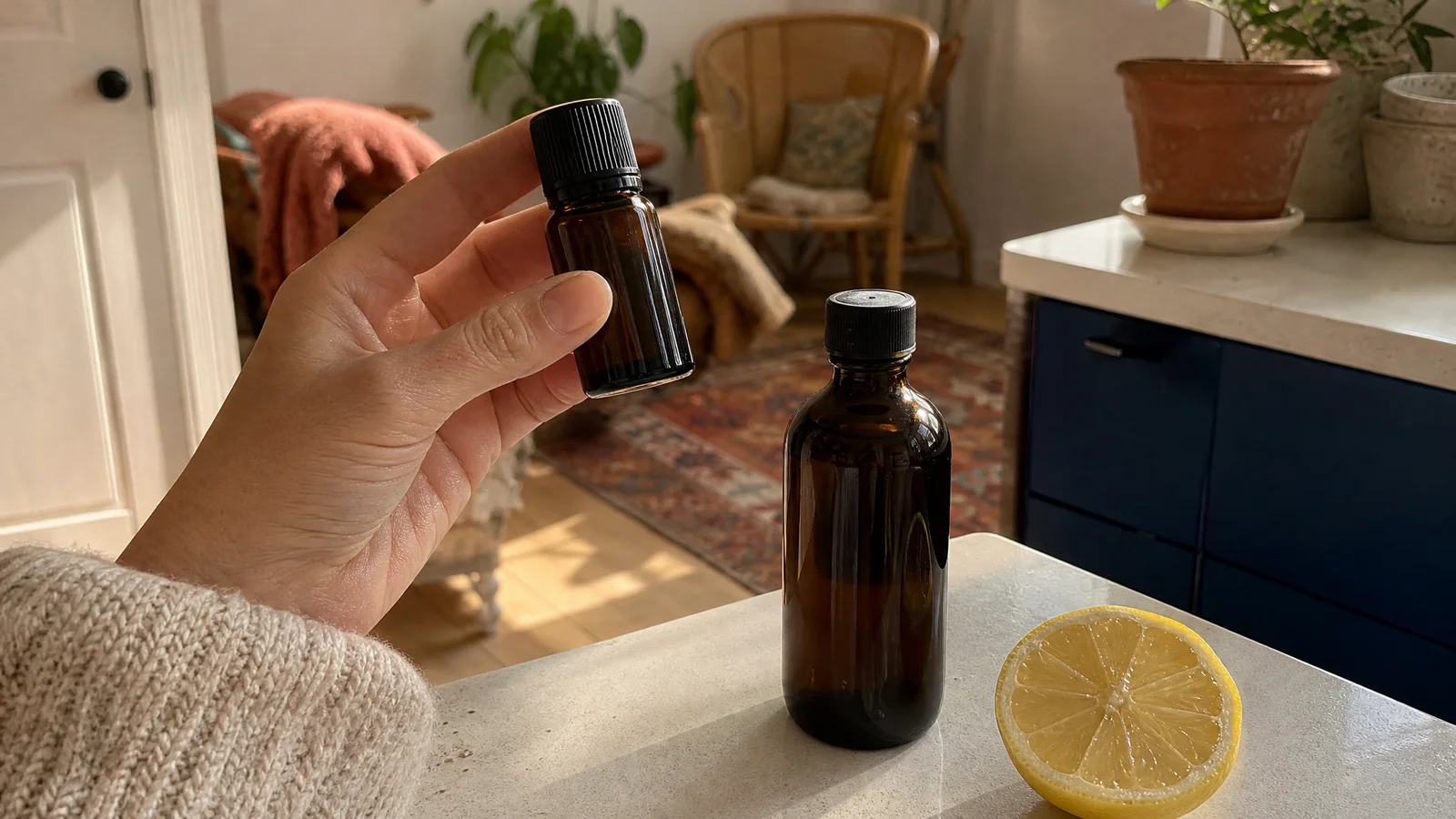
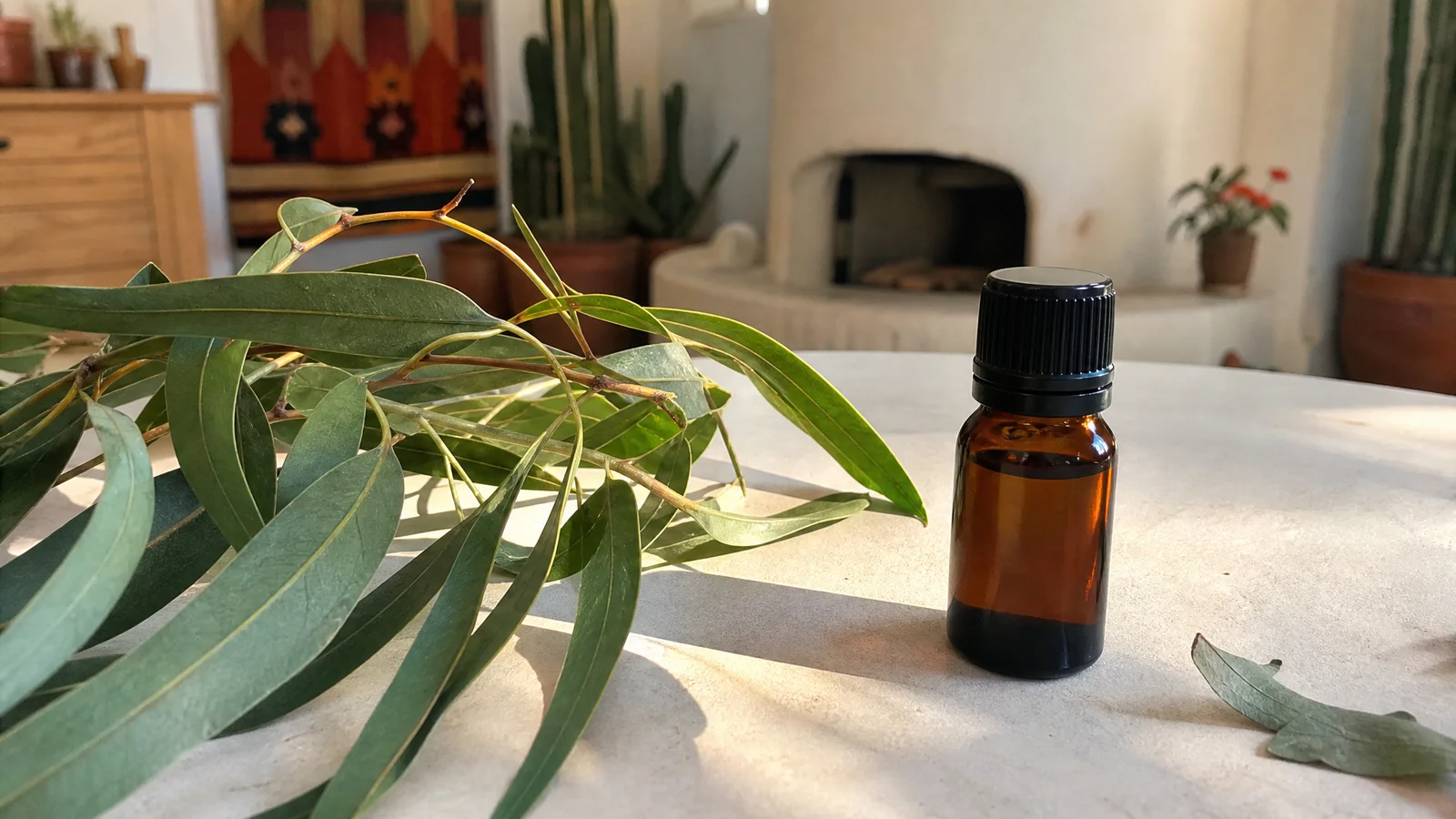
"Lemon eucalyptus" turns up on two very different products. One is an EPA-registered repellent whose active ingredient is OLE or PMD, a refined material with a registration number on the label. The other is lemon eucalyptus essential oil, the steam-distilled leaf oil we sell. Ours is an aromatic oil for diffusing, candles, soap and blends, and we sell it neat, so any skin use means diluting it yourself. We sell the essential oil and not a registered repellent, and we would rather say so plainly than blur the line to make a sale.
That distinction matters most with children. CDC's mosquito page says, "We do not know the effectiveness of non-EPA registered insect repellents, including some natural repellents." So a bottle of essential oil is not a gentle homemade bug spray for a small child, and our own guidance for it is simple: keep it away from eyes, children and pets, and store it capped and out of reach. Poison Control says the same of essential oils generally, advising that bottles be kept where children cannot find them, locked up and out of sight and reach if you have young children.
The under 3 rule, and where the sources differ
The American Academy of Pediatrics' HealthyChildren site says, "Do not use products containing oil of lemon eucalyptus or para-menthane-diol (PMD) on children younger than 3 years old." CDC's mosquito page repeats it almost word for word, and CDC's Yellow Book ties the caution to the possibility of skin reactions. It is a sensitivity caution, and it settles the question for a toddler: if the label says OLE or PMD, a child under 3 does not wear it.
EPA takes a label-by-label view. It says that, according to product labels, some oil of lemon eucalyptus products should not be used on children under three, and that certain products with OLE as the sole active ingredient at 30% or less carry no such restriction. When a regulator's per-label approach and the pediatricians' blanket advice differ, we would follow the stricter one. Reading fine print at dusk with a child in your arms is a poor setting for a close call, and a pediatrician is the right person to weigh a specific label if you want a second opinion.
| Age | Registered OLE or PMD repellent | Our essential oil |
|---|---|---|
| Under 3 | CDC and AAP: do not use | Keep out of reach |
| 3 and older | Follow the label; an adult applies it | Keep out of reach; not a repellent |
What helps the youngest children instead
Barriers do a lot of the work for babies and toddlers, and they have no label age limit. HealthyChildren advises mosquito netting over baby carriers and strollers where a baby may be exposed to insects, and CDC's Yellow Book lists the same step. CDC's travel guidance also recommends long-sleeved shirts and long pants. Which repellent active ingredient, if any, suits a given child at a given age is a conversation for your pediatrician, and HealthyChildren notes that parents of newborns and premature infants should be especially cautious about putting chemicals on a baby's skin.
If your child is 3 or older
With a registered product and the label in hand, the steps from EPA, CDC and AAP are consistent:
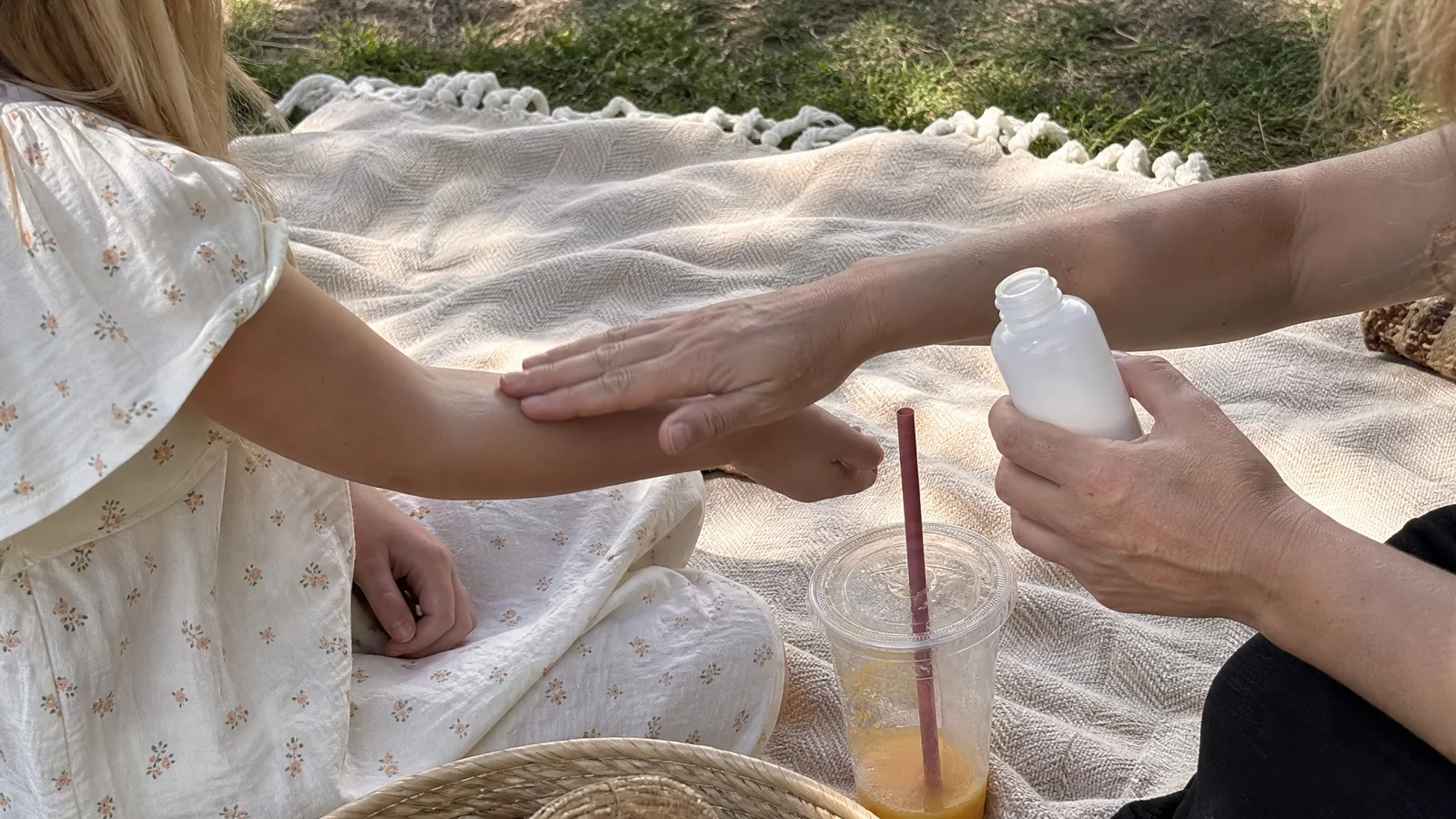
- An adult does the applying. CDC's Yellow Book says children should not handle repellents. Put it on your own hands first, then spread it on the child's exposed skin.
- Skip the hands. EPA advises against applying repellent to a child's hands, since they end up in mouths and eyes.
- Keep the face gentle. Spray a little on your own hands first, then rub it on, staying clear of the eyes and mouth and using only a little around the ears.
- Wash up afterward. EPA says to wash the child's treated skin and clothes with soap and water, or give a bath, once you are back indoors.
Our guide to applying repellent goes further on technique, and insect repellent ingredients compared sets out how the age rules differ between actives. For the full picture on OLE against a bottle of essential oil, read OLE vs lemon eucalyptus essential oil.
Small habits that make dusk easier
Most of the scramble at dusk comes from being unprepared. Keep the netting, a light long-sleeved layer and the stroller cover in the bag before you leave the house, so you are not improvising while a toddler fusses. Check the screens and the porch door, and tip out any standing water in a saucer or toy before the evening begins. These are small chores that cost nothing and sit entirely within the guidance above.
Where our oil belongs in a family home
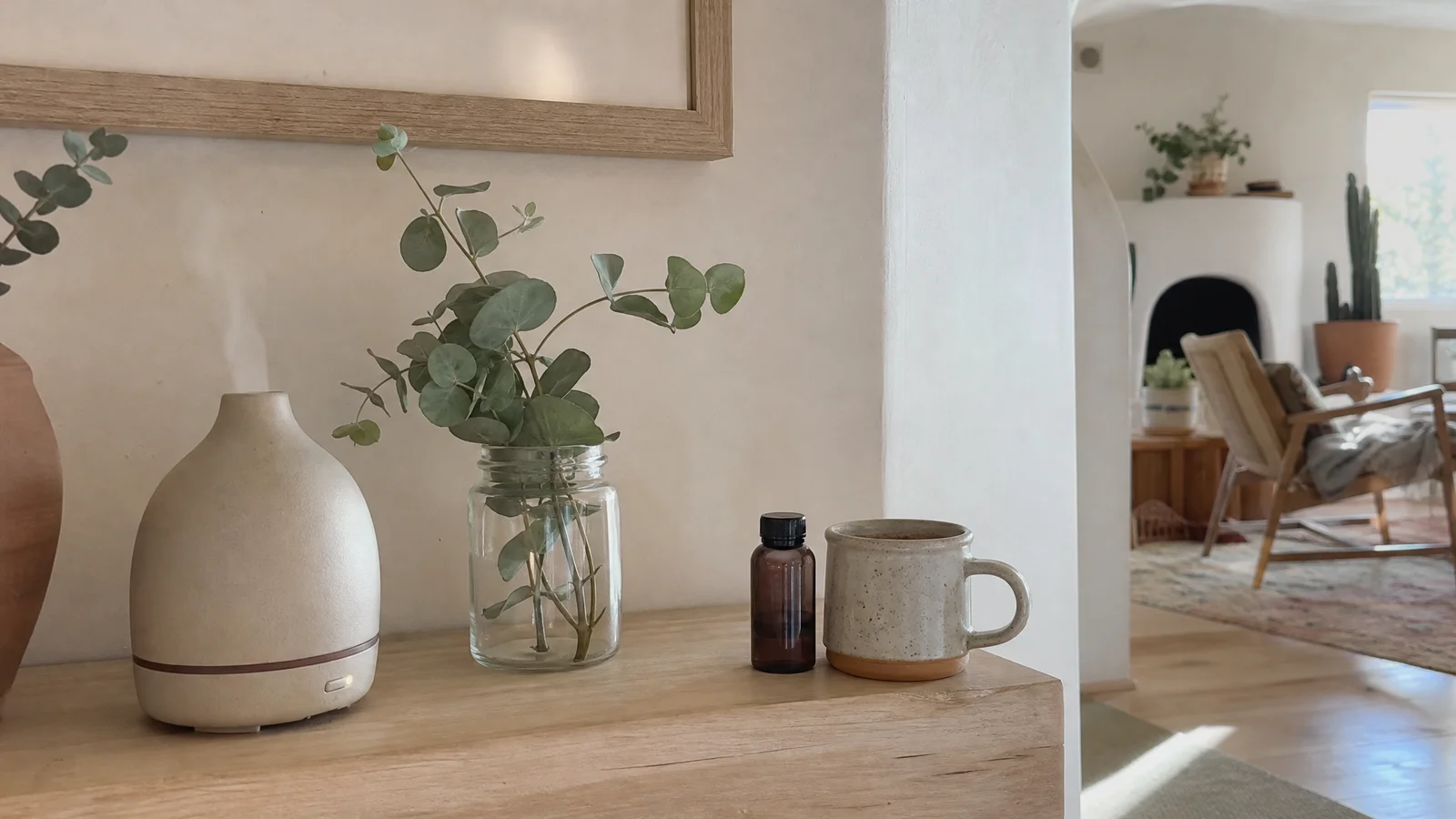
We love this oil for its bright, lemony, lightly camphorous aroma, and it is a good fit for an adult-only craft table: candles, soap, a fragrance blend. In a house with small children, the practical rule is storage. Cap the bottle, keep it on a high shelf or in a locked cabinet, and keep it away from the diffuser nearest a nursery. The oil is for grown-up projects, and the bug protection for the little ones comes from netting, clothing, and whatever your pediatrician recommends.
Lemon Eucalyptus Essential Oil
Lemon Eucalyptus Essential Oil from our own shop, in sizes from 0.5 oz to bulk.
From $9.99
Shop Now →Sources & Further Reading
- Preventing Mosquito Bites | Mosquitoes | CDC
- Mosquitoes, Ticks, and Other Arthropods (CDC Yellow Book)
- How to Choose an Insect Repellent for Your Child - HealthyChildren.org
- Using Insect Repellents Safely and Effectively | US EPA
- Essential oils: Poisonous when misused | Poison Control
- Avoid bug bites | Travelers' Health | CDC