Does Lemon Eucalyptus Oil Stain? What to Do When It Spills
A single drop of lemon eucalyptus oil lands on a favourite cotton tee, spreads into a dark coin, and you wonder whether that is the end of the shirt. It is not. Yes, the oil can leave a mark, but it is an oily mark, and oily marks respond to ordinary, well-understood laundry methods if you deal with them early and gently.

Lemon Eucalyptus Essential Oil
Our own Lemon Eucalyptus Essential Oil, in sizes from 0.5 oz to bulk.
From $9.99
Shop Now →Why it marks fabric
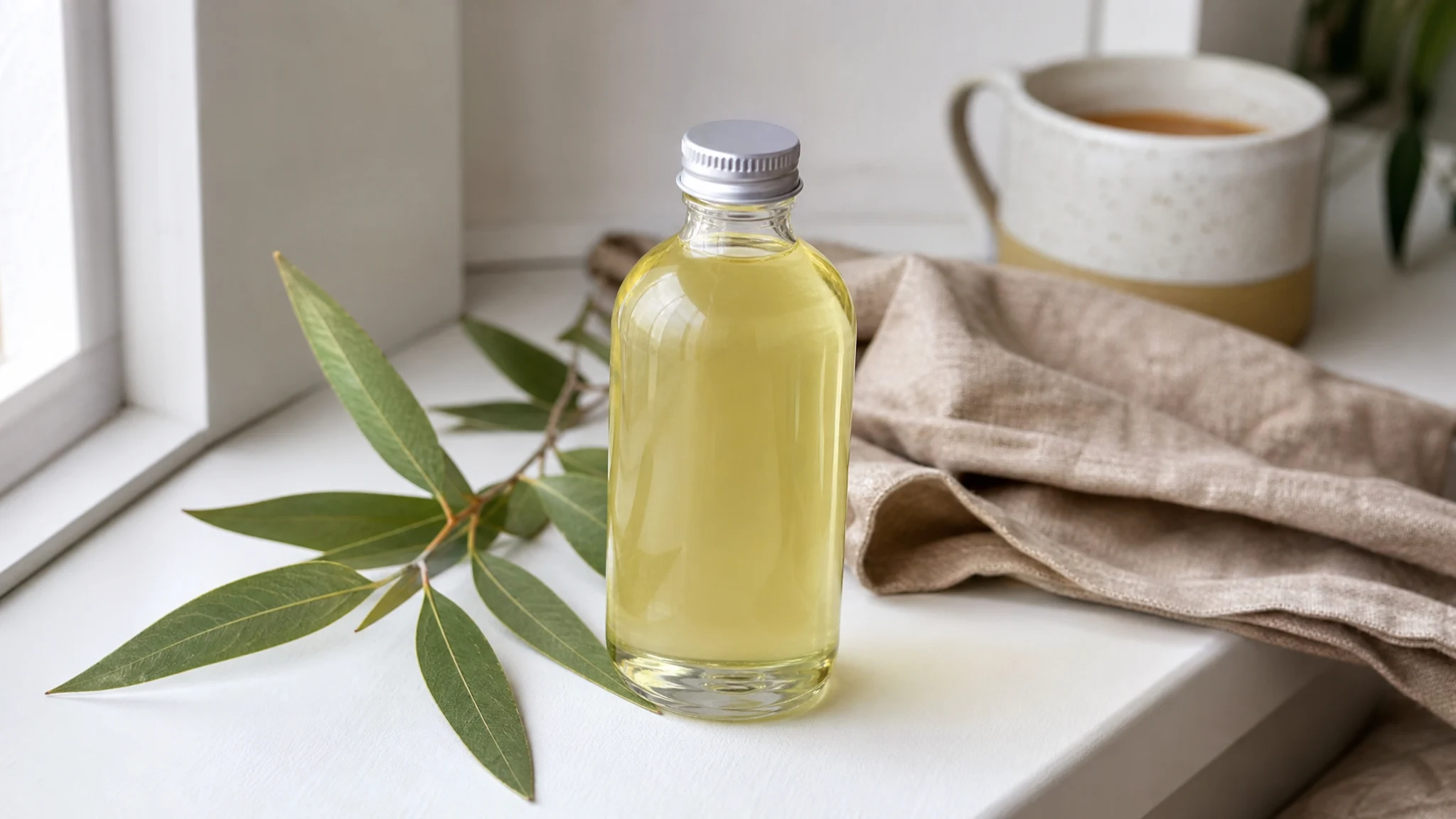
Essential oils do not dissolve in plain water. Tisserand's guidance on blending with alcohol makes the point from the other direction: to get an essential oil to spread through a water-based spray you need a high-strength alcohol or an emulsifier. The same thing is why a splash of water on a spot does little. The oil sits in the fibres and spreads as a damp patch. We describe ours as typically pale yellow to light amber, so on pale linen or cotton a spot may carry a faint tint as well as the darker wet look.
We sell an undiluted oil, so one drop is a concentrated amount. Tisserand puts a drop at 20 to 40 to the millilitre, which means each one is only about 0.025 to 0.05 ml. That is a small spot, and small spots are the easiest to lift.
What to do in the first few minutes
The method below follows University of Georgia Extension's advice for oil-based stains and a consumer laundry guide from Clorox. Neither is written for essential oils, so treat it as our reasoning: an oil mark is an oil mark.
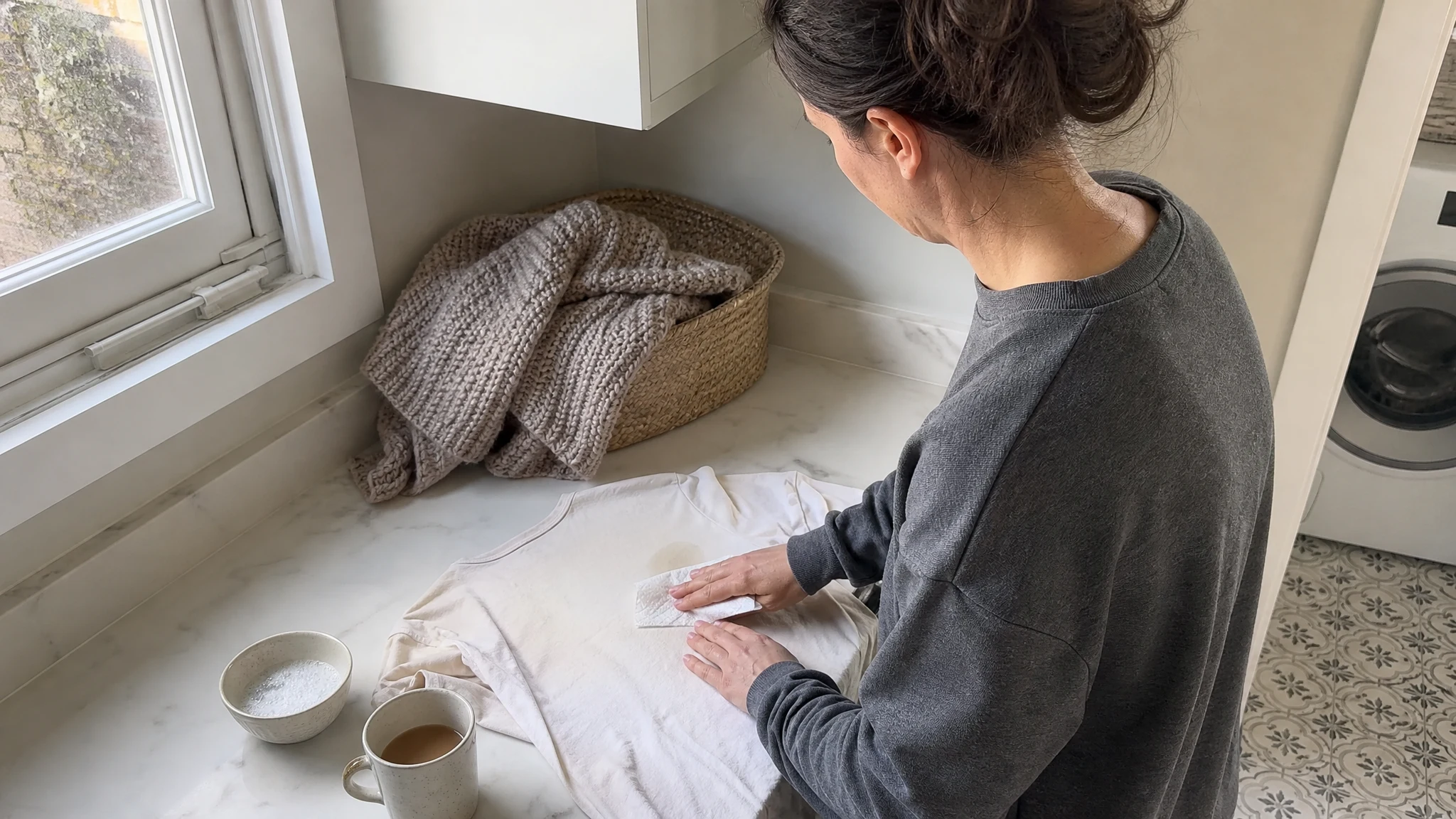
- Blot, do not rub. Lift off whatever is sitting on the surface with a paper towel or clean cloth. Rubbing pushes the oil deeper.
- Work in dish detergent. UGA Extension suggests rubbing detergent into the dampened stain; Clorox suggests dish detergent worked in gently and left for 5 to 10 minutes so it can break down the oil.
- Consider an absorbent for a fresh spot. Clorox notes that cornstarch or baking soda can soak up surface oil, though baking soda may leave residue. Brush it off before washing.
- Wash as the care label allows. Clorox says warm water is usually best for oily stains because it helps break down grease. UGA's advice is to read the care label before trying any stain-removal method and to pretest on an unseen area for colourfastness.
- Check before the dryer. Clorox says to avoid drying with heat until the stain is gone, because heat can set it. Repeat the detergent step if a shadow remains.
When to hand it to someone else
Some fabrics are not worth gambling on. Silk, wool, suede, leather and anything marked dry clean only belong with a professional cleaner. Clorox specifically warns against bleach on silk, suede and leather. Take the item in soon, and tell them what spilled and when. A cleaner can use solvents and equipment that a kitchen sink cannot.
The same caution applies to upholstery and carpet. UGA Extension notes that dry-cleaning solvents can destroy carpet backing and the foam padding in upholstery, so we would blot, avoid soaking, and call a professional for anything large or valuable.
Floors, wood and other surfaces
For hard floors, UGA Extension suggests wiping up the excess, scrubbing with a soft brush and a detergent solution, rinsing and drying, and it warns against plain soap on that surface because it can leave a dull finish. For oily marks on wood it describes a foam made from hot water and dishwashing detergent, then rinsing and drying. A finish is a coating, and we cannot vouch for how every one reacts to a concentrated oil, so test in an unseen corner first and follow the maker's care advice.
If it is on skin instead of the shirt
Undiluted oil on skin is a different matter. Wash it off gently with soap and water and read our essential oil first aid article. It also helps to know our dilution guidance before you pour anything onto your hands.
Prevention is mostly habit
- Open the bottle over a tray, a plate or a folded paper towel, not over the clothes you are wearing.
- Tilt slowly. A slow pour gives you one drop at a time.
- Keep the cap on between uses; a knocked-over open bottle is a bigger spill than any drop.
- If you are scenting fabric deliberately, read our linen spray article. A spray that stays mixed avoids the concentrated spots that a stray drop makes.
- Making a household cleaner? Our scented cleaner article covers how to blend it in.
A drop on a shirt is a small, fixable nuisance. Blot, wash with detergent, keep it away from heat until the mark is gone, and send the delicate pieces to a cleaner. Then get back to enjoying that bright lemon scent.
Lemon Eucalyptus Essential Oil
Lemon Eucalyptus Essential Oil from our own shop, in sizes from 0.5 oz to bulk.
From $9.99
Shop Now →Sources & Further Reading
- Remove Stains From Oil-Based Foods, University of Georgia Cooperative Extension
- How to Get Oil Stains & Grease Stains Out of Clothes, Clorox
- Effective Use of Alcohol for Aromatic Blending, Tisserand Institute
- How big is a drop?, Tisserand Institute