Lemon Eucalyptus Linen Spray: A Recipe That Stays Mixed
The classic room spray, a few drops of essential oil in a bottle of water, has one flaw: oil does not dissolve in water. It floats, clings to the bottle and sprays out in beads that can mark fabric. A bit of chemistry turns it into a spray that is clear, even and lovely to use, and it suits a bright oil like lemon eucalyptus very well.

Lemon Eucalyptus Essential Oil
Our own Lemon Eucalyptus Essential Oil, in sizes from 0.5 oz to bulk.
From $9.99
Shop Now →Why linens suit lemon eucalyptus
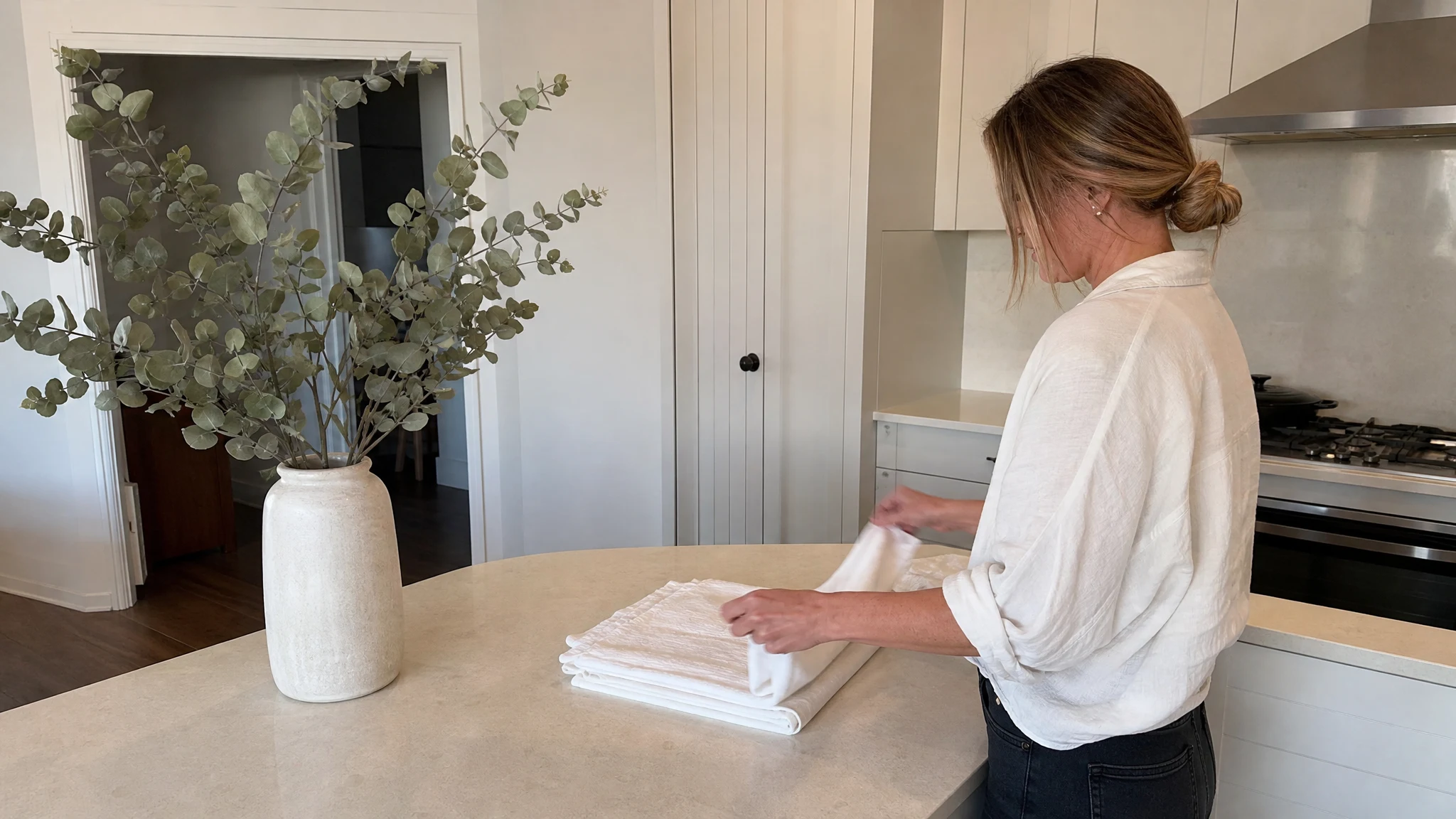
Fabric holds a scent more quietly than air does. Mist a pillowcase, a tea towel or the inside of a linen closet and the lemon opens up, bright and green with that lightly camphorous edge, then settles into something soft you only catch when you lean in. Because lemon eucalyptus is a top note, do not expect it to last for weeks. Think of it as a fresh-laundry feeling that you top up when you change the sheets.
A linen spray also suits the way we like to start with this oil: small, quick and forgiving. If you do not love the result, you have made one 4 oz bottle and not a whole batch of candles.
Let ethanol do the mixing
Tisserand Institute's article on alcohol for aromatic blending explains that ethanol brings oil and water together. For dissolving essential oils, it recommends 95 to 100% ethanol; 75.5% (151 proof) is the stated minimum but may dissolve oils less easily, so ordinary vodka at 80 to 100 proof is not enough. Ethanol also plays a second role as a preservative: any water-based product needs one, and Tisserand recommends alcohol at 20 to 30% of the total formula, with 25% as the target. Essential oils themselves are not a practical preservative, since the amount needed would be too much for skin. Tisserand's case discussion on a homemade water-based spray makes the same point and notes that oil-based sprays are a simple alternative if you would rather leave water out.
So the alcohol is doing two jobs, which is why we would not cut it back to save a few pennies.
Pick a strength, then weigh it
A linen spray touches skin more than you might think, since pillowcases meet cheeks. We suggest diluting skin-contact products at 0.5% to 2%, and because citronellal is a known skin sensitiser for some people, we would begin lower still. Tisserand's ranges run from 0.2 to 1% for sensitive skin, 0.5 to 1.2% for facial products and 1 to 3% for body oils. Reasoning from those figures, we would start a linen spray at 1%; a spray dried on fabric reads as a gentler scent than a mist in the air, so you rarely need to reach for the top of the range.
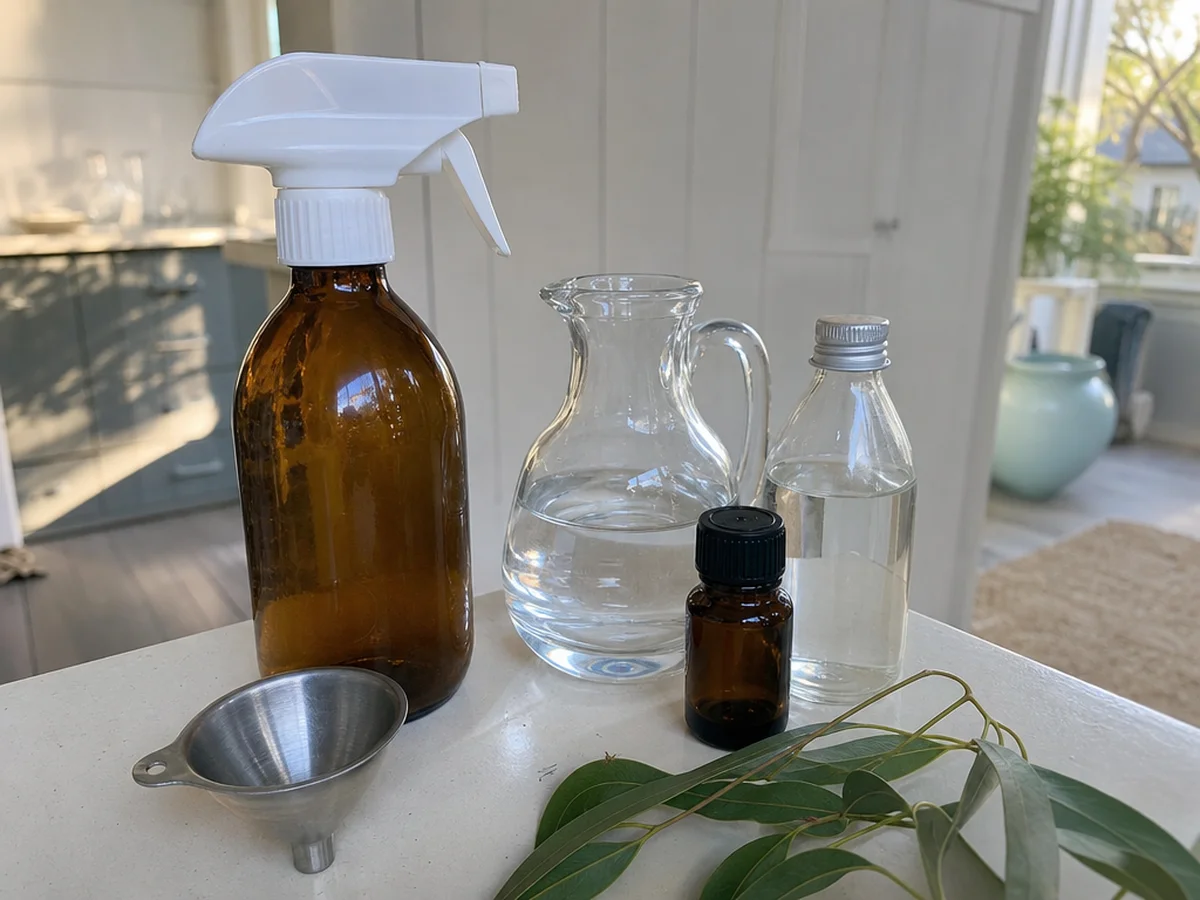
The arithmetic below is for a 4 oz (about 113 g) bottle with a 25% ethanol base. Weigh the ingredients on a scale that reads to 0.1 g.
| Oil strength | Lemon eucalyptus oil | 95 to 100% ethanol (25%) | Distilled water (to 113 g) |
|---|---|---|---|
| 1% | about 1.1 g | about 28 g | about 84 g |
| 2% | about 2.3 g | about 28 g | about 83 g |
| 3% | about 3.4 g | about 28 g | about 82 g |
Weighing beats counting drops. Tisserand's drop-size article found anywhere from about 20 to 40 drops per milliliter depending on the dropper, so a count of drops can be twice what you meant.
Choosing your bottle and nozzle
The bottle matters more than people expect. Pick a glass or sturdy plastic bottle with a fine-mist nozzle and rinse it well first, because a weak or clogged sprayer turns a lovely mix into splatters. Smell the empty bottle before you start, since leftover scent from a previous project will mingle with yours. A pharmacy or craft supplier will have these.
Making it
- Put the oil in the empty bottle first, add the ethanol and swirl until clear.
- Add the distilled water and swirl again. If a faint haze appears, lower the oil next time rather than adding more.
- Label the bottle with the date and the percentages, and keep it capped, out of sun and heat, as we do with the oil itself.
- Test a hidden patch of fabric and let it dry before judging, since cloth and finish change how a spray behaves.
Where and when to spritz
Pick your moments. A light mist over a folded stack in the closet, a pass over the curtains, a spritz over the bed an hour before you make it up so it can dry first, or a mist on the fabric of a favorite chair. Hold the bottle at arm's length, keep it moving as you spray, and start with fewer pumps than you think you need. You will notice the scent is strongest while the fabric is damp and softer once it has dried, so judge it after it has dried.
Mist from arm's length, keep it off skin and eyes, and use a spray bottle only for this job. Because lemon eucalyptus is a top note, the scent is fresh and quick. Our article on blending by evaporation order explains how to give it a slower partner, and our diffusing guide is the place to turn if you would rather scent a room with a diffuser. Our dilution guide covers the maths in more detail.
It is a scent spray and nothing more. We sell the oil; the ethanol, bottle and scale come from a pharmacy or craft supplier, and keep the whole project well away from flames, since ethanol is flammable.
A clear, evenly mixed spray is a small pleasure, and it starts with giving the oil something to dissolve in.
Lemon Eucalyptus Essential Oil
Lemon Eucalyptus Essential Oil from our own shop, in sizes from 0.5 oz to bulk.
From $9.99
Shop Now →