Lemon Eucalyptus Oil in Candles and Soap: Maker Tips
Lemon eucalyptus smells wonderful in the bottle, and makers sometimes discover that the bright part is the first to leave. That is not a flaw so much as a property of top notes, and a few simple habits will help you keep more of the lemon in your finished candle or bar.
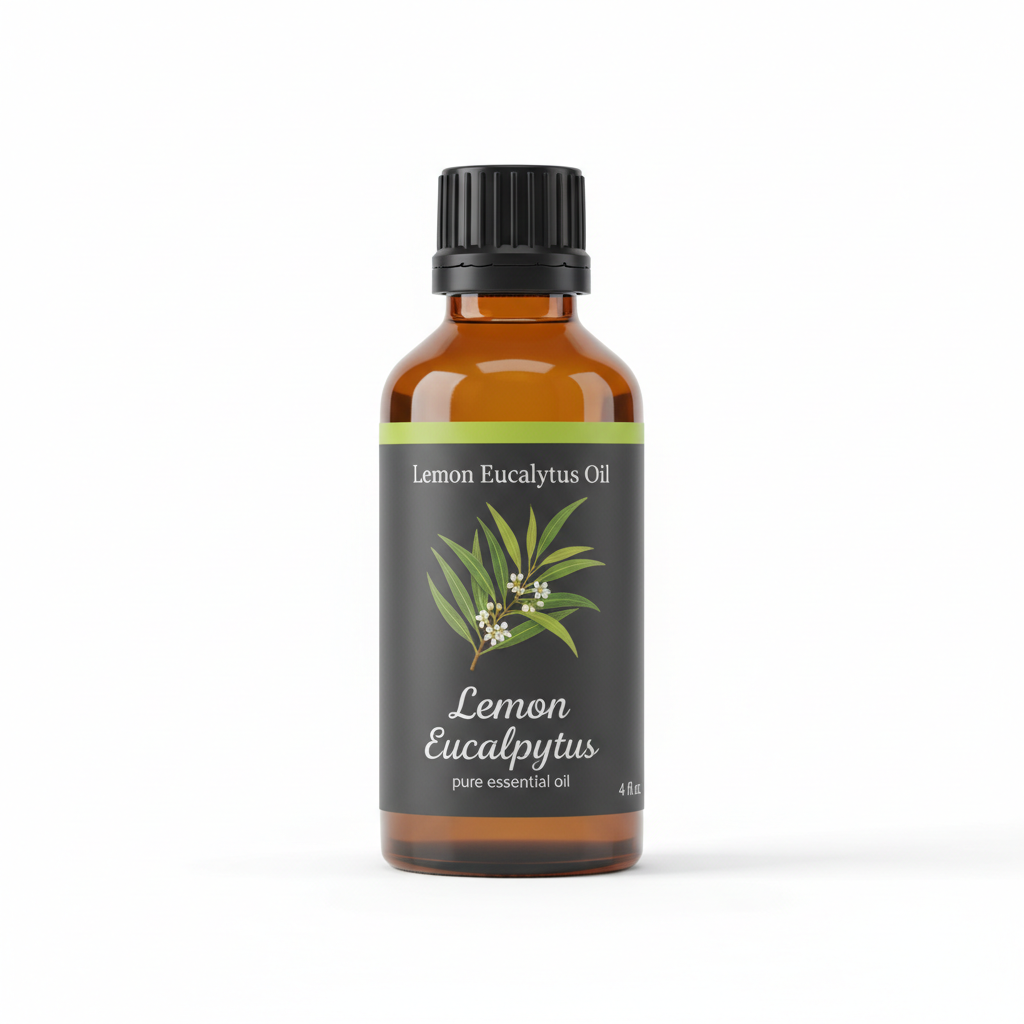
Lemon Eucalyptus Essential Oil
Our own Lemon Eucalyptus Essential Oil, in sizes from 0.5 oz to bulk.
From $9.99
Shop Now →Start with the right oil in the recipe
Lemon eucalyptus is not interchangeable with regular eucalyptus. A 2018 analysis found the lemon-scented gum sample led by citronellal at 36%, while 1,8-cineole, the medicinal eucalyptus compound, made up just 11%. Ours is lemony, fresh and green with a lightly camphorous base, and it sits in the top of a blend. So swap it in as a new scent, not as a like-for-like substitute, and try it on its own first. The comparison with regular eucalyptus shows how far apart they are.
Candles: loads, heat and patience
The standard formula, as Craftybase lays it out, is fragrance weight equals load percent divided by 100, times wax weight. At a 6% load, 320 g of wax takes 19.2 g of oil. Craftybase recommends weighing fragrance rather than counting drops, and that is good advice: Tisserand Institute counts roughly 20 to 40 drops per milliliter, so drop counts at candle scale drift quickly. Craftybase's maximum loads are typical values for fragrance oils (for example 10% to 12% for soy, 6% to 10% for paraffin, 3% to 6% for beeswax), and it advises checking your wax supplier's data. Those figures are for fragrance oils, not essential oils, so start well below them and increase from there.
Temperature matters more for a top note than for most oils. Craftybase says most suppliers recommend adding fragrance at 180 to 185 degrees F, that you should add it at least 10 to 15 degrees below the oil's flash point, and that low-flash-point oils want a lower addition temperature to protect volatile top notes. Our reasoning is that a bright citrus oil gives you the most scent when you stir it in as cool as your wax allows. If you need flash point data to plan your pour, ask us in writing through the contact page.
Then wait. Craftybase says most candles need one to two weeks to cure before the fragrance fully bonds with the wax, and that testing a fresh pour is misleading. A properly sized wick should reach a full melt pool within two to three hours. See our patio candle formulation for a worked example.
Set up the bench for citrus
Small habits help a delicate scent. Keep a notebook and a kitchen scale next to your wax pot. Write the date, the weight of the oil and the pour temperature on a label for every test piece. Pour small tests, not full batches, and sniff each one cold, warm and again a week later. You'll notice the lemon changes character as a candle or bar cures, and your notes will tell you which version you liked best.
Soap: a gentler way to hold the lemon
Usage rates depend on the basis you use, so state yours. HBNO suggests 3% to 6% of base oil weight for most cold and hot process soap, or about 0.5 oz per pound of oils for a light scent up to 1 oz for a strong one. Soap Queen suggests up to 0.8 oz per pound of cold process soap for a strong scent, and notes those figures follow IFRA and RIFM maximum usage limits for each material. Check the IFRA limits for your own formulation rather than relying on a number from us: start at the low end and move up after a cured test bar.
Citrus is the hard part. Soap Queen calls cold process a harsh environment where changing pH can attack components of an oil, and says lemon is among the citrus oils that come out weak. HBNO adds that gel-phase temperatures can climb above 160 degrees F and drive off top notes. Both sources offer remedies: anchor a light scent with a deeper one such as patchouli or sandalwood, and consider keeping low-flash-point scents out of the gel phase. Judge the bar after the cure, not at the pour. Our full walk-through is in making cold process soap with lemon eucalyptus oil.
Melts and sprays
Wax melts have no water, so no preservative question arises; our wax melt formulation covers loads and warmer cautions. A water-based room spray changes everything, because it needs a preservation system; our room spray article shows an ethanol version.
Claims and wording
Keep your product copy on scent. FDA's aromatherapy page says regulation depends mainly on intended use, that products with therapeutic claims can be treated as drugs, and that advertising claims fall to the Federal Trade Commission. Scented candles are overseen by the Consumer Product Safety Commission. We sell an essential oil and not a registered repellent, and CDC does not recommend "pure" oil of lemon eucalyptus as a repellent, so a candle or soap that promises bug benefits takes on risk you do not need. Wax, lye and other supplies come from a craft supplier.
Before you buy more
Our sample bottles are there so you can test the oil in your own product before committing to volume; see the bulk page for details. Date the bottle when you open it, and keep it capped away from heat. Tisserand Institute notes most essential oils keep well for at least a year or two before oxidation sets in, and our shop gives two to three years unopened.
Start small, weigh everything and let your test pieces cure. The lemon rewards patience.
The first time a bar or a candle comes out smelling the way you imagined is a lovely moment, and the notebook is what lets you do it again.
Lemon Eucalyptus Essential Oil
Lemon Eucalyptus Essential Oil from our own shop, in sizes from 0.5 oz to bulk.
From $9.99
Shop Now →Sources & Further Reading
- Candle Fragrance Load Calculator: Formula, Wax Percentages and Flash Point Guide (Craftybase)
- Essential Oils in Soap Formulation: Usage Rates, Scent Retention & Scaling From Lab to Production (HBNO)
- How to Prevent Scent Fading in Soap (Soap Queen)
- Antibacterial, Antioxidant, and Antiproliferative Activities of Corymbia citriodora and the Essential Oils of Eight Eucalyptus Species
- How big is a drop? (Tisserand Institute)
- Aromatherapy (FDA)
- Mosquitoes, Ticks, and Other Arthropods (CDC Yellow Book)