Lemon Eucalyptus Oil FAQ: Your Top Questions Answered
People usually arrive with the same handful of questions, often with a bottle half in the cart. Is this really made from lemons? Is it the same as eucalyptus oil? Can it go on skin? Here are the answers we would give you across the counter, with a pointer to a longer article wherever one exists.

Lemon Eucalyptus Essential Oil
Our own Lemon Eucalyptus Essential Oil, in sizes from 0.5 oz to bulk.
From $9.99
Shop Now →What it is
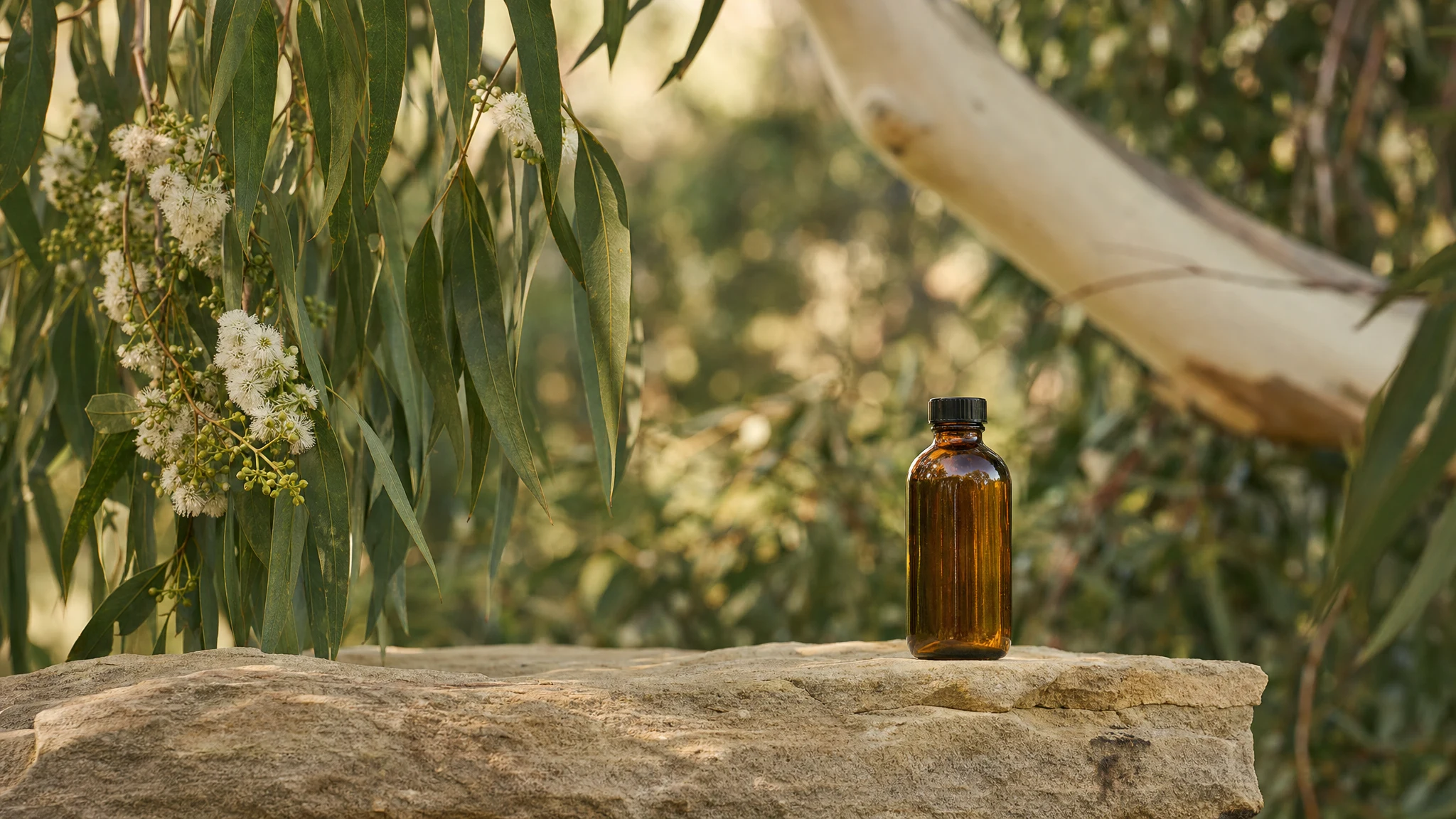
Is it made from lemons? No. We steam-distill it from the leaves of the lemon-scented gum, Corymbia citriodora. The lemon note comes from citronellal, a compound that Ian Southwell's survey of aromatic plants puts at 65% to 85% of the leaf oil of this species. The aroma is lemony, fresh and green, with a crisp, lightly camphorous base that feels sunnier than a standard eucalyptus. Our article on the tree tells its story.
How is it different from ordinary eucalyptus oil? They come from different species and they do not substitute for each other. In a 2018 analysis of eight eucalyptus species and the lemon-scented gum, the lemon-scented gum sample was led by citronellal at 36%, with 1,8-cineole, the compound behind the classic medicinal eucalyptus smell, at 11%. In practice you hear the difference at once, and in a blend it works as a bright top note rather than a sharp, medicinal one. See lemon eucalyptus versus eucalyptus oil.
Where is it from, and is it organic? The species is native to Australia and is now grown in many countries, and a review of the tree notes that the oil's composition varies with location, harvest season and leaf age. If you need details on a specific lot, such as origin, organic status or batch documentation, ask us in writing through the contact page before ordering and we will tell you what we can share.
What does it smell like? Lemony, fresh and green, with bright citrus up front and a crisp, lightly camphorous base. Open the bottle and you will notice the lemon first, then the leafy green, and last of all that gentle camphor edge. It is a top note, so it opens fast and fades faster than woody oils.
Is it the same as lemongrass or lemon essential oil? No. Those come from different plants and have their own character. Lemon eucalyptus gives you a lemony lift with a green, leafy, slightly camphorous backbone, which is what makes it distinctive. We sell only this one oil, so a lemongrass or sweet orange to go beside it would come from another supplier.
The repellent question
Is it the same as oil of lemon eucalyptus, and will it repel mosquitoes? No, and we make no repellent claim. The oil of lemon eucalyptus on repellent labels is a refined, EPA-registered material, and CDC does not recommend using "pure" oil of lemon eucalyptus as a repellent. If you want a repellent, buy a registered product from a pharmacy or outdoor shop. Our explainer on the two materials goes row by row.
Skin, pets and households
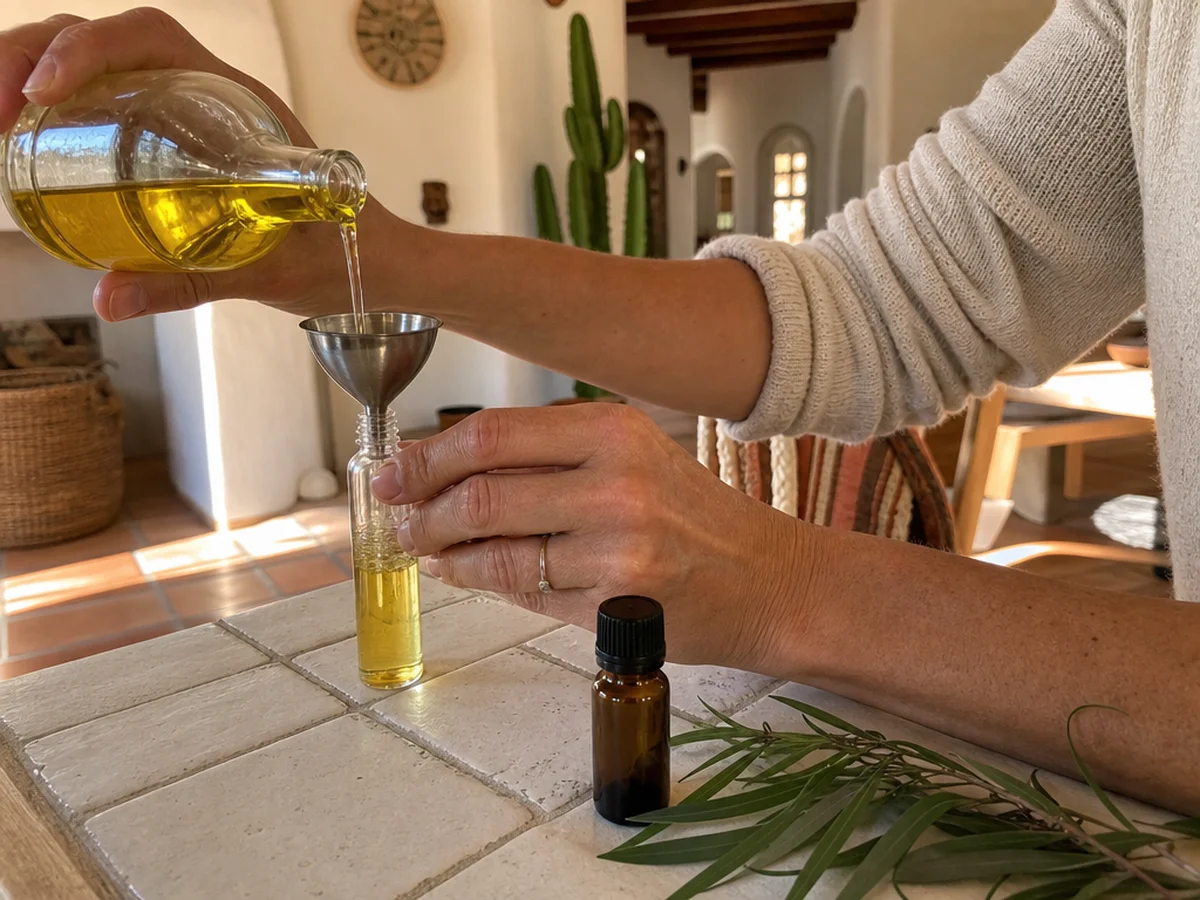
Can I put it on my skin? We sell it undiluted, so the dilution is yours to do. Our guidance is to dilute to 0.5% to 2% in a carrier oil such as jojoba or sweet almond and to patch test on a small area first. Tisserand Institute's general ranges run from 0.2% to 1% for sensitive skin to 1% to 3% for body oils and lotions, so we start at the lower end. Citronellal can sensitize some people's skin, which is one more reason to go gently. Details are in how to dilute lemon eucalyptus oil.
Is it okay around pets, children and pregnancy? We keep it away from children and pets, and we do not take it internally. For pregnancy, nursing or any medical condition, a physician is the right person to ask, and a veterinarian for animals. Our articles on cats, dogs and pregnancy walk through what the sources say.
Using and keeping it
What can I make with it? People use it in diffuser blends, soap, candles, wax melts and room sprays. A top note fades faster than a woody oil, so expect a short, bright scent that you can anchor with something deeper.

How should I store it? Capped tight, away from direct light and heat. We say it typically keeps its character for two to three years unopened. For comparison, Tisserand Institute notes that most essential oils keep well for at least one to two years before oxidation takes effect, that refrigeration roughly doubles that, and that citrus oils can turn cloudy as they age. Writing the date you opened a bottle on the label is a good habit. See how to store lemon eucalyptus oil.
Can I mix it with other oils? Yes, and it likes company. Lemongrass, lavender, cedarwood, peppermint and sweet orange all blend well with it. Smell it beside a partner on paper strips before you commit to a whole bottle of anything, and write down the ratio so you can repeat the one you love.
Do I need to take care when handling it? Wash your hands after handling it and keep them away from your eyes in the meantime. It is concentrated, and a drop on a fingertip travels easily.
Which size should I order? We offer 0.5, 1, 2, 4, 8 and 16 oz bottles and 5, 25, 100 and 400 lb containers, all the same oil. For a first try, a small bottle is plenty; our first-bottle guide helps, and the bulk and wholesale pages cover samples and volume.
If your question is not here, write to us through the contact page. For medical questions, a physician, pharmacist or veterinarian will serve you better than an oil shop.
Lemon Eucalyptus Essential Oil
Lemon Eucalyptus Essential Oil from our own shop, in sizes from 0.5 oz to bulk.
From $9.99
Shop Now →Sources & Further Reading
- Backhousia citriodora F. Muell. (Lemon Myrtle), an Unrivalled Source of Citral
- Antibacterial, Antioxidant, and Antiproliferative Activities of Corymbia citriodora and the Essential Oils of Eight Eucalyptus Species
- Corymbia citriodora: a valuable resource from Australian flora for the production of fragrances, repellents, and bioactive compounds
- Mosquitoes, Ticks, and Other Arthropods (CDC Yellow Book)
- Dilution for essential oils (Tisserand Institute)
- Is my bottle of essential oil oxidized or no longer good to use? (Tisserand Institute)