How to Make Lemon Eucalyptus Wax Melts at Home
A wax melt is one of the simplest ways to fill a small room with scent: no flame, no wick, just gentle warmth. A bright oil like lemon eucalyptus suits the job, giving a crisp lemon-and-leaf freshness in a hall, bathroom or desk corner. A little planning decides how well it works, and the choice of warmer matters as much as the wax.

Lemon Eucalyptus Essential Oil
Our own Lemon Eucalyptus Essential Oil, in sizes from 0.5 oz to bulk.
From $9.99
Shop Now →Start with the warmer
Warmers are heating appliances, and CPSC has recalled some for fire and burn hazards. It recalled about 730,000 Provo Craft electric candle warmers because the heating element could detach and melt the plastic casing beneath, with 11 reports including two fires. It also recalled about 32,000 Family Dollar wax warmer sets that could produce high flames, with 11 reports including two burn injuries and three cases of property damage. That Family Dollar model was a tea-light warmer, not an electric plate.
Two recalls do not make warmers unsafe as a category, but they are a good reason to check the model you buy against CPSC's recall list, put it on a flat, heat-tolerant surface away from curtains and paper, and switch it off when you leave the room or go to bed. That last habit is our suggestion rather than a CPSC rule for wax melts.
What to expect from this oil
We describe lemon eucalyptus as lemony, fresh and green, and as a top note. Top notes evaporate fastest, so in a warm melt the lemon sparkle arrives quickly and fades sooner than a woody oil would. Hiqili, a melt maker, notes that essential oils tend to give a softer, shorter scent than fragrance oils made for melts. That makes lemon eucalyptus a charming choice for a short, clean burst in a small space, and a slower partner under it stretches the effect. Lemongrass, lavender, cedarwood, peppermint and sweet orange all blend well with it, and our list of partners and evaporation-order article help you choose. We sell only the lemon eucalyptus oil, so the others come from a supplier of your choice.
What you need on the table
This is a gentle, low-fuss project, and setting up first makes it more enjoyable. You will want a kitchen scale that reads in grams, since weighing beats counting drops every time. Add a heat-safe pouring jug, a spoon you do not mind dedicating to wax, a silicone mold or an old clamshell package, and a few paper towels. Cover the work surface with newspaper, because wax drips find their way everywhere.
Choose your wax before your oil. Soy melt wax is a popular, forgiving starting point, and the supplier will print their own temperature and scent-load guidance on the bag. That printed guidance beats anything in a general article, ours included.
The formulation, by weight
Hiqili suggests testing a scent load of 8 to 12% of the wax weight, adds that the limit depends on the wax, and says a lower supplier limit should win. Those are general melt figures rather than ones set for essential oils, so we would climb gradually from the low end. For 100 g of wax:
| Test | Load by wax weight | Oil per 100 g wax | What to look for |
|---|---|---|---|
| 1 | 4% | 4 g | Smell the cured melt in the warmer: faint or fine? |
| 2 | 6% | 6 g | Only if test 1 is faint after curing |
| 3 | 8% | 8 g | The low end of Hiqili's range |
Too much oil shows itself: Hiqili lists surface oil beads, a greasy feel or residue in the mold as the signs. If you see them, step the load back and try again.
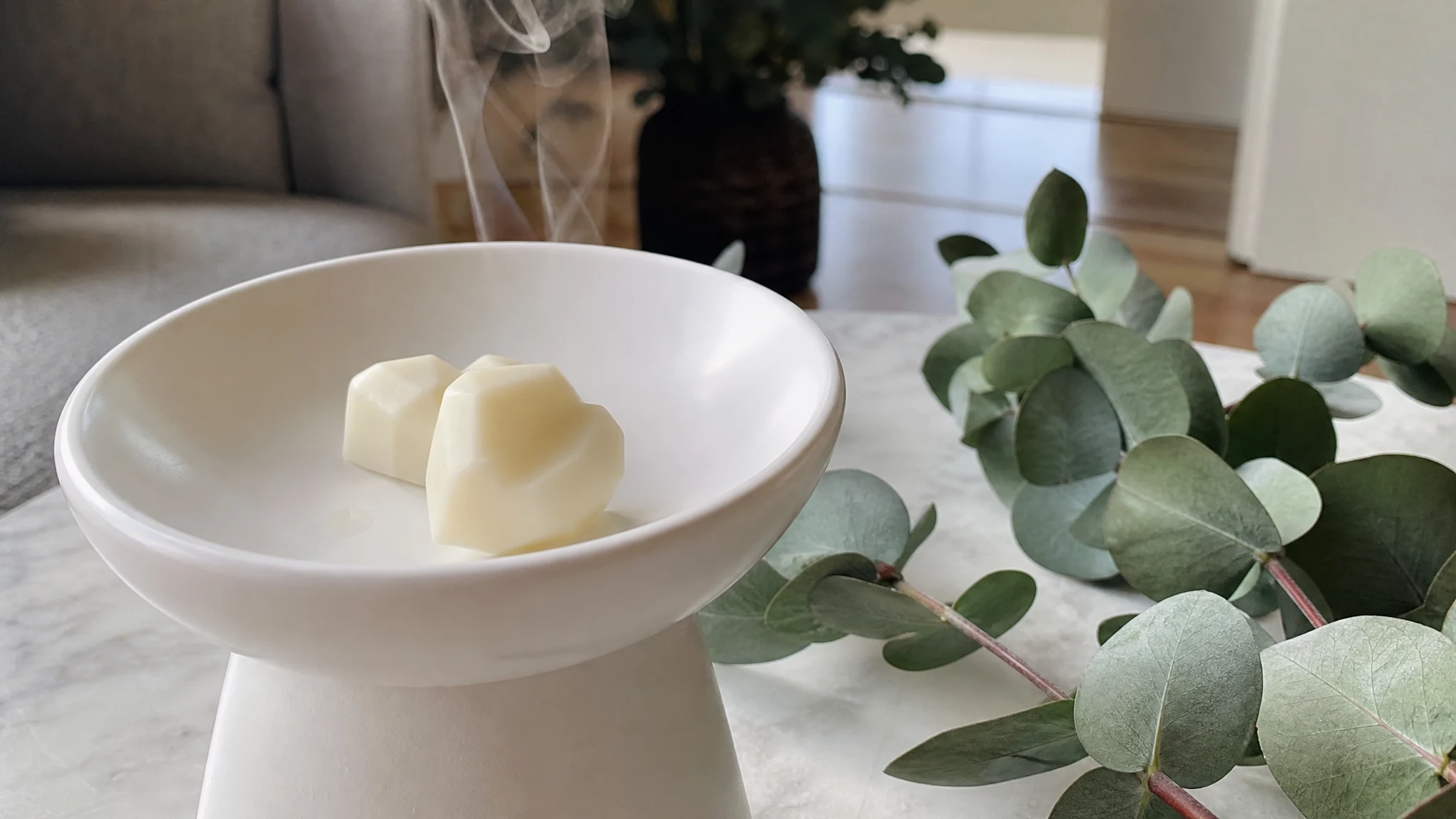
Think about the finished size too. Small melts are the friendliest for a bright oil like this one: a little cube or a tiny flower shape in the warmer's dish gives a quick lift and is easy to swap out when the scent has softened. Big melts last longer but can leave you with a faded scent for most of their life.
Method
- Melt soy or your chosen melt wax by the supplier's directions. Hiqili gives 175 to 185 F as a typical soy add temperature, so check your wax.
- Take it off the heat, add the weighed oil, and stir for about two minutes, as Hiqili suggests.
- Pour into the mold and let it set.
- Rest the melts for a few days before judging; Hiqili suggests testing after 3 to 5 days, then again after a week or two.
Keep the working oil capped and away from heat between batches. Our storage guide explains how to look after it, and if you are curious about other ways to scent a room, our diffusing guide is a good next stop.
What you will notice along the way
When the first melt goes into the warmer, stand in the doorway rather than right over it. The first few minutes smell the most lemony, and you may then notice the green, slightly camphor-like side step forward. After an hour or so the scent often settles into a softer background, which is exactly what you want from a small room. If it seems to disappear completely, the melt is probably spent, and you can pop in a fresh one.
Clean the dish once it has cooled and set, not while it is hot. A tissue wipes out the leftover wax with no effort at all.
Small melts, a modest load and a steady warmer are all you need for a fresh little corner of lemon.
Lemon Eucalyptus Essential Oil
Lemon Eucalyptus Essential Oil from our own shop, in sizes from 0.5 oz to bulk.
From $9.99
Shop Now →