Scenting an Outdoor Wedding: Where Candles Work Best
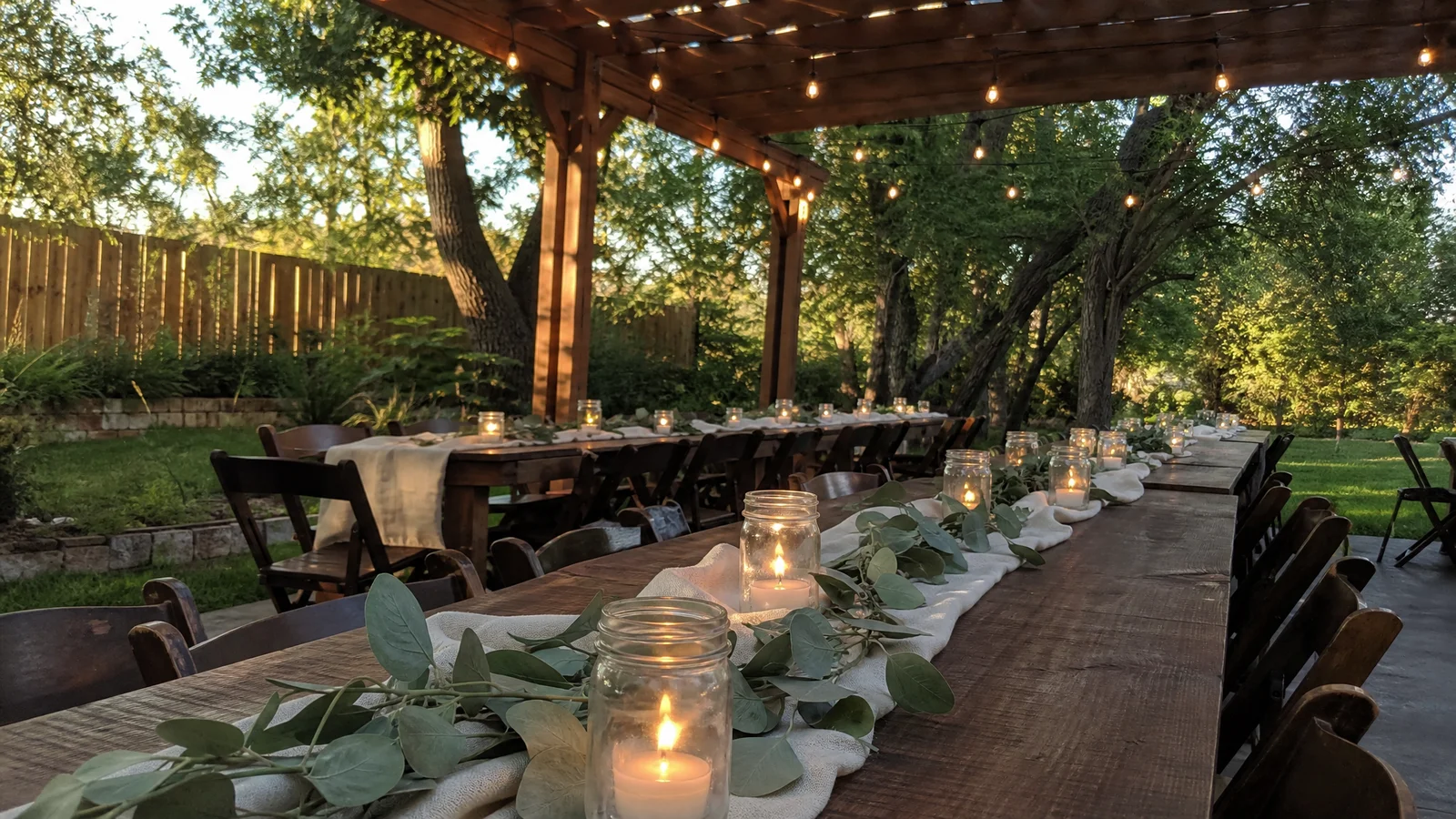
Picture a lawn wedding at golden hour: string lights, long tables, and the faint scent of lemon drifting from a candle by the welcome sign. It is a lovely idea, and it works best when you plan it as a scent for moments rather than a scent for the whole party. Open air changes the rules.

Lemon Eucalyptus Essential Oil
Our own Lemon Eucalyptus Essential Oil, in sizes from 0.5 oz to bulk.
From $9.99
Shop Now →Give the scent a job
Indoors, a candle's scent builds up in the room. Outdoors, any breeze carries it off. That is reasoning from basic physics rather than a measured result, but it points to a clear plan: choose a few places where scent will be noticed, and let it be a pleasant surprise there.
Lemon eucalyptus suits that role. Its aroma is lemony, fresh and green over a lightly camphorous base, and it is a top note, the bright part of a scent that greets you first and tends to thin out fastest. In practice that makes it a natural fit for an entrance, a welcome table or a place guests pass through, and less so for a dinner table where people sit for hours.
Guests stop noticing, so put it where they arrive
A 2017 review in Physiology and Behavior by Pellegrino, Sinding, de Wijk and Hummel concludes that habituation to odors, a decrease in how intense a smell feels with repeated exposure, is relatively fast. The abstract does not give times for particular scents, so we will not guess at minutes. The practical lesson we draw is that scent does best where people arrive, move around and return, and worst right beside a seat they occupy all evening.
| Spot | How guests use it | Our suggestion |
|---|---|---|
| Entrance, welcome table, guest book | Brief passes, new people all the time | The best place for the scent |
| Ceremony seating | Seated for a set time | Near the way in, not beside the rows |
| Cocktail area | Standing, circulating, food nearby | Light scent only; let the food lead |
| Dining tables | Seated and eating for a long time | Unscented candles, so nothing competes with the meal |
That placement column is judgment, so treat it as a starting plan to test at the venue.
Make candles early
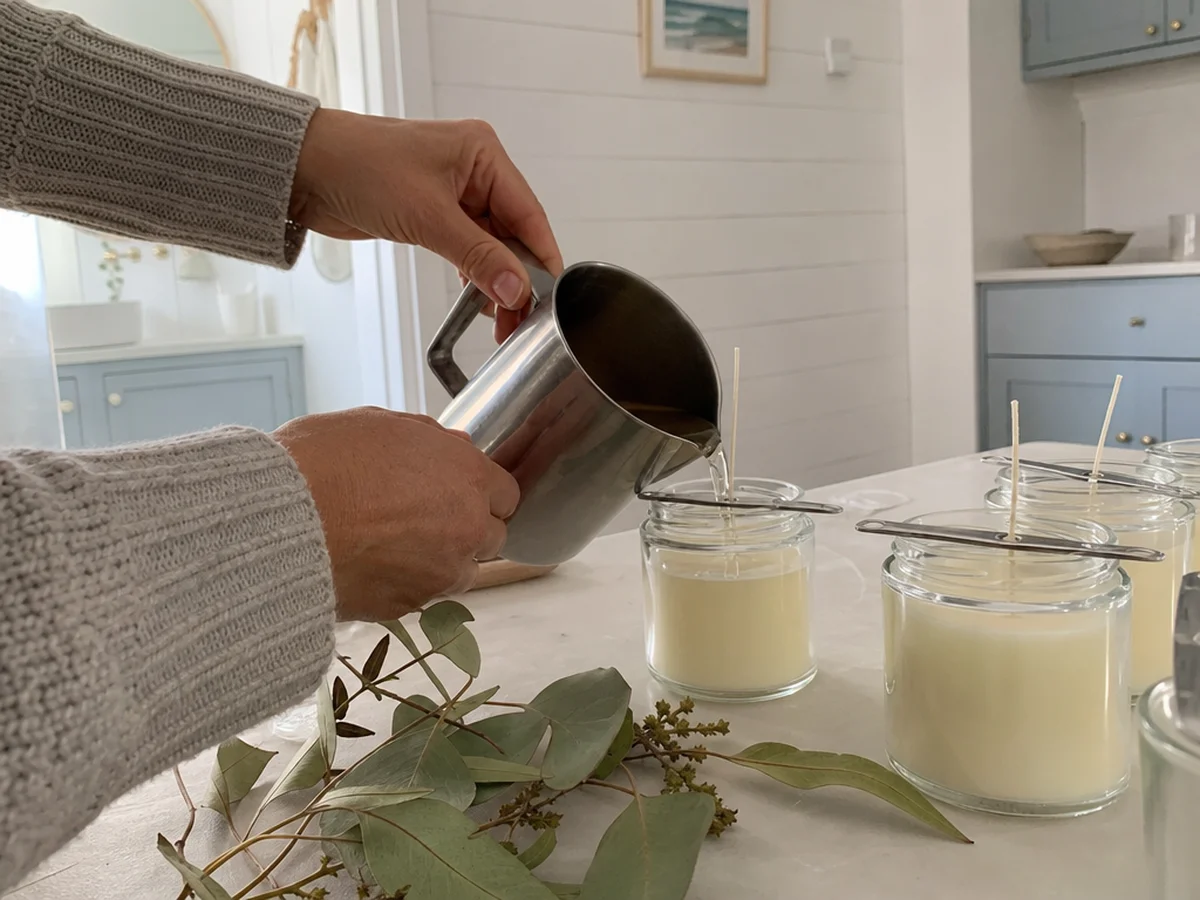
If you are making the candles yourself, the calendar is the thing to watch. We sell the oil only, so wax, wicks and containers come from a craft supplier. Craftybase says most candles need one to two weeks to cure before the fragrance fully bonds with the wax, so judging a freshly poured candle can mislead. It gives the load formula (fragrance weight equals the load percentage divided by 100, times the wax weight, so 6% of a 320 g batch is 19.2 g) and suggests a burn test, with a correctly sized wick reaching a full melt pool within two to three hours. Its maximum loads are written for fragrance oils, so for an essential oil the right amount is something to test in your own wax.
Working backwards from a wedding date, pouring three or four weeks ahead leaves room to cure, burn test and, if needed, pour again. That timeline is our suggestion. Craftybase also advises adding fragrance at least 10 to 15 degrees Fahrenheit below the material's flash point and checking the safety data sheet for the exact figure; if you are working with our oil and need a number, ask us in writing through the contact page. Our patio candle formulation and the candle maker's buying guide walk through the by-weight arithmetic.
Buying finished candles instead? Ask the maker what the scent is made from and whether the candle was burn tested at its size, because a lemon eucalyptus label does not tell you either.
Flame outdoors needs a little extra care
The U.S. Fire Administration, citing NFPA, says about 20 home candle fires are reported each day. Its advice is to keep candles at least 12 inches from anything that can burn, use sturdy holders where they cannot be easily knocked over, blow them out when you leave, and consider battery-operated flameless candles. Its page is about homes, so what follows is our reasoning: an event has tablecloths, programs, flowers and fabric arches, and guests are standing and moving, so the clear space and the stable holder matter even more. Ask your venue about its candle rules, and flameless candles are a good answer where flame is not allowed.
Walk the route like a guest
A week before the event, stand at the entrance and walk the path your guests will take. Where do they slow down? Where do they cluster? Those pauses are where scent will land best. Then ask a friend who has not seen your plan to walk in cold and tell you what they notice, and where. Their first reaction beats any amount of guessing.
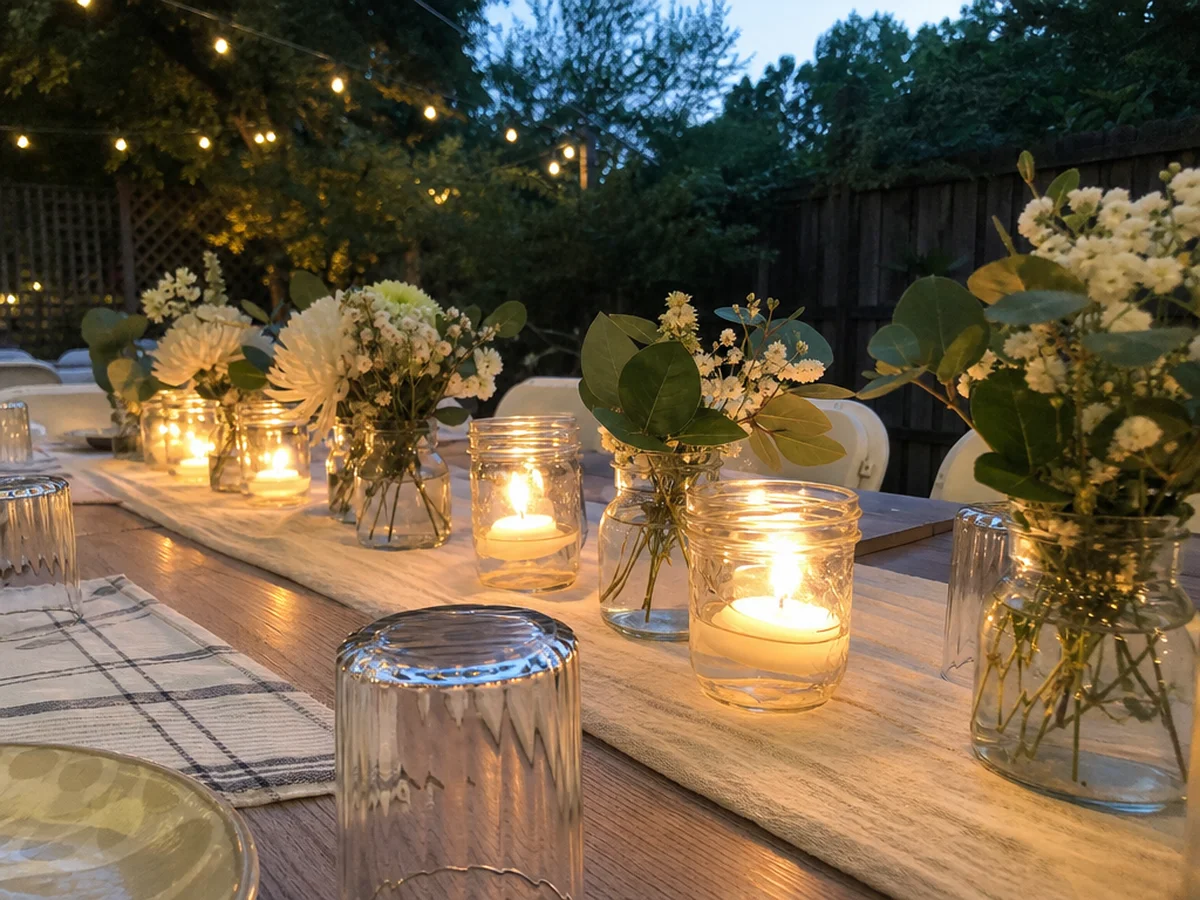
Do it at the same time of day as the event if you can. Light, temperature and the breeze all change how a scent drifts, and an afternoon walk-through tells you more than a bright midday check ever will.
A candle is atmosphere, not a bug plan
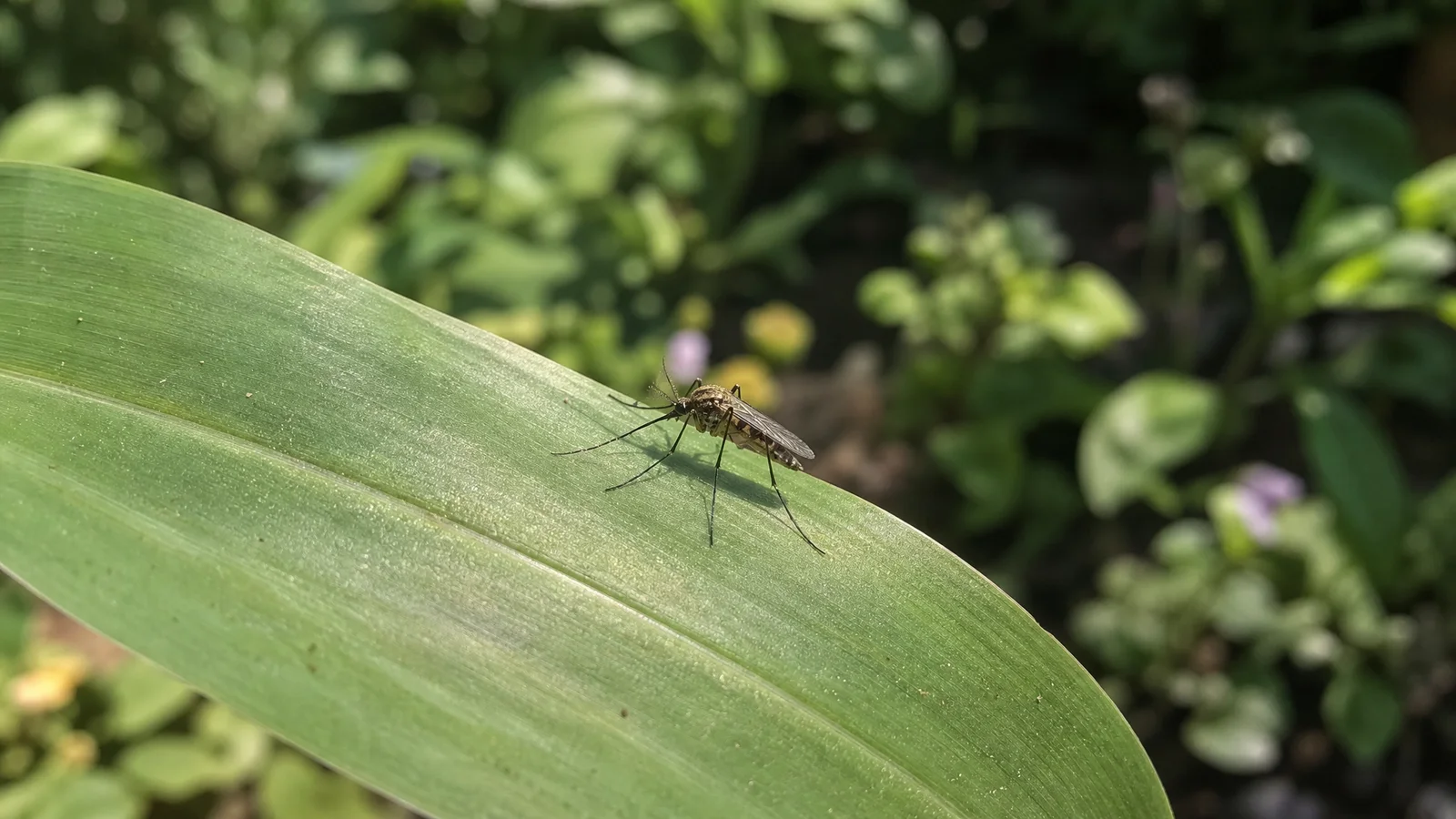
It is easy to assume a lemon-scented candle will help with mosquitoes, so let us be clear: we sell an essential oil, not a registered repellent, and a candle is part of the evening's mood. For the bug side of the evening, the outdoor event mosquito plan is the place to look. Keep scent light as well, since you cannot know who is sensitive to fragrance, and an unscented seating area is a kindness for guests who are pregnant, unwell or simply not fans.
Two or three well-chosen scented spots, an early pour and a steady holder will do more than a dozen candles ever could.
Lemon Eucalyptus Essential Oil
Lemon Eucalyptus Essential Oil from our own shop, in sizes from 0.5 oz to bulk.
From $9.99
Shop Now →Sources & Further Reading
- Habituation and adaptation to odors in humans Pellegrino R, Sinding C, de Wijk RA, Hummel T. Physiology and Behavior 177:13-19, 2017
- Candle Fragrance Load Calculator - Formula, Wax Percentages and Flash Point Guide Craftybase
- Candle Fire Safety U.S. Fire Administration