Which Bugs Does Lemon Eucalyptus Repellent Cover?
Search for what lemon eucalyptus repels and you will meet long lists of bugs, each with a cheerful tick beside it. The truth is more graded than that. The evidence is firm for mosquitoes, decent for ticks in one study, and thin for most other pests, and the label on the product you are holding decides what it may claim.

Lemon Eucalyptus Essential Oil
Our own Lemon Eucalyptus Essential Oil, in sizes from 0.5 oz to bulk.
From $9.99
Shop Now →First, which "lemon eucalyptus" is this?
Everything on this page concerns EPA-registered repellents whose active ingredient is oil of lemon eucalyptus (OLE) or PMD. The CDC lists both among its recommended active ingredients, next to DEET, picaridin and IR3535. It does not recommend an unformulated lemon eucalyptus essential oil as a repellent, since that has not been through validated testing and carries no EPA registration. The oil we sell is the essential oil, and our how-we-test page says plainly it is not a registered repellent, so none of what follows is a claim about our bottle. The difference is laid out in our OLE comparison.
A friendly habit when you read any list of bugs online: ask where each tick mark came from. A list that names twenty insects and cites nothing is telling you about hope, not evidence. The sections below separate what has been studied from what has only been repeated.
Mosquitoes: the strong suit
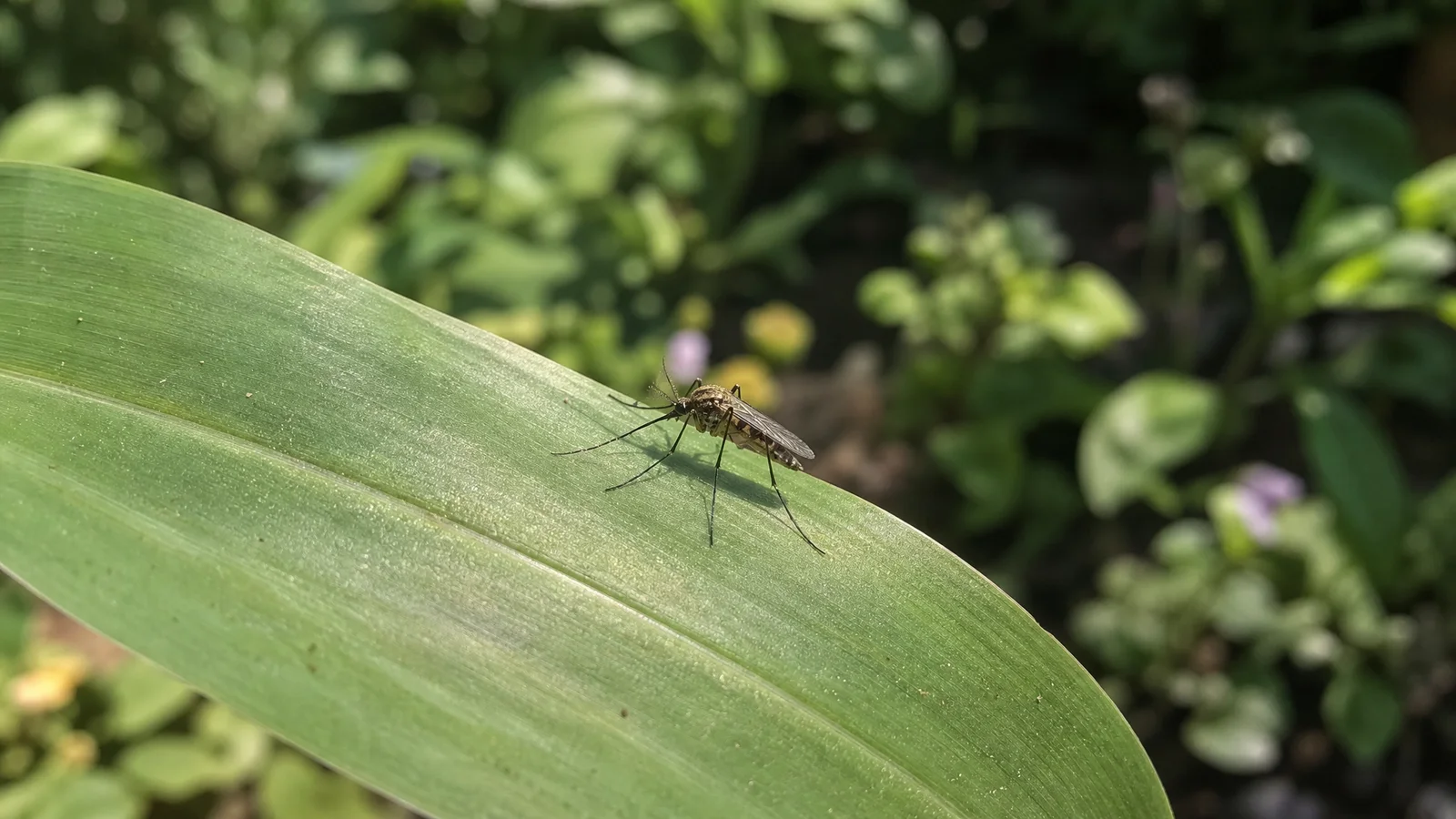
The best-documented case is mosquitoes. A 2006 review by Carroll and Loye summarised field and laboratory data on PMD against several mosquito groups, including comparisons with high-strength DEET, and concluded that CDC's endorsement was warranted. That is one well-documented review rather than the last word, but it is why mosquitoes sit at the top of every sensible list. For a plain-English walk through the studies, see does lemon eucalyptus repel mosquitoes.
Ticks: one product, one species
The tick evidence is real but narrower than headlines suggest. In a Swedish cross-over field trial reported by Gardulf and colleagues, 111 adults sprayed a lemon eucalyptus extract (Citriodiol) on their lower legs for two weeks and went without any repellent for two. They reported 42 attached ticks in the spray weeks and 112 in the no-spray weeks. That is encouraging, though the volunteers kept their own diaries, the comparison was against no repellent rather than a placebo, and it covered a single product against a single European tick. The authors themselves called for more studies. Our tick article puts it in context, including the clothing layer the CDC suggests.
Midges, black flies and the rest
This is where marketing tends to outrun data. In a light-trap experiment, Murchie and colleagues found that mesh treated with a DEET and PMD repellent surprisingly caught three to four times more of the commonest midge group. The authors suggested the strong trap light overwhelmed any close-range effect, and they cautioned that it does not mean the repellent fails on a person. So the honest answer for biting midges is "unclear". For black flies, a 2026 laboratory feeding system paper tested products on a single species, which makes it a lead and no more. For gnats, deer flies and horse flies, we could find no study to point you to.
How to buy for the bug you actually have
EPA's optional repellency awareness graphic shows whether a product is meant for mosquitoes, ticks or both, and the agency's search tool filters on the same two pests. Claims about other insects live in the maker's label text. Our reasoning from that is simple: do not buy a product for a pest the label does not name.
- Name the pest. A dusk mosquito problem and a tick problem in leaf litter call for different layers.
- Read the label for that pest, using our label guide if you want a hand.
- Check the registration number in EPA's search tool.
- If the label is silent on your pest, add another layer such as clothing, timing or a physical barrier, rather than more product.
Garden gnats are the pest people ask about most and the one we can verify least, so our gardening piece sticks to what a label can back up. And remember the CDC's age guidance: OLE and PMD products generally are not for children under 3, with a narrow label-dependent exception, so read the label first and ask a pediatrician.
If you are not sure which pest is bothering you, pay attention to when and where it happens. Tiny biting insects at dusk by the water, a bite from something you never saw in tall grass, and a swarm around the garden hose are three different stories. A few notes in your phone over a couple of weeks will tell you more than any list will.
Match the layer to the evening
Different settings call for different habits. At a dusk barbecue, screens, sleeves and the timing of your evening do a lot of the work. On a walk through long grass, long trousers tucked into socks and a careful look at your clothes afterwards come first. Near still water at sunset, you may simply decide to eat earlier and move indoors. A repellent registered for your pest is one layer among several, not the whole plan, and thinking in layers keeps you from leaning on any single product.
We sell one oil, a bright steam-distilled leaf oil for fragrance and craft projects, and we leave bug protection to registered products made for it. Sorting out which one you need is the whole point of reading the label.
Lemon Eucalyptus Essential Oil
Lemon Eucalyptus Essential Oil from our own shop, in sizes from 0.5 oz to bulk.
From $9.99
Shop Now →Sources & Further Reading
- Mosquitoes, Ticks, and Other Arthropods (CDC Yellow Book)
- Find the Repellent that is Right for You (US EPA)
- Repellency Awareness Graphic (US EPA)
- PMD, a registered botanical mosquito repellent with deet-like efficacy (J Am Mosq Control Assoc, 2006)
- A prospective cross-over field trial shows protection of lemon eucalyptus extract against tick bites (J Med Entomol, 2004)
- DEET (N,N-diethyl-meta-toluamide)/PMD (para-menthane-3,8-diol) repellent-treated mesh increases Culicoides catches in light traps (Parasitol Res, 2016)
- THE DEVELOPMENT OF A WATER-JACKETED MEMBRANE FEEDER REPELLENT TESTING SYSTEM FOR BLACK FLIES (DIPTERA: SIMULIIDAE) (J Am Mosq Control Assoc, 2026)