What Does Lemon Eucalyptus Oil Smell Like?
Lemon eucalyptus smells like lemon the way a freshly cut garden smells like summer: you know exactly what it is, and it is not quite what you expected. We describe it as lemony, fresh and green, with bright citrus up front that settles into a crisp, lightly camphorous base, sunnier and more open than the eucalyptus most people know.

Lemon Eucalyptus Essential Oil
Our own Lemon Eucalyptus Essential Oil, in sizes from 0.5 oz to bulk.
From $9.99
Shop Now →Leaf, not fruit
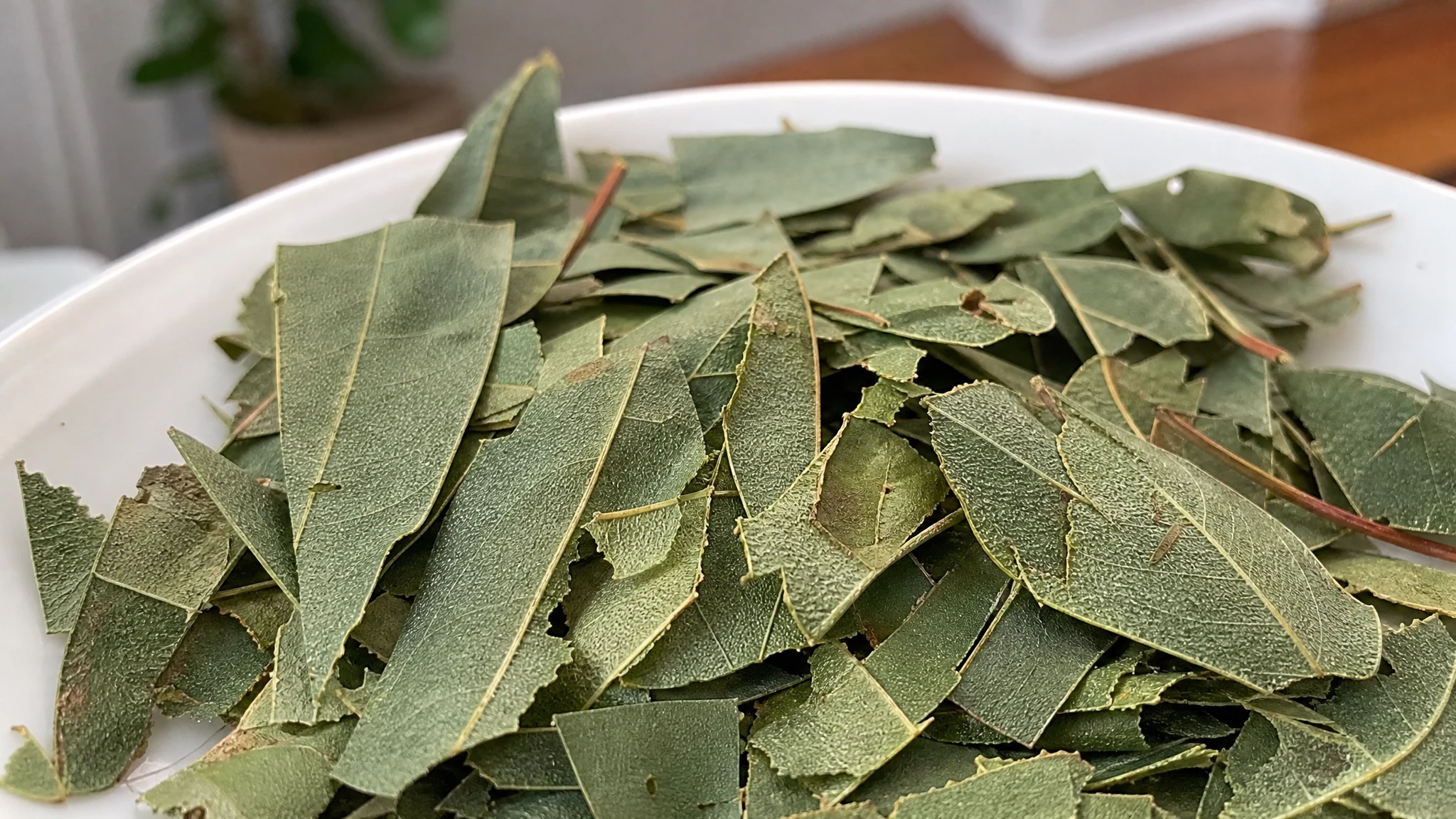
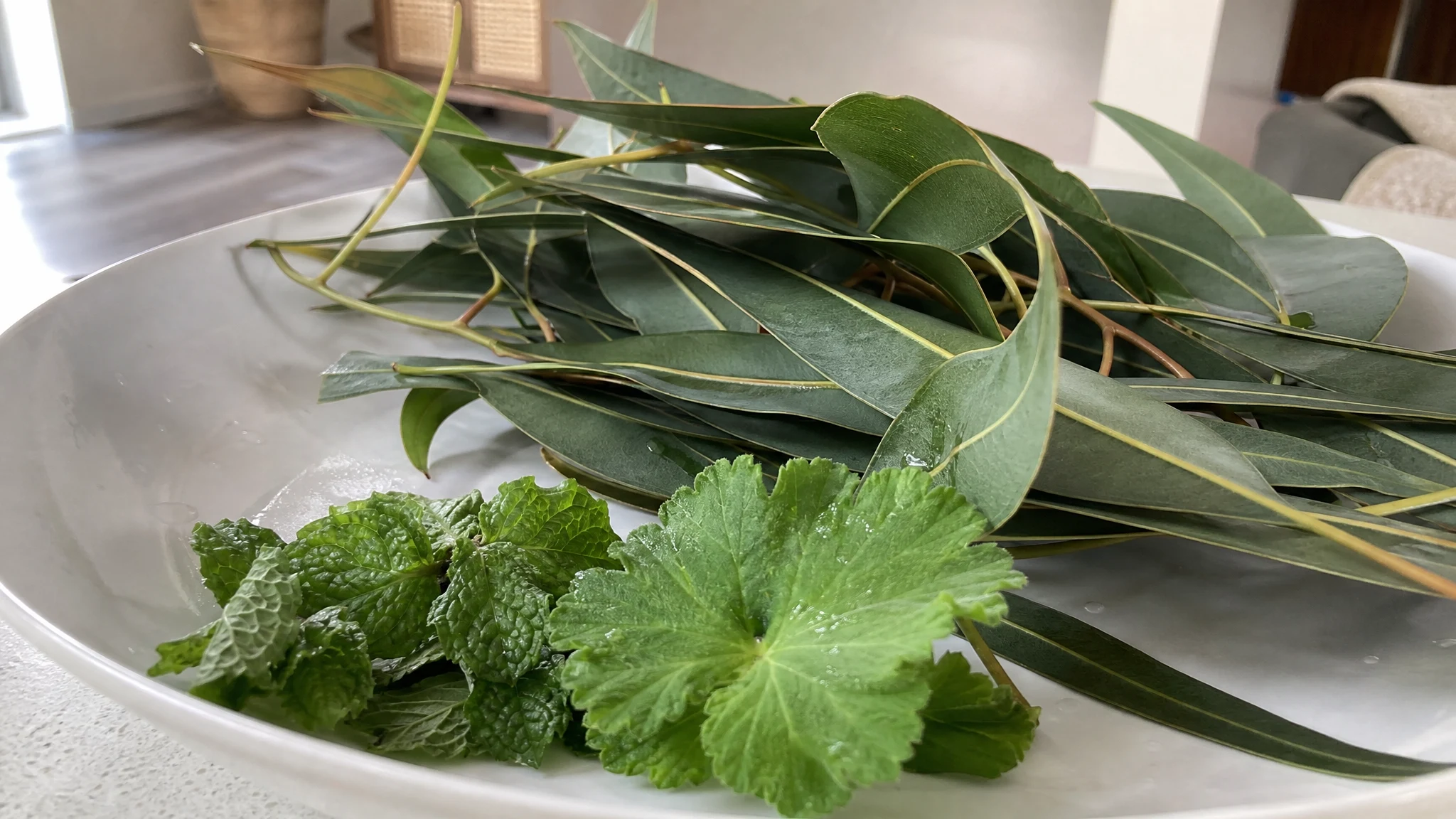
The first thing to understand is that there is no fruit in this bottle. Lemon peel oil is pressed from the rind; lemon eucalyptus is steam distilled from the leaves of Corymbia citriodora. Different starting material, different molecules. The lemon note comes from citronellal, the leading aroma compound in the oil, whereas lemongrass and lemon myrtle get their lemon from citral, according to a review by Southwell. That is why all three are called "lemony" yet smell like three different people. We put them side by side in our lemongrass comparison.
It also helps explain why this does not smell like a chest-rub eucalyptus. In an analysis by Miguel and colleagues, ordinary Eucalyptus globulus oil was dominated by 1,8-cineole, at 64%, while a lemon-scented gum sample held only 11%. Less of the medicinal note means more room for the green, citrusy character. Our globulus comparison goes deeper.
How the scent unfolds
This is a top note, which means it makes its entrance quickly and then steps back. Wikipedia's article on perfume explains that top notes are small, light molecules that evaporate fast, with citrus materials as a textbook case. Here is how that tends to read, as a way of thinking about it rather than a measurement:
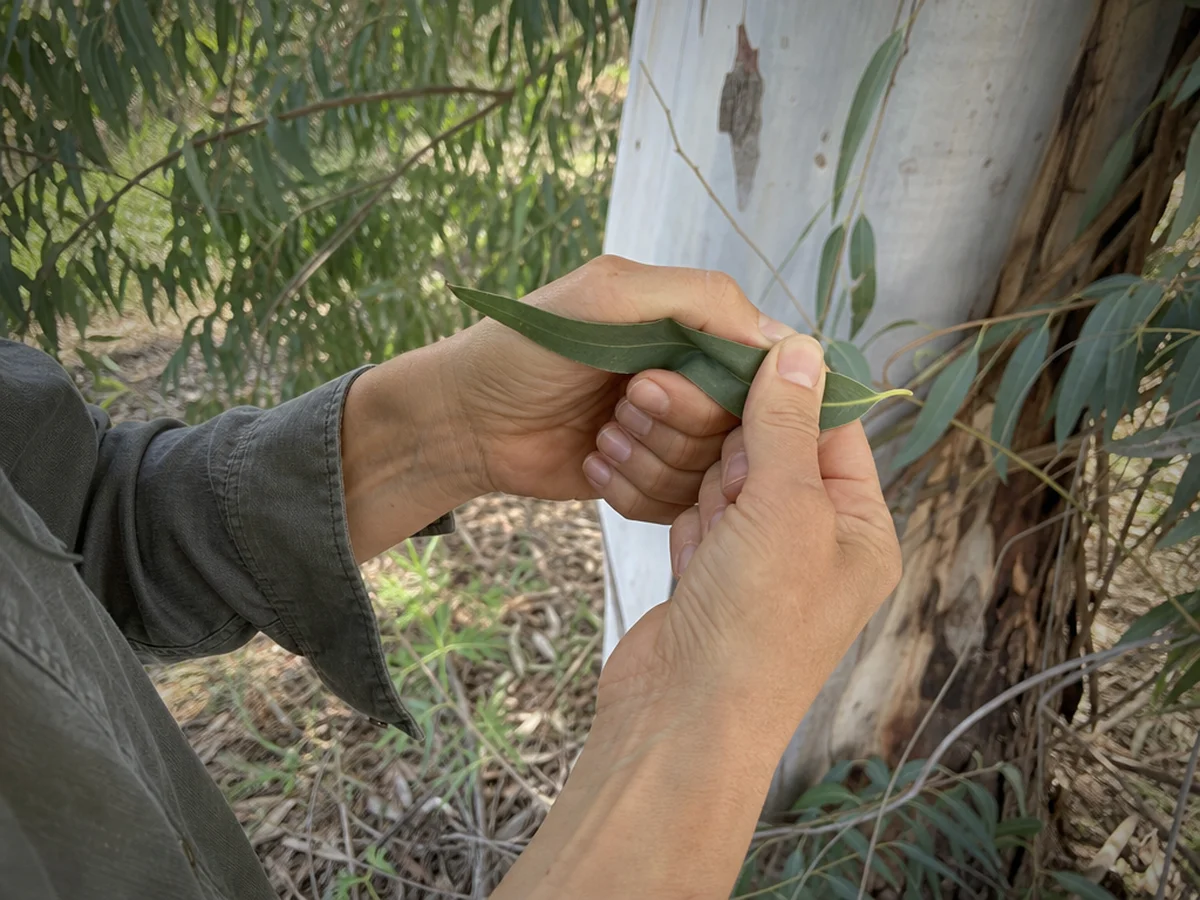
- The first minute. Sharp, sparkling citrus with a green edge.
- A few minutes in. Rounder and softer; a cool, camphor-like edge can appear.
- After half an hour. A quiet, dry, faintly sweet-green trace. The lemon has mostly left the building.
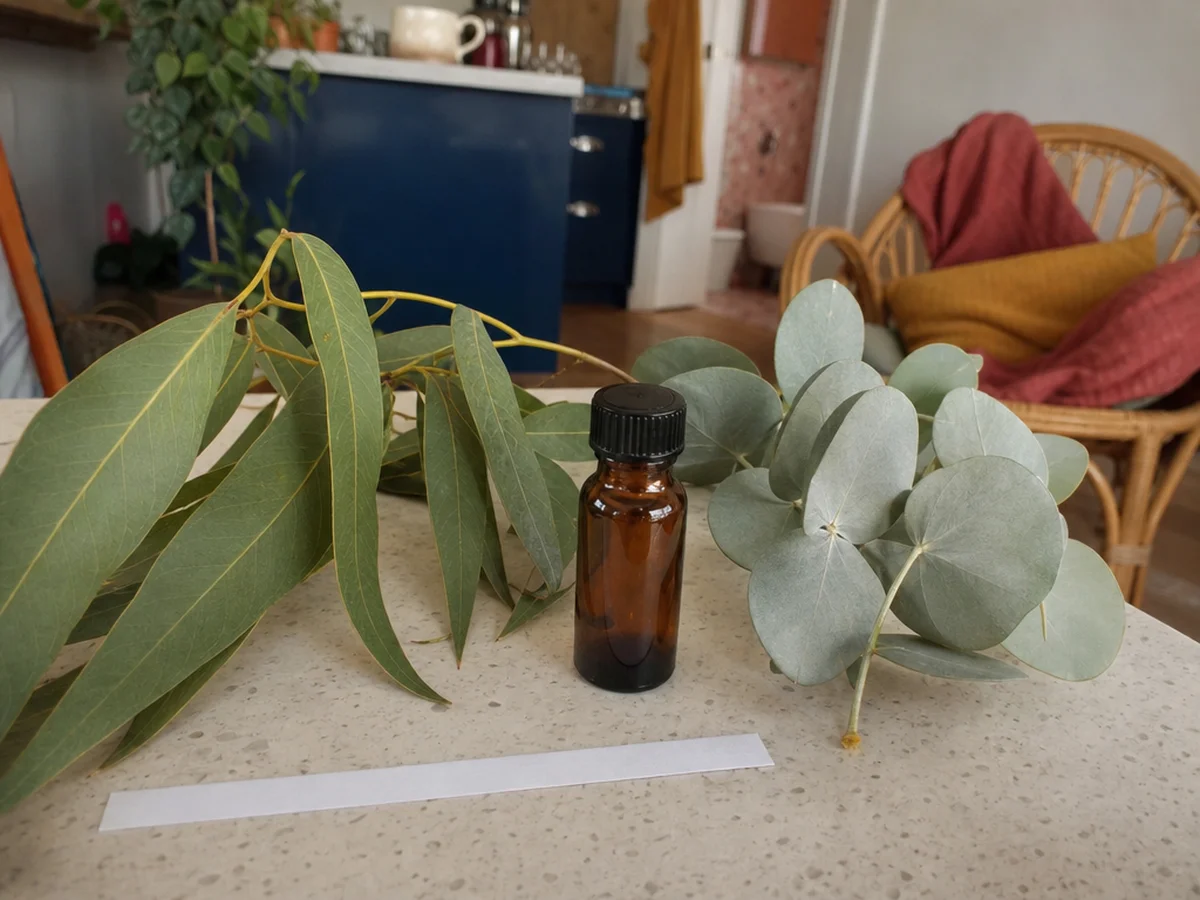
That arc is the best reason to judge the oil in stages instead of at the bottle neck. Put a drop on a paper strip, sniff, set it down, and come back in a few minutes and again later. You will learn more from the strip than from any adjective.
A simple smelling session at home
You do not need any equipment to get to know this oil. Cut a few strips of plain paper, label one with the name of the oil, and put a single drop on it. Hold it a hand's width from your nose and breathe in gently, then wave it a little and try again. If you have another bottle on the shelf, say sweet orange or lavender, give it its own strip so you can compare them side by side.
- Smell the strip right away and jot down the first word that comes to mind.
- Set it down, do something else for five minutes, and smell it again.
- Come back after half an hour and write down what is left.
Those three words, one from each stage, are a better record of the oil than any description we could give you. Keep them with the strip if you plan to blend later.
Keep your nose honest
A tired nose is the most common reason people over-scent a blend. A study of habituation and adaptation to odors in humans reports that habituation is relatively fast, so a bright oil sniffed repeatedly will seem to fade even when the bottle has not changed. Step outside, breathe fresh air, and come back before you decide to add more. Judge it, too, in the product at the strength you will actually use, since dilution changes how a strong top note reads.
One more thing worth knowing: composition shifts with where and when the leaf was grown, as Goodine and Oelgemoeller note, so one lot can smell a touch different from the next. We describe the colour as typically pale yellow to light amber, but colour is not a reliable guide to the scent.
Putting the scent to work
Because it lifts a blend at the start and then recedes, lemon eucalyptus shines in a diffuser, a candle's first minutes, or a room spray where you want a clean, open opening. If you want the freshness to linger, pair it with heavier partners. We suggest lemongrass, lavender, cedarwood, peppermint and sweet orange, and our bright partners list and blending mistakes give ideas.
A word on care, because a citronellal-forward oil is lively. Some people find it sharp in a small room. It is also a concentrated botanical, so for skin use we suggest a carrier oil, a patch test and a light hand, which is why we start at the low end of our 0.5% to 2% range. Keep it away from children and pets, ask a veterinarian before diffusing near cats, dogs or birds, and check with your physician if you are pregnant or nursing. The scent also says nothing about insects; we sell an essential oil, not a registered repellent.
Words people reach for
Scent is hard to put into words, so it helps to borrow from everyday life. As you smell the oil, you may find yourself thinking of crushed leaves on a warm path, a glass of lemon water with a sprig of something green in it, or the clean air of an open window. Your own comparison might be quite different, and that is part of the pleasure. Try describing it to a friend and see whether they agree, because noses differ more than people expect.
We like to remind customers that a scent profile is a starting point and not a rule. Sit with the oil for a few evenings in the same room, and the picture will get clearer than a first sniff ever could.
Smell it for what it is: a leaf oil that carries the memory of a sunny grove.
Lemon Eucalyptus Essential Oil
Lemon Eucalyptus Essential Oil from our own shop, in sizes from 0.5 oz to bulk.
From $9.99
Shop Now →Sources & Further Reading
- Backhousia citriodora F. Muell. (Lemon Myrtle), an Unrivalled Source of Citral (Southwell, Foods, 2021)
- Antibacterial, Antioxidant, and Antiproliferative Activities of Corymbia citriodora and the Essential Oils of Eight Eucalyptus Species (Miguel et al., Medicines, 2018)
- Corymbia citriodora: a valuable resource from Australian flora for the production of fragrances, repellents, and bioactive compounds (Goodine and Oelgemoeller, 2020)
- Perfume - Wikipedia
- Habituation and adaptation to odors in humans (Wageningen University & Research)