Citronellal Explained: Why Lemon Eucalyptus Smells Lemony
Crush a leaf from a lemon-scented gum and you get lemon, though nothing about the tree is a citrus. The credit goes to a single molecule called citronellal, and once you know about it, a lot of what this oil does (and how we suggest you treat it) falls into place.

Lemon Eucalyptus Essential Oil
Our own Lemon Eucalyptus Essential Oil, in sizes from 0.5 oz to bulk.
From $9.99
Shop Now →One molecule, several famous plants
Citronellal is a ten-carbon aldehyde, and it turns up as the leading aroma molecule in a handful of plants. Wikipedia's entry on citronellal names the leaf oil of lemon-scented gum (Corymbia citriodora) among its main sources, alongside oils from several Cymbopogon grasses, and credits it with the lemony character of citronella oil. That is why people so often tangle up lemon eucalyptus and citronella: different plants, same headline molecule. We describe the oil's naturally high citronellal as the source of its brighter lemon note, and that is a fair one-line summary of the whole story.
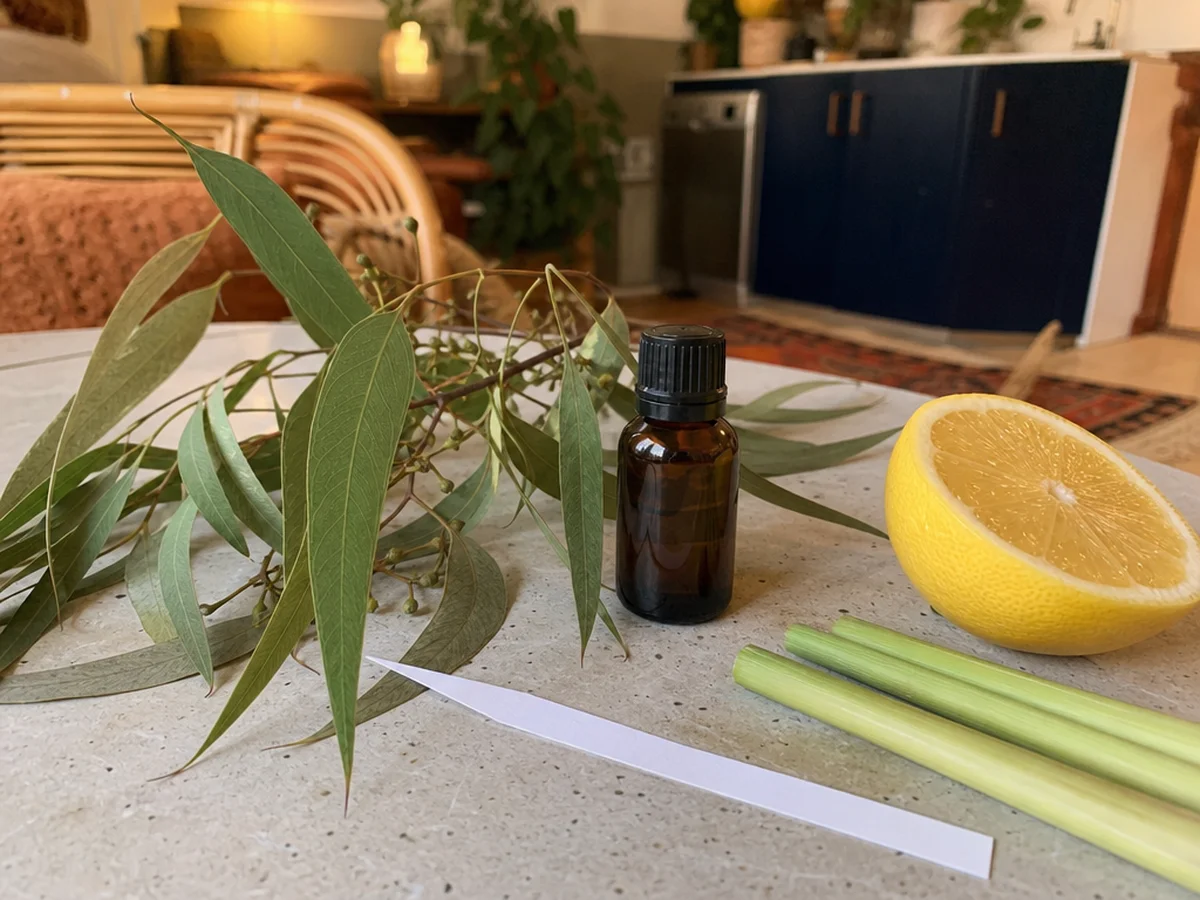
It also explains why this oil does not smell like lemongrass or lemon myrtle, which are "lemony" for a different reason. Those two get their scent from citral, a different molecule altogether. If you like comparing, we walk through lemon eucalyptus against lemongrass and against lemon myrtle side by side.
If you ever get the chance to rub a leaf of lemon-scented gum between your fingers, the lemon is the first thing you'll notice. It surprises people every time, because the tree looks like any other eucalyptus. The bottle is that same surprise, concentrated.
"High citronellal" is a range, not a number
People like a single figure, but trees do not oblige. The plant-resource handbook PROSEA reports that natural Australian stands of this species run from about 1% to 91% citronellal in the leaf oil, and that the citronellal-rich types behind the trade oil sit between 65% and 91%. A review by Southwell lists 65% to 85% for the oil. A single sample from a Portuguese arboretum, analysed by Miguel and colleagues, came in at 36%, with isopulegol, citronellol and 1,8-cineole making up much of the rest.
The takeaway is practical rather than statistical. Where the leaf grew, when it was cut and how it was distilled all shift the result, so two oils sold under the same name can smell a little different. If a figure matters to what you are making, ask for it in writing before you order. You can reach us through the contact page, and our guide to judging lemon eucalyptus oil quality lists what a good report should show. The supporting cast of smaller molecules has its own write-up in the isopulegol and citronellol article.
What a lemon-scented molecule means at the bench
It is a top note. Perfumers sort materials by how fast they reach the nose and how fast they leave. Per Wikipedia's article on perfume, top notes are made of small, light molecules that evaporate quickly, and citrus materials are the classic example. A citronellal-led oil follows the same logic, so expect the lemon to sparkle first and recede first. Pair it with something heavier if you want the freshness to hang around. Our list of blending partners is a good place to start.
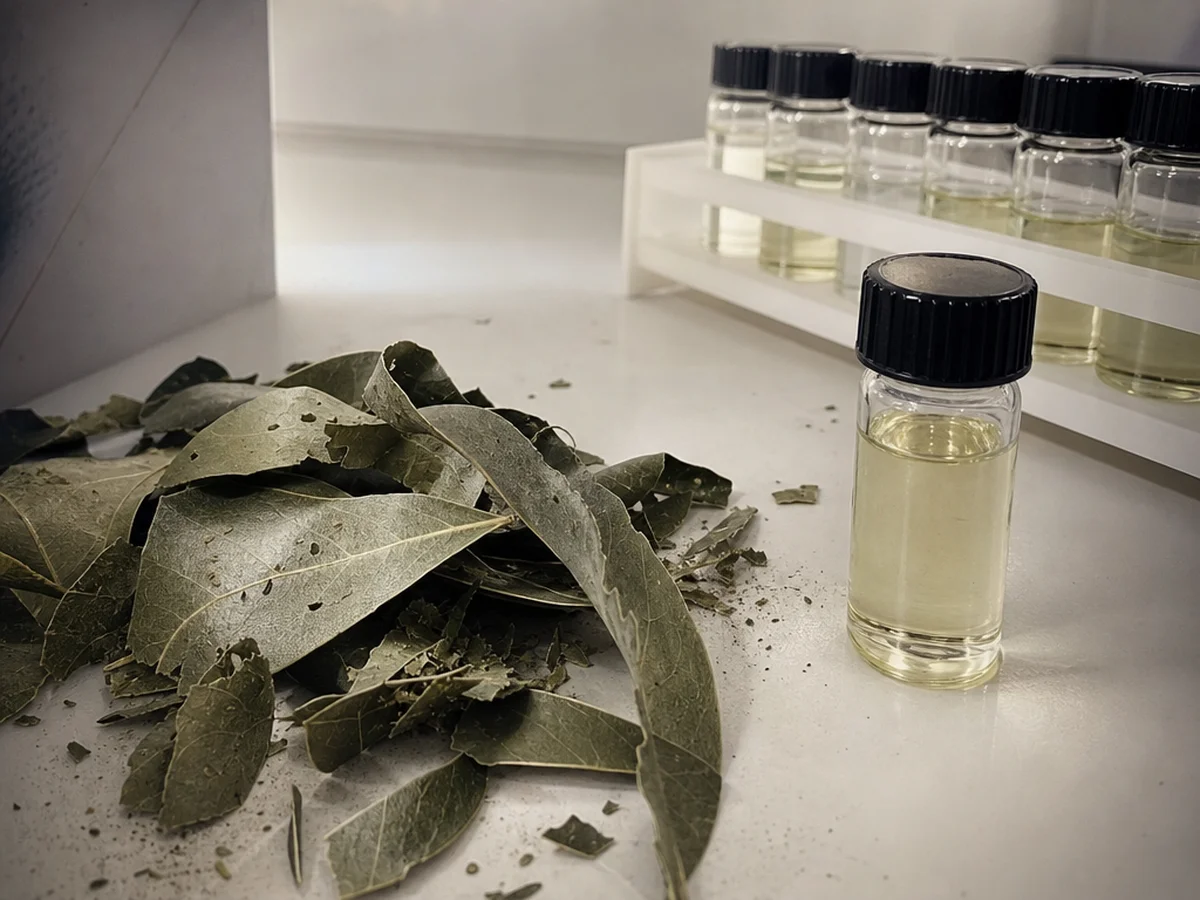
It likes cool, dark shelves. Aldehydes are reactive, and oils with a lot of them are the ones that lose their sparkle with age. Our how-we-test page puts it simply: this oil ages faster than a wood oil, so keep it cool and dark, cap it tightly, and decant working amounts into smaller bottles. We expect it to hold its character for two to three years unopened, stored that way. More habits are in our storage guide.
It wants a light hand on skin. Citronellal is a recognised skin sensitiser for some people; the hazard classification for the isolated compound includes "may cause an allergic skin reaction". That describes the isolated molecule rather than a bottle of oil, but it is a good reason to treat the oil with respect. We sell it undiluted, so the maths is yours: we suggest a carrier oil and a patch test first. Our general guidance is 0.5% to 2%, and the Tisserand Institute's dilution guidance gives 0.2% to 1% for reactive skin, noting that adverse reactions are concentration-dependent. For a sensitiser we would start at the low end and stay there. Our dilution guide shows the arithmetic.
For makers, all of this adds up to one piece of advice: start small. A first trial batch of candle, soap or room scent with a light hand will tell you how the lemon behaves in your recipe before you commit a bigger pour. Write down what you used and how it smelled the next day, and your second batch will be better than your first.
Citronellal and the repellent aisle
Here the molecule has a second life. Citronellal is the raw material from which PMD, the ingredient in registered repellents, is made. The CDC does not recommend an unformulated lemon eucalyptus essential oil as a repellent, and what it lists are EPA-registered products. We sell the essential oil, not a registered repellent, and we do not suggest it for that job. If bug protection is what you are after, pick a registered product at a pharmacy or outdoor shop; our PMD explainer shows how the two materials are related.

For us, citronellal is simply the reason to love this oil: it gives you a crisp, lemony, green top note that smells sunnier than ordinary eucalyptus ever will.
Lemon Eucalyptus Essential Oil
Lemon Eucalyptus Essential Oil from our own shop, in sizes from 0.5 oz to bulk.
From $9.99
Shop Now →Sources & Further Reading
- Citronellal - Wikipedia
- Backhousia citriodora F. Muell. (Lemon Myrtle), an Unrivalled Source of Citral (Southwell, Foods, 2021)
- Antibacterial, Antioxidant, and Antiproliferative Activities of Corymbia citriodora and the Essential Oils of Eight Eucalyptus Species (Miguel et al., Medicines, 2018)
- Corymbia citriodora (Hook.) K.D. Hill & L.A.S. Johnson (PROSEA)
- Dilution for essential oils (Tisserand Institute)
- Perfume - Wikipedia
- Mosquitoes, Ticks, and Other Arthropods (CDC Yellow Book)