Does Lemon Eucalyptus Repel Mosquitoes? It Depends
The honest answer depends on which bottle you mean. A registered repellent made with oil of lemon eucalyptus (OLE) or PMD, used as the label says, has solid evidence behind it. The plain essential oil is a different product with a different record, and it is the one we sell.

Lemon Eucalyptus Essential Oil
Our own Lemon Eucalyptus Essential Oil, in sizes from 0.5 oz to bulk.
From $9.99
Shop Now →Two bottles that share a name
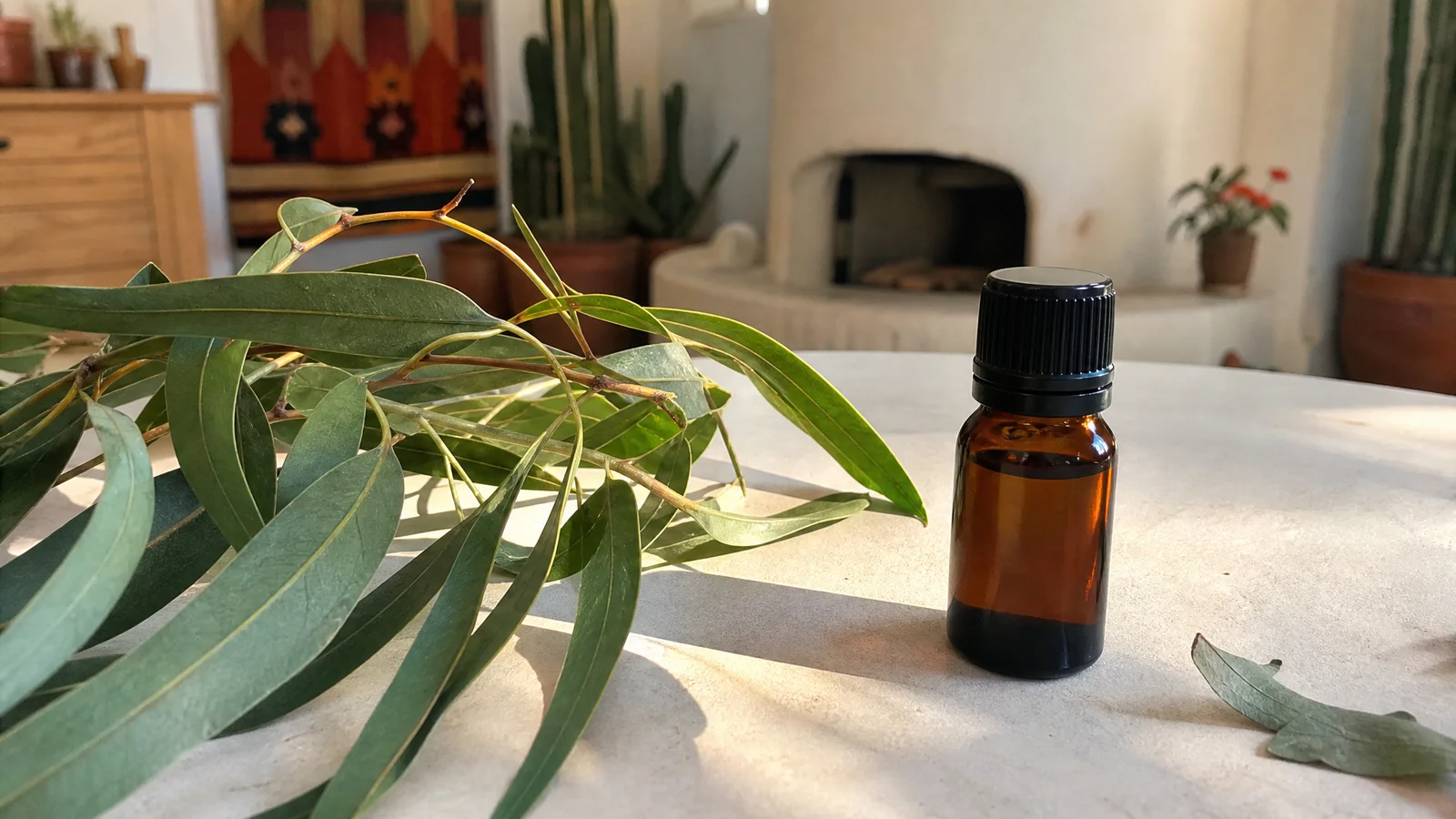
We sell the steam-distilled leaf oil of lemon eucalyptus for its bright, lemony-green aroma. We sell the essential oil, not a registered repellent, and we won't blur that line to make a sale. A repellent labeled with oil of lemon eucalyptus is a refined, PMD-enriched ingredient in a formulated product, carrying an EPA registration number, directions and an age statement. CDC lists those products among its recommended repellents, and it also says it does not recommend "pure" oil of lemon eucalyptus, an essential oil that is not formulated, as a repellent because it lacks validated testing and EPA registration. Our comparison of OLE and the essential oil goes through the split in more detail.
How to tell which bottle is in your hand
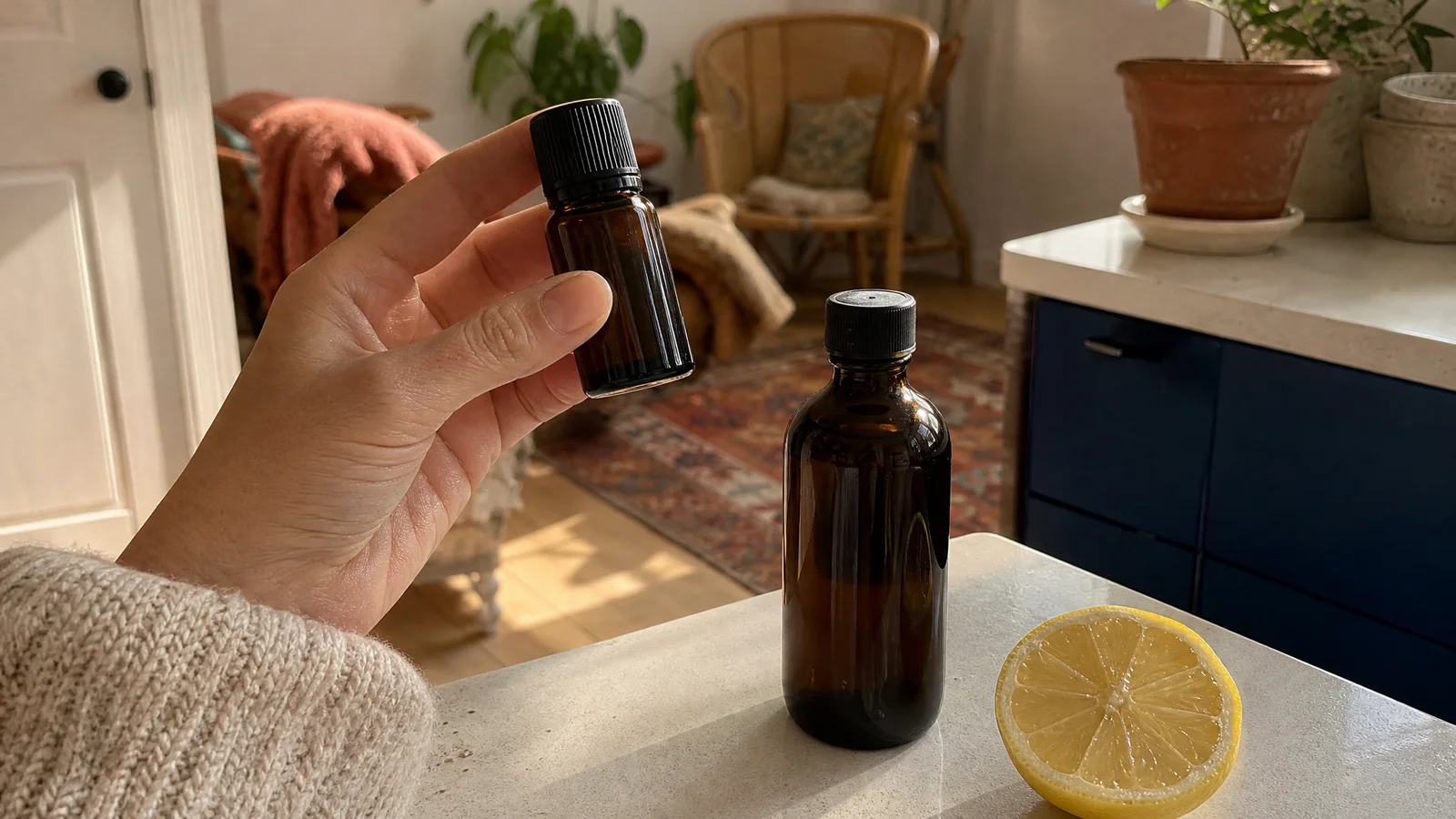
The quickest way is to turn the bottle around. A registered repellent has an EPA registration number, an active ingredient panel and directions with an age statement printed on the back. A bottle of essential oil is labeled with a botanical name and, if the seller is careful, a note that it is for external, aromatic use. Neither is better in the abstract; they are made for different jobs, and the label is how you match the job.
What the research on the registered ingredient looks like
PMD has a respectable record. Carroll and Loye's 2006 review of PMD's history and performance, which includes original field and laboratory data, concluded that CDC's 2005 endorsement was warranted and probably underestimated its value as a DEET alternative. In a 2002 comparison of repellents in a controlled laboratory, 15 volunteers tested a range of products against mosquitoes. A formulation with 23.8% DEET gave a mean complete-protection time of 301.5 minutes, a soybean-oil repellent about 95 minutes, and all the other botanical repellents tested under 20 minutes.
Why would the refined version outperform the oil? A review of plant-based repellents offers a mechanism: PMD has a lower vapour pressure than the volatile monoterpenes in most plant oils, so it stays on skin longer, and the PMD-rich material left after distillation was far more effective than the essential oil itself. The same review reports the essential oil as repellent for around an hour in one cited study. That is the review's finding, not a test of our bottle, and it points to a practical lesson: a strong lemon scent is not evidence of lasting protection. Citronellal, the molecule behind the lemon note, is volatile.
Why a lab hour is a best case
Protection times come from controlled tests, such as a treated forearm in a cage of hungry mosquitoes. A walk through damp grass in July, with sweat and a backpack, is a different situation, so a lab hour is best read as a ceiling. The review also points out that few repellent studies have followed standard WHO testing guidelines, which is one more reason to rely on a registered label, where the claims have been reviewed, rather than a number from an advertisement.
A lab hour and a real evening
It helps to picture your own evening when you read any number. Think about how long you will be outside, whether you will be sweating or swimming, and who is with you. A claim that suits a still, quiet porch may not suit a long walk, and knowing that before you go is better than finding out halfway through.
Where evidence reaches its limit
Bites and disease are different questions. A 2014 meta-analysis of ten trials in malaria-endemic populations found topical repellents showed 18% protection against falciparum malaria and 20% against vivax, neither statistically significant, and concluded repellents are unlikely to give effective protection alone. That analysis covered repellents of all kinds, not OLE specifically, but it is a good reason for a travel-medicine clinic to guide a trip to a disease area.
Enjoying the scent on a bug-season evening
If what you love is the lemon, that is easy to enjoy on its own terms. Picture the porch in the evening with a diffuser or scented candle going somewhere sensible, and a registered product on the shelf for the skin. Scent and protection are separate decisions, and the evening goes better when you let each one be what it is. Then you can open the bottle just to smell it, which is, honestly, most of the pleasure.
A short guide by situation
| Your situation | What we would suggest |
|---|---|
| Porch or garden, bites are an annoyance | A registered OLE or PMD product is one reasonable option; read the label and compare with others in our ingredient comparison |
| A trip where bites carry health risk | Ask a travel-medicine clinic which ingredient to carry |
| A child under 3 | CDC says not to use OLE or PMD products; ask a pediatrician |
| You want a lemony aroma | That is what our essential oil is for, in a diffuser or a craft project |
For how long a registered product keeps working, see how long lemon eucalyptus repellent lasts, and for a deeper look at the studies, what the research on OLE and PMD shows. Because the essential oil has no repellent directions, we don't give dilution or recipe advice for that purpose. If a repellent is swallowed or splashed in eyes, call Poison Help at 1-800-222-1222.
The lemon scent that draws people to this oil is a pleasure all its own, and it doesn't need to be a mosquito shield to be worth enjoying.
Lemon Eucalyptus Essential Oil
Lemon Eucalyptus Essential Oil from our own shop, in sizes from 0.5 oz to bulk.
From $9.99
Shop Now →Sources & Further Reading
- Mosquitoes, Ticks, and Other Arthropods (CDC Yellow Book 2026 Edition)
- PMD, a registered botanical mosquito repellent with deet-like efficacy (Carroll and Loye, 2006)
- Comparative efficacy of insect repellents against mosquito bites (Fradin and Day, 2002)
- Plant-based insect repellents: a review of their efficacy, development and testing (Maia and Moore, 2011)
- Are topical insect repellents effective against malaria in endemic populations? A systematic review and meta-analysis (Wilson et al., 2014)