What Is Lemon Eucalyptus Oil? The Lemon-Scented Gum
There is not a single lemon in lemon eucalyptus oil. The citrus note comes from the leaves of a tall, smooth-barked gum tree, and it is one of the most surprising scents in the eucalyptus family: bright, fresh and green, with a faint camphor edge underneath. Once you have smelled it, regular eucalyptus never quite smells the same again.

Lemon Eucalyptus Essential Oil
Our own Lemon Eucalyptus Essential Oil, in sizes from 0.5 oz to bulk.
From $9.99
Shop Now →A gum tree with a citrus secret
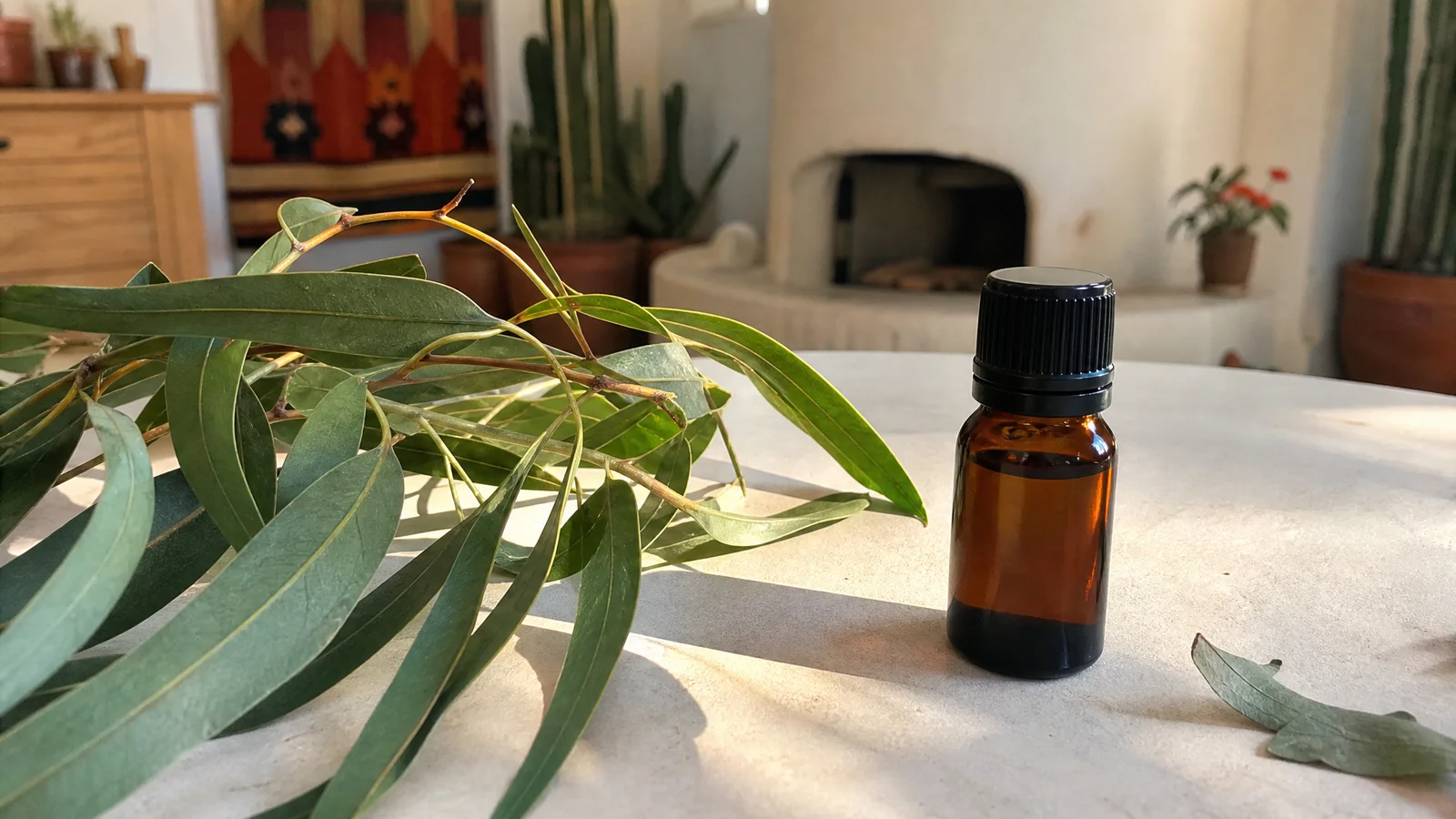
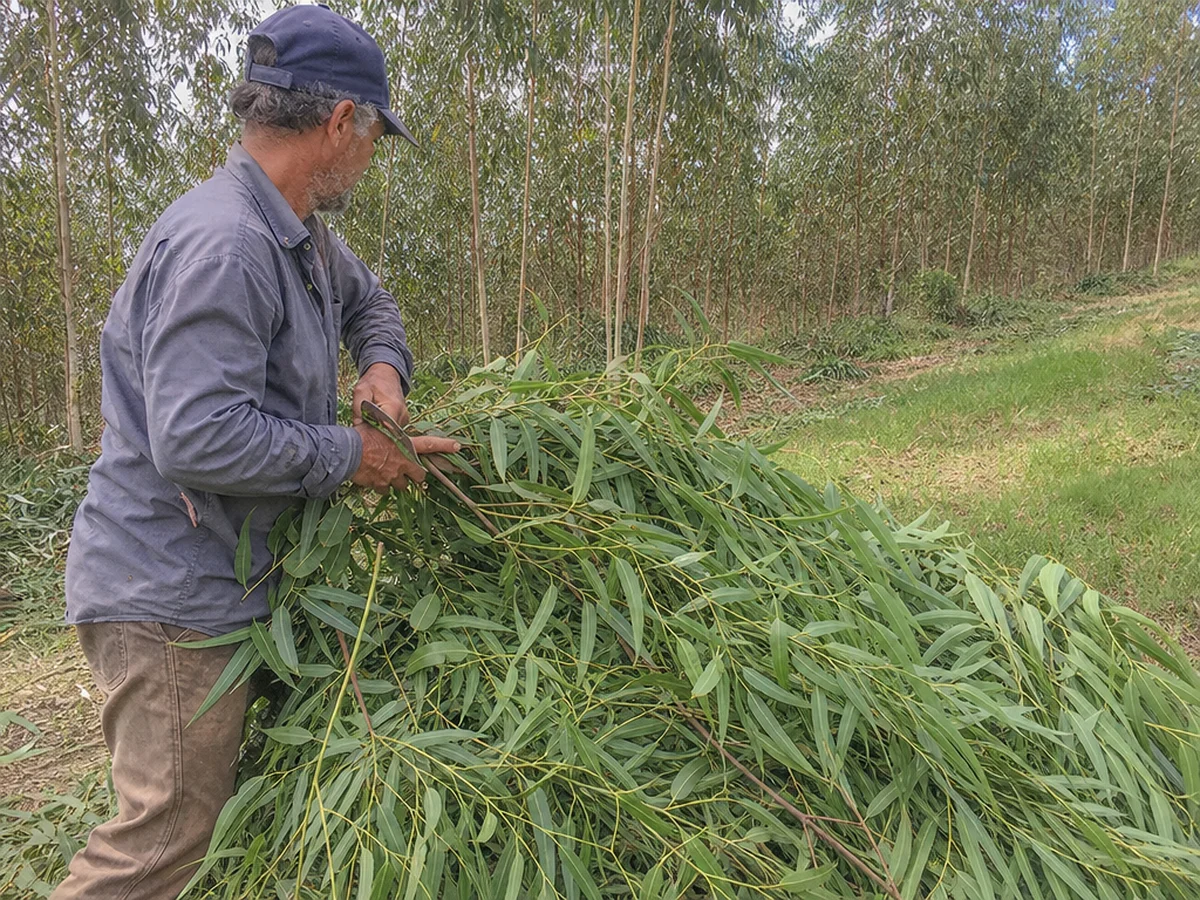
We sell the steam-distilled leaf oil of the lemon-scented gum, a tree native to Queensland that is now planted in other parts of the world, including Brazil and China. Our shop table lists its botanical name as Eucalyptus citriodora, while our product description uses Corymbia citriodora, which is the current name. Both point to the same tree, and the international standard for the oil, ISO 3044, uses Corymbia citriodora with Eucalyptus citriodora as the synonym. A review of the tree by Goodine and Oelgemoeller describes it as native to Australia and now grown worldwide, and names citronellal, citronellol and isopulegol among its main terpenes.
Citronellal is the star. A survey of published analyses puts it at roughly 65 to 85% of Corymbia citriodora oil, though the figure moves with where and when the leaves were grown and how they were distilled. It is the molecule that gives the oil its lemony lift, and it is why this oil smells so different from the cineole-heavy, medicinal sharpness of classic blue gum eucalyptus. If you want to see that contrast side by side, our piece on lemon eucalyptus versus eucalyptus globulus lays it out.
First impressions from the bottle
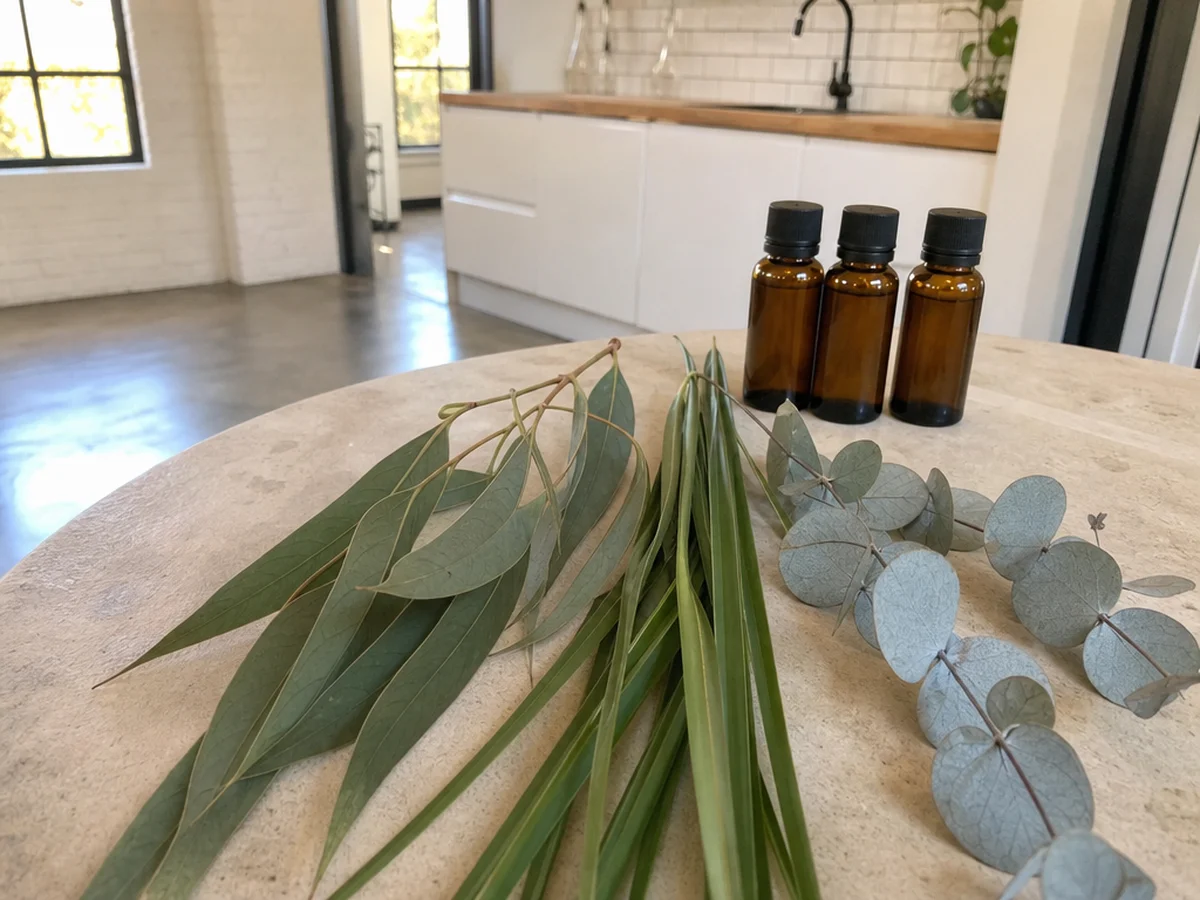
Open the cap and let the aroma come to you rather than pushing your nose in. The first thing you will notice is the lemon, clean and sunny, then a green, leafy note, and last a light camphor edge that reminds you this is, after all, a eucalyptus. Put a drop on a paper strip and come back to it a few times over the next hour. You will notice the lemon thin out first while the green and camphor stay a little longer, which is the top-note story in miniature.
Three bottles, one name
The phrase "lemon eucalyptus" covers three quite different things, and sorting them out saves a lot of confusion.
- The essential oil is what we sell: the steam-distilled leaf oil, used in scenting projects.
- Oil of lemon eucalyptus (OLE) and PMD are the refined material found in registered insect repellents. They start from the same tree, but they are not interchangeable with the essential oil, and our how-we-test page says exactly that. CDC does not recommend "pure" oil of lemon eucalyptus as a repellent, since it is an unformulated essential oil that has not undergone validated testing for safety and efficacy and is not registered with EPA. If you want a repellent, choose an EPA-registered product from a pharmacy or outdoor shop.
- Lemon eucalyptus fragrance oil is a manufactured scent, a different product again.
Our guide to OLE versus the essential oil goes into the difference at length.
What it is good at
Scent is the heart of it. We describe the aroma as lemony, fresh and green, a bright citrus lift up front settling into a crisp, lightly camphorous base that feels sunnier and more open than standard eucalyptus. In perfumery terms it is a top note, which means it is the first thing you smell and the first to fade. That shapes how we would use it.
- Diffusing and room scent: a natural fit. Our diffusing guide covers ventilation and household details.
- Blending: it likes a slower partner underneath. Lemongrass, lavender, cedarwood, peppermint and sweet orange all blend well with it, and our blending article explains evaporation order.
- Candles, wax melts and soap: a top note will fade in heat and in lye, so these are projects where it rewards a little planning.
- Diluted skin use: we recommend 0.5% to 2% in a carrier oil such as jojoba or sweet almond oil, with a patch test first. Citronellal is a known skin sensitiser for some people, so we would begin at the low end. Our dilution guide has the arithmetic, and Tisserand Institute's published ranges, from 0.2 to 1% for sensitive skin up to 1 to 3% for body products, are worth a look as a cross-check.
It is an external cosmetic oil. Please do not take it internally, keep it away from eyes, children and pets, and ask a physician or pharmacist about anything medical. We make no medical claims about it.
Where we would start
If this is your first bottle, we suggest starting small and simple. Smell it on its own, then try it in the easiest project you have, a diffuser or a room spray, before you commit to something bigger like candles or soap. A first bottle is for getting to know the oil, and once you know how it behaves, every project after goes more smoothly.
Looking after a bottle
Top notes are delicate. We suggest keeping the bottle capped, away from sun and heat, and it typically holds its character for 2 to 3 years unopened. Tisserand Institute adds that most essential oils stay in good condition for at least one to two years, that citrus-smelling oils can turn cloudy as they oxidise, and that using oils within 6 to 12 months of purchase keeps oxidation mostly out of the picture. For bigger quantities, our bulk page and wholesale page have the details, and the contact page is the place for questions about batch documentation.

Smell it once on a blotter and the name makes sense: all the freshness of lemon, carried by a tree.
Lemon Eucalyptus Essential Oil
Lemon Eucalyptus Essential Oil from our own shop, in sizes from 0.5 oz to bulk.
From $9.99
Shop Now →Sources & Further Reading
- Corymbia citriodora: a valuable resource from Australian flora for the production of fragrances, repellents, and bioactive compounds
- Backhousia citriodora F. Muell. (Lemon Myrtle), an Unrivalled Source of Citral (Foods, 2021; its tables also cover Corymbia citriodora)
- Mosquitoes, Ticks, and Other Arthropods | CDC Yellow Book™
- Dilution for essential oils
- Is my bottle of essential oil oxidized or no longer good to use?