Lemongrass or Lemon Eucalyptus? How to Choose
Lemongrass and lemon eucalyptus get lumped together because both smell of lemon and both come from leaves. Put them in the same blend and the difference shows up at once, though, and so does a difference in how much care each deserves on skin. The most useful way to choose is by what you are making, so that is how we have organized this.

Lemon Eucalyptus Essential Oil
Our own Lemon Eucalyptus Essential Oil, in sizes from 0.5 oz to bulk.
From $9.99
Shop Now →Where the lemon comes from
The two oils reach lemon by different roads. Lemongrass is a citral oil. Southwell's review lists two species, Cymbopogon flexuosus at 60% to 90% citral and C. citratus at 73% to 90%. Lemon-scented gum, Corymbia citriodora, is a citronellal oil, with a literature range of 65% to 85%. A single study of a Portuguese arboretum sample landed at 36% citronellal alongside isopulegol, citronellol and cineole, so treat all of these as ranges for the species. Origin, season and leaf age move the numbers.
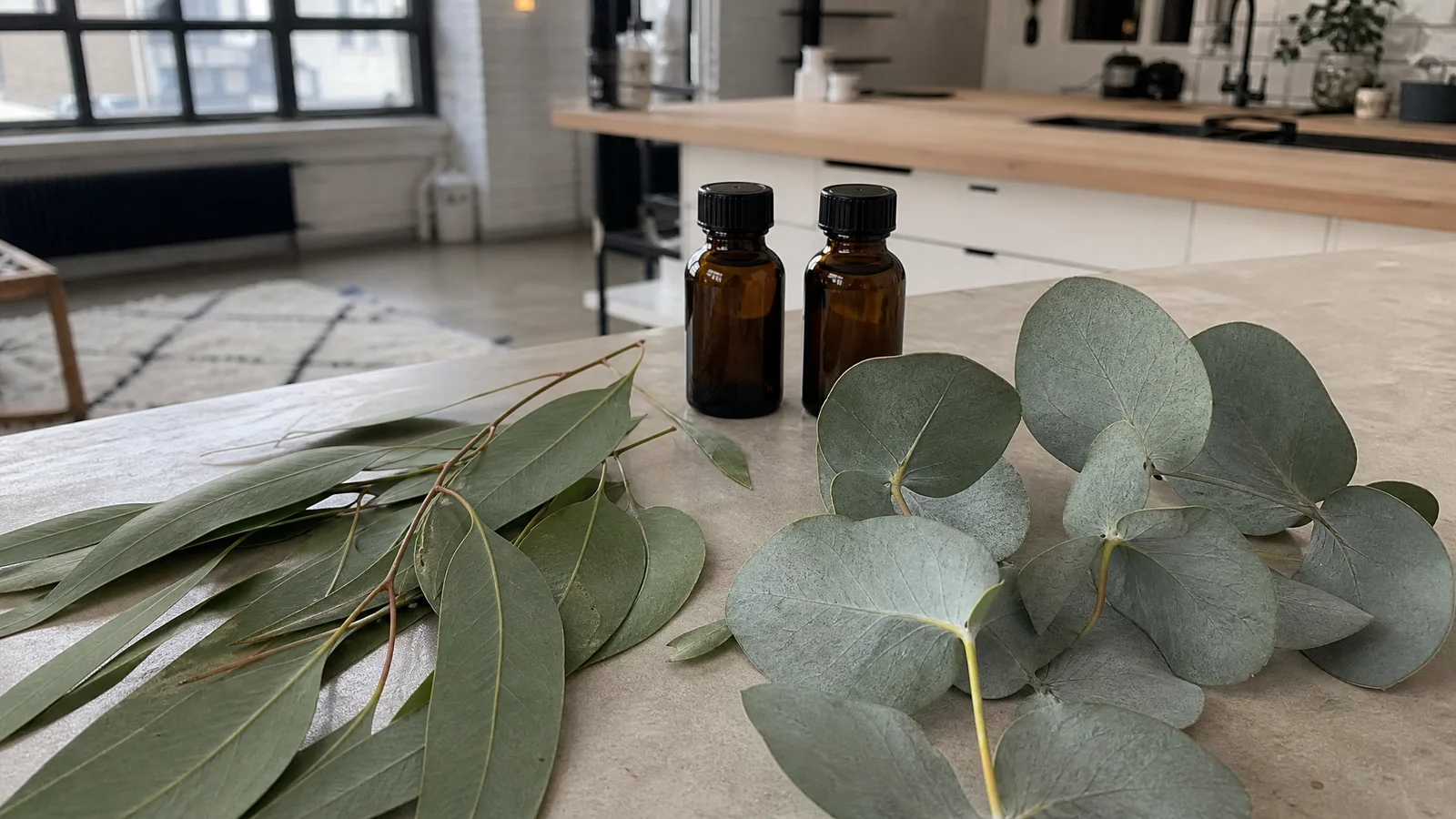
The practical meaning is that lemongrass is concentrated around one molecule family, while lemon eucalyptus is a blend of several. We describe ours as lemony, fresh and green, with a crisp, lightly camphorous base. If you want to explore the other citral tree, lemon eucalyptus and lemon myrtle picks that thread up.
What a leaf gives up
Here is a small piece of arithmetic that explains a lot about oils on a shelf. Using the review's yields, lemongrass gives 0.2% to 0.4% oil from the leaf, which works out to roughly 250 to 500 kilograms of leaf for a liter of oil (one kilogram at 0.4% gives about four milliliters). Lemon-scented gum is reported at 0.5% to 4.2%, which works out to roughly 24 to 200 kilograms per liter, a wide spread because the range is wide. That is our own back-of-envelope sum, offered as a reason the two oils need not be priced alike and not as a pricing rule. For how we think about cost, see what drives the price of lemon eucalyptus oil.
On skin, the oils part ways
The review says citral irritates skin in rabbits and sensitizes the skin of guinea pigs, and that in humans it irritates and sensitizes at high concentrations but "not by consumer products". It recommends topical use below 1% in a formulation and says citral-rich oils should be restricted during pregnancy. Lemongrass is a citral oil, so we would carry that caution over to it.
For lemon eucalyptus our own guidance is to dilute to 0.5% to 2% in a carrier oil, patch test first, and begin at the low end, because citronellal is a known skin sensitiser for some people. The two oils carry different cautions, so a leave-on recipe written for one should not be borrowed for the other. Because we sell our oil neat, the dilution arithmetic is yours to do, and our dilution guide shows how. If you are pregnant, an OB/GYN or midwife is the right person to ask, and our pregnancy article sets out what authorities say.
Choosing by project
- A diffuser or room scent. If you like a green lemon with a camphor edge, lemon eucalyptus is our one oil, and lemongrass is among those we list as blending well with it. Ventilation and pets matter for both, as covered in diffusing lemon eucalyptus oil.
- Candles and soap. Your finished recipe and the standards for that product set the limits, not this comparison. Start with the candle maker's buying guide.
- A leave-on skin product. Neither is an obvious first pick; many oils carry fewer sensitising molecules. A dermatologist or licensed esthetician can steer you if your skin is reactive.
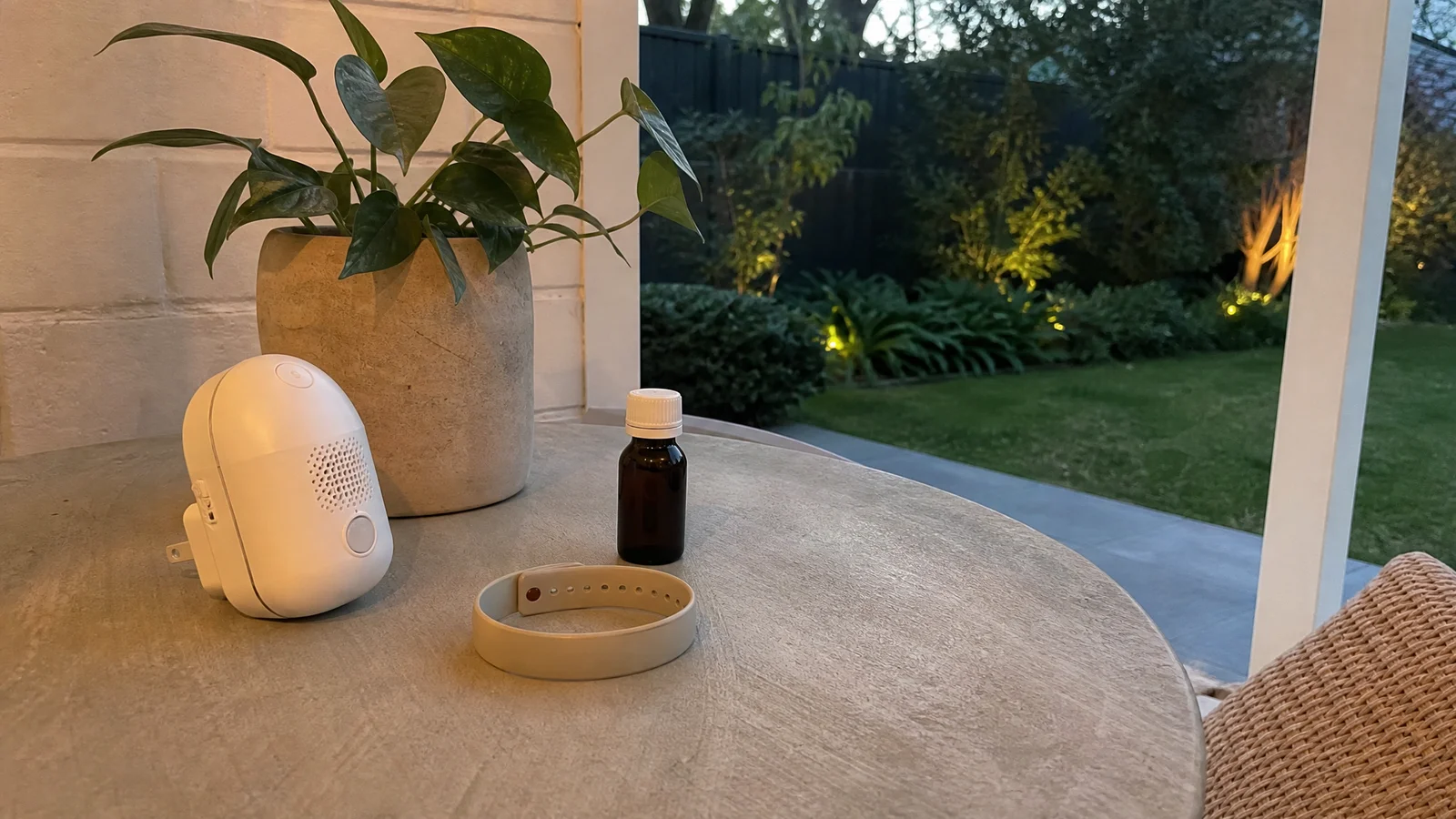
- Something for mosquitoes. We sell an aromatic essential oil, and CDC says it does not recommend using "pure" oil of lemon eucalyptus as a repellent. Buy a product with an EPA registration number from a pharmacy or outdoor shop.
Think about the whole blend, not one oil
A good habit before you commit to either oil is to picture what else is in the recipe. A blend with lavender and cedarwood has plenty of depth already, and a bright top note slips on top like a squeeze of lemon on a savory dish. A blend that is already citrusy, with sweet orange for example, may not need a second lemon at all, and a green, leafy edge could be the more interesting thing to add.
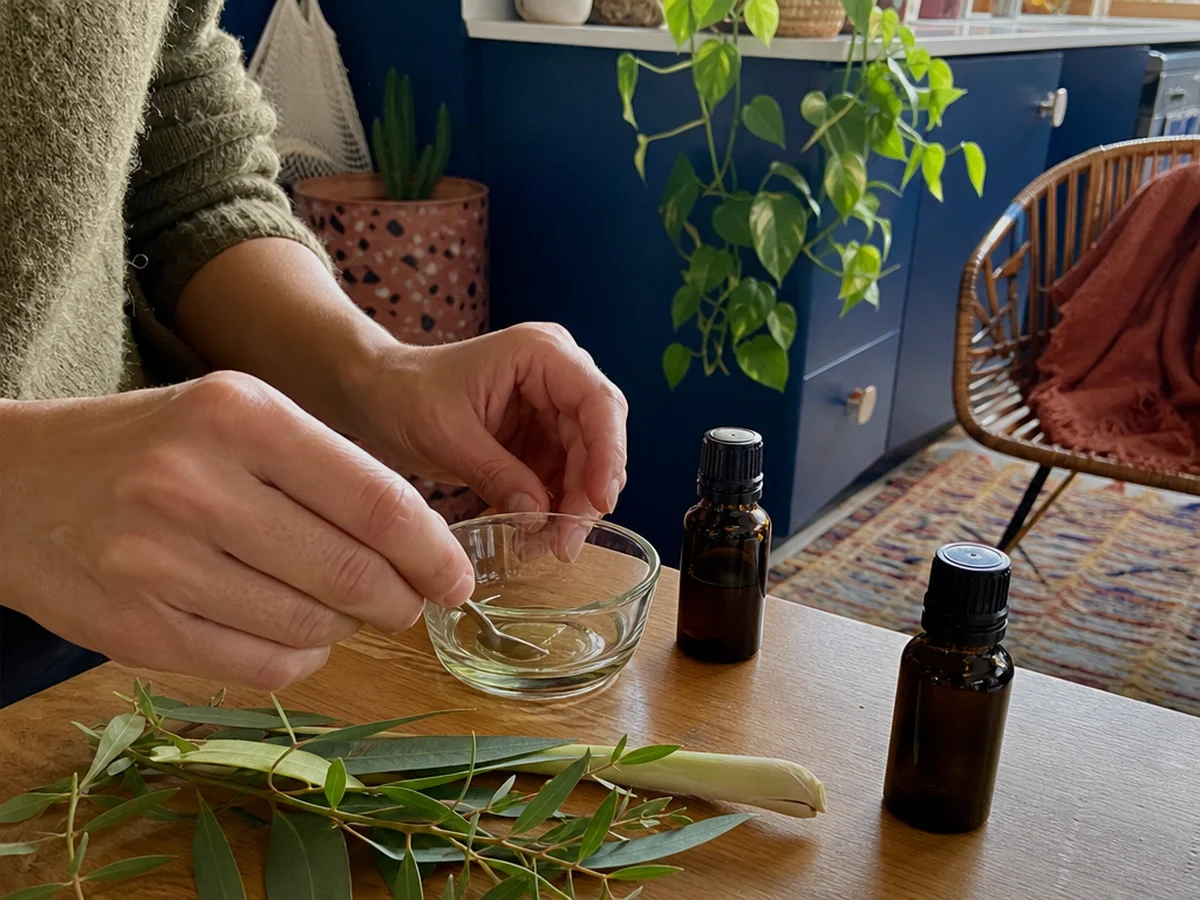
Start small. Mix a tiny test batch, a few drops in total, and let it sit overnight before judging. Scents change as they mingle, and the version you smell the next day is the one you will live with.
Let your nose make the final call
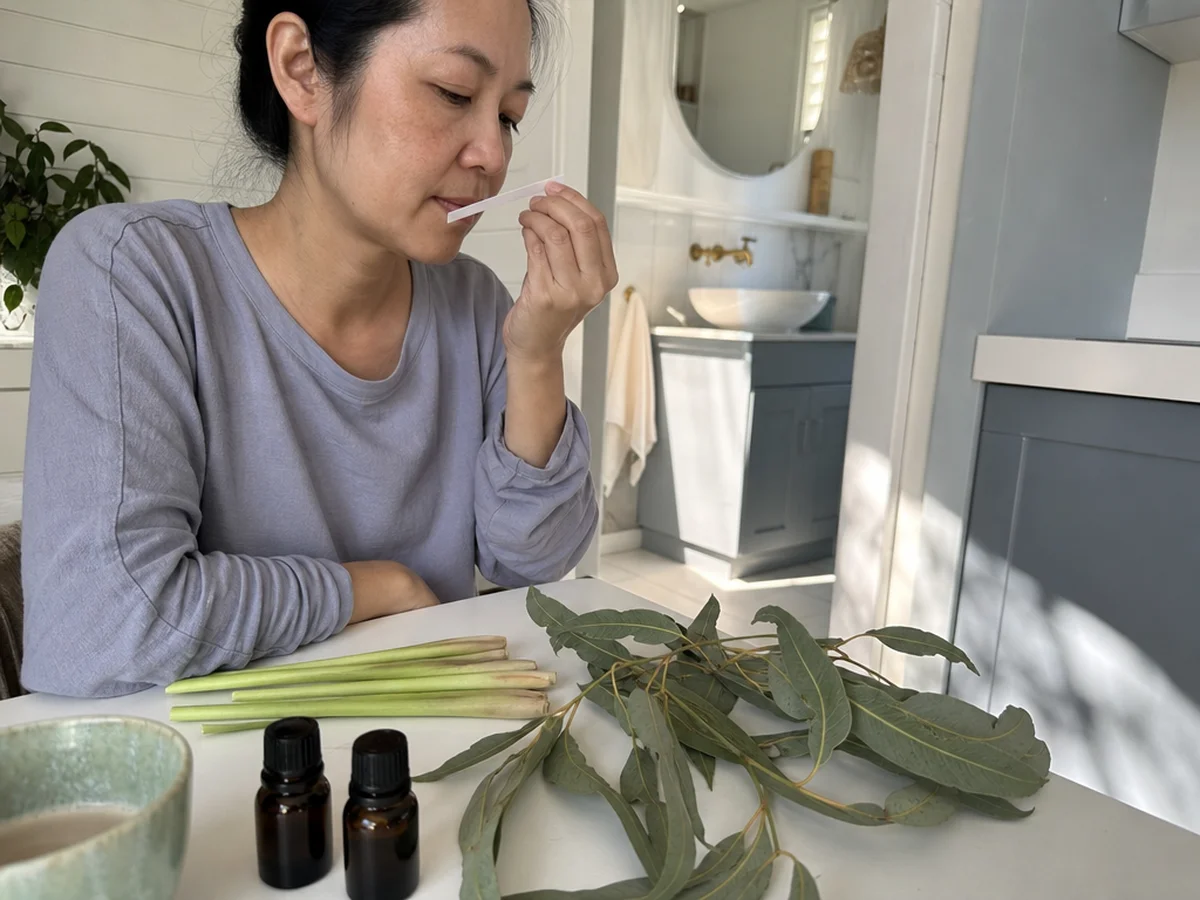
A blotter test is the old perfumer's way and it costs almost nothing. Smell one oil, wait a few minutes, smell the other, and note the first impression and what is left after ten minutes. Top notes like these evaporate fast, so the early and late impressions are worth comparing. We sell lemon eucalyptus only; for lemongrass, buy from a supplier that carries it, and ask them for the species name.
If you are still undecided, there is no shame in keeping both on the shelf. Plenty of makers do.
The nicest outcome is not a winner but a choice that fits: a citral oil when you want one clear lemon, and a green, layered one when you want lemon to open a blend and then step aside.
Lemon Eucalyptus Essential Oil
Lemon Eucalyptus Essential Oil from our own shop, in sizes from 0.5 oz to bulk.
From $9.99
Shop Now →Sources & Further Reading
- Backhousia citriodora F. Muell. (Lemon Myrtle), an Unrivalled Source of Citral, Foods, 2021.
- Antibacterial, Antioxidant, and Antiproliferative Activities of Corymbia citriodora and the Essential Oils of Eight Eucalyptus Species, Medicines, 2018.
- Mosquitoes, Ticks, and Other Arthropods, CDC Yellow Book.