Lemon Eucalyptus Blends: 7 Mistakes That Make Them Smell Off
A blend that smelled wonderful last month now smells flat, or sharp, or just not quite right. Before you blame the oil, know that blends usually go astray in the process. Here are seven common culprits, in roughly the order they are easiest to check.
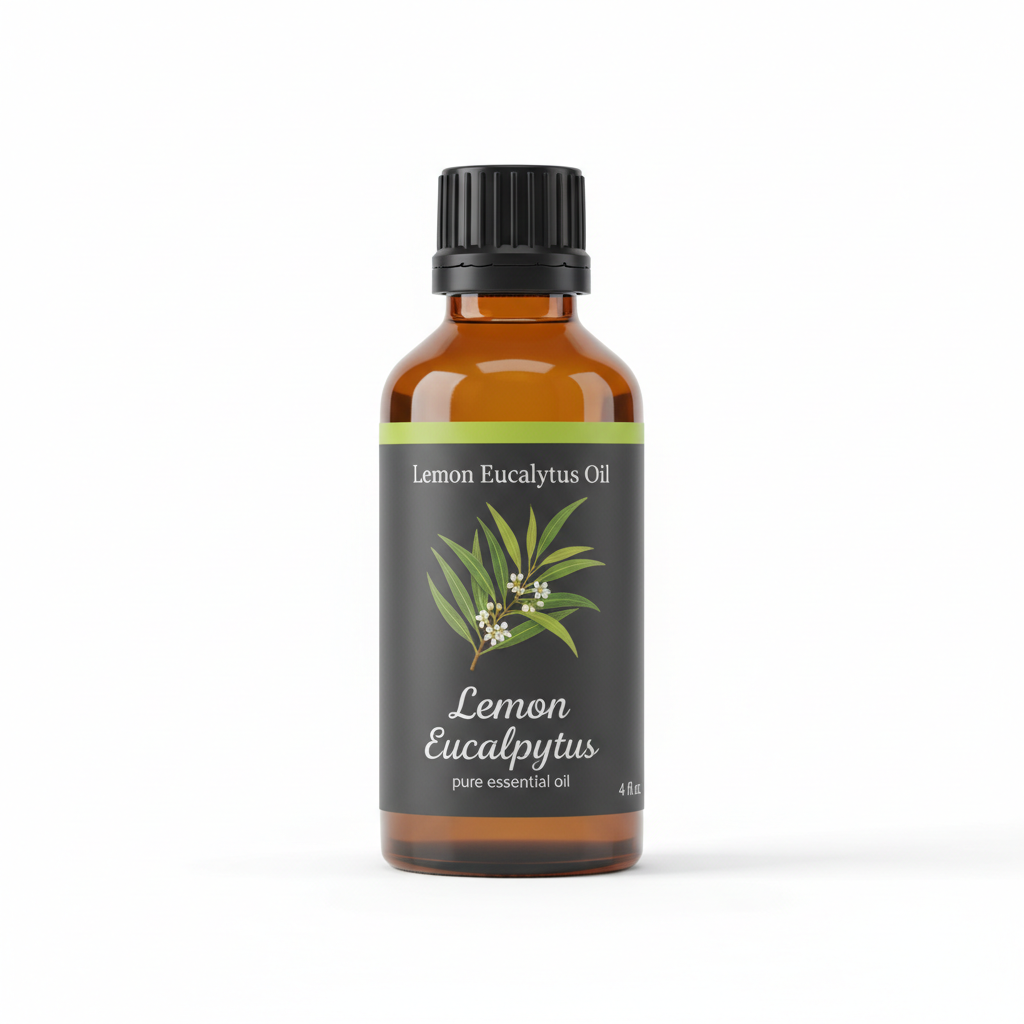
Lemon Eucalyptus Essential Oil
Our own Lemon Eucalyptus Essential Oil, in sizes from 0.5 oz to bulk.
From $9.99
Shop Now →1. The bottle has aged
Lemon eucalyptus is a top note, and our how-we-test page says it ages faster than a wood oil. The Tisserand Institute explains that oxidation takes the brightness and freshness out of an oil, that citrus oils sometimes turn cloudy, and that refrigeration about doubles useful life. We say our oil typically holds its character for 2 to 3 years unopened, capped tight, away from light and heat; once opened, the clock runs faster. If a once-loved recipe seems dull, smell the neat oil beside a fresh sample before changing the recipe. Date each bottle when you open it, and see our storage article.
2. Drops instead of grams
A recipe in drops assumes every drop is the same, and the Tisserand Institute's summary of studies shows about 20 to 40 drops per millilitre depending on the oil and the dropper. "Three drops of this to one of that" can quietly become a different ratio. A small scale reading to 0.01 g makes recipes repeatable. With only droppers, use the same dropper every time and note it.
3. A nose that has adapted
Research by Pellegrino and colleagues reports that people habituate to odors fairly quickly. Spend an hour blending in one room and you will keep adding oil to a mix that has not actually weakened. Smell a blotter, step into fresh air for a few minutes, smell again, and decide on the second sniff, or ask someone who just walked in.
4. Oil in water with nothing to bind it
Oil does not dissolve in water. The Tisserand Institute says solubilising essential oil takes 95 to 100% ethanol (151 proof, roughly 75%, at minimum) and that vodka will not do the job. A water-based spray also needs a preservative system, and if ethanol is doing that work it should make up at least 20 to 30% of the finished product, with 25% recommended. A bottle of water and drops separates and can grow microbes. Our room and linen spray article works through a better way.
5. A top note over a flame
Wikipedia notes that in a heat diffuser the heat can change the chemical structure of the oils, and that top notes are small, light molecules that evaporate quickly. Put those together and a lemony opening probably leaves fastest in a heated bowl. That is our reading rather than a measurement for this oil, so test it on your own device. If your blend vanishes quickly over a candle, an ultrasonic unit may show you the same blend in a gentler light. Our diffuser guide goes through the types.
6. Treating one dilution range as covering a blend
Our dilution guidance for lemon eucalyptus is 0.5% to 2% in a carrier oil with a patch test, and citronellal is a known skin sensitiser for some people, so we begin at the low end. The Tisserand Institute lists 0.2% to 1% for sensitive or impaired skin, 0.5% to 1.2% for facial cosmetics and 1% to 3% for body oils and lotions. Those figures are for single oils; for a blend, our approach is to count every essential oil in the bottle against one limit and let the most cautious ingredient set it. That is our reasoning, not a quoted rule.
Fresh citrus partners matter here too. Wikipedia's limonene entry lists oxidised limonene as a skin sensitiser, and sweet orange oil is more than 90% d-limonene, so an old orange bottle can add a second sensitiser. Small bottles and a patch test keep things comfortable. For reactive skin, a dermatologist is the person to ask. Our dilution guide has the arithmetic.
7. Buying a partner by its common name
Two bottles with the same label are not always the same oil. Wikipedia's entry on cedar oil points out that most oils sold as cedarwood come from junipers and cypresses, not true cedars. Lavender is similar: linalool is about 29% in Lavandula angustifolia and about 49% in L. latifolia in the table it cites. Ask for the botanical name in writing, as we would for lemon eucalyptus itself. Our partner article has more.
When to start over
Sometimes the kindest thing is a clean slate. If you have been adjusting a blend for an hour, walk away, drink some water and come back tomorrow. A fresh nose and a fresh blotter are worth more than another round of tweaks. And if the blend is truly stubborn, put a drop of the lemon eucalyptus alone on a blotter. It is a fine scent by itself, and starting there reminds you what you liked in the first place.
A calmer way to troubleshoot
Check the bottle's age, then your measuring, then the delivery method. Change one thing, retest on a blotter, and log it with the date and weights.
A few households should proceed carefully. Keep our oil away from children and pets, and ask a physician if you are pregnant, nursing or managing a condition. Anyone with asthma or a pet bird should talk to a physician or veterinarian before diffusing anything. Peppermint in particular carries a warning, in Wikipedia's entry, about serious side effects for children and infants if inhaled.
Most blends are one small adjustment away from right, and a log makes that adjustment obvious. We sell an essential oil, not a registered repellent, so these blends are about scent and nothing more.
Lemon Eucalyptus Essential Oil
Lemon Eucalyptus Essential Oil from our own shop, in sizes from 0.5 oz to bulk.
From $9.99
Shop Now →Sources & Further Reading
- Is my bottle of essential oil oxidized or no longer good to use?, Tisserand Institute
- How big is a drop?, Tisserand Institute
- Habituation and adaptation to odors in humans, Wageningen University & Research (Pellegrino et al., 2017)
- Effective Use of Alcohol for Aromatic Blending, Tisserand Institute
- Dilution for essential oils, Tisserand Institute
- Aroma lamp, Wikipedia
- Perfume, Wikipedia
- Limonene, Wikipedia
- Orange oil, Wikipedia
- Cedar oil, Wikipedia
- Lavender oil, Wikipedia
- Peppermint extract, Wikipedia