Lemon Eucalyptus on Skin: Spotting a Reaction
A bartender who squeezes limes indoors all day may never get a rash, and the same bartender squeezing them in bright sun can end up with blisters. Skin reactions are like that: they depend on the material, the amount, the timing and the person. Lemon eucalyptus is an oil that rewards a little respect on skin, so here is how to think about it, and what the usual authorities say to do if skin objects.

Lemon Eucalyptus Essential Oil
Our own Lemon Eucalyptus Essential Oil, in sizes from 0.5 oz to bulk.
From $9.99
Shop Now →Know which bottle you have
Two different products carry the name. A registered repellent with an EPA registration number comes with first aid directions printed on its label, and those directions are the ones to follow. NPIC, the National Pesticide Information Center, says to follow the First Aid instructions on the product label and lists Poison Control at 800-222-1222 for more advice. The other product is a plain essential oil, like the steam-distilled leaf oil we sell. We sell it neat, as a concentrated aromatic material, and it is not a registered repellent. Poison Control notes that because essential oils are potent, diluting them in a carrier oil is the best way to avoid a bad reaction from direct skin contact.
Why we treat this oil with care
Lemon eucalyptus is rich in citronellal, which gives it that bright lemon lift. Citronellal is a known skin sensitiser for some people, so this is not an oil to be generous with. The practical response is dilution, and we recommend 0.5% to 2% in a carrier oil with a patch test first. Where an authority suggests lower, we go lower. The Tisserand Institute's dilution page lists 0.2% to 1% for sensitive or impaired skin, 0.5% to 1.2% for facial products, and 1% to 3% for body oils and lotions. Given the citronellal, we start at the bottom of our range, 0.5%, and move no higher unless skin is clearly happy. Our walkthrough of how to dilute lemon eucalyptus oil covers the arithmetic.
Irritation and allergy are different things
The American Academy of Dermatology describes contact dermatitis as skin that is either irritated or reacting allergically. Irritation builds with exposure: "With enough exposure, even everyday things that we touch can irritate the skin." An allergic rash "tends to appear hours or days after your skin touches what you're allergic to." The AAD also names fragrance among the more common triggers.
That timing is why a quick "it felt fine for a minute" is weak reassurance. A reaction may show up after the test window, and skin that tolerated the first use can complain after repeated use.
A patch test that means something
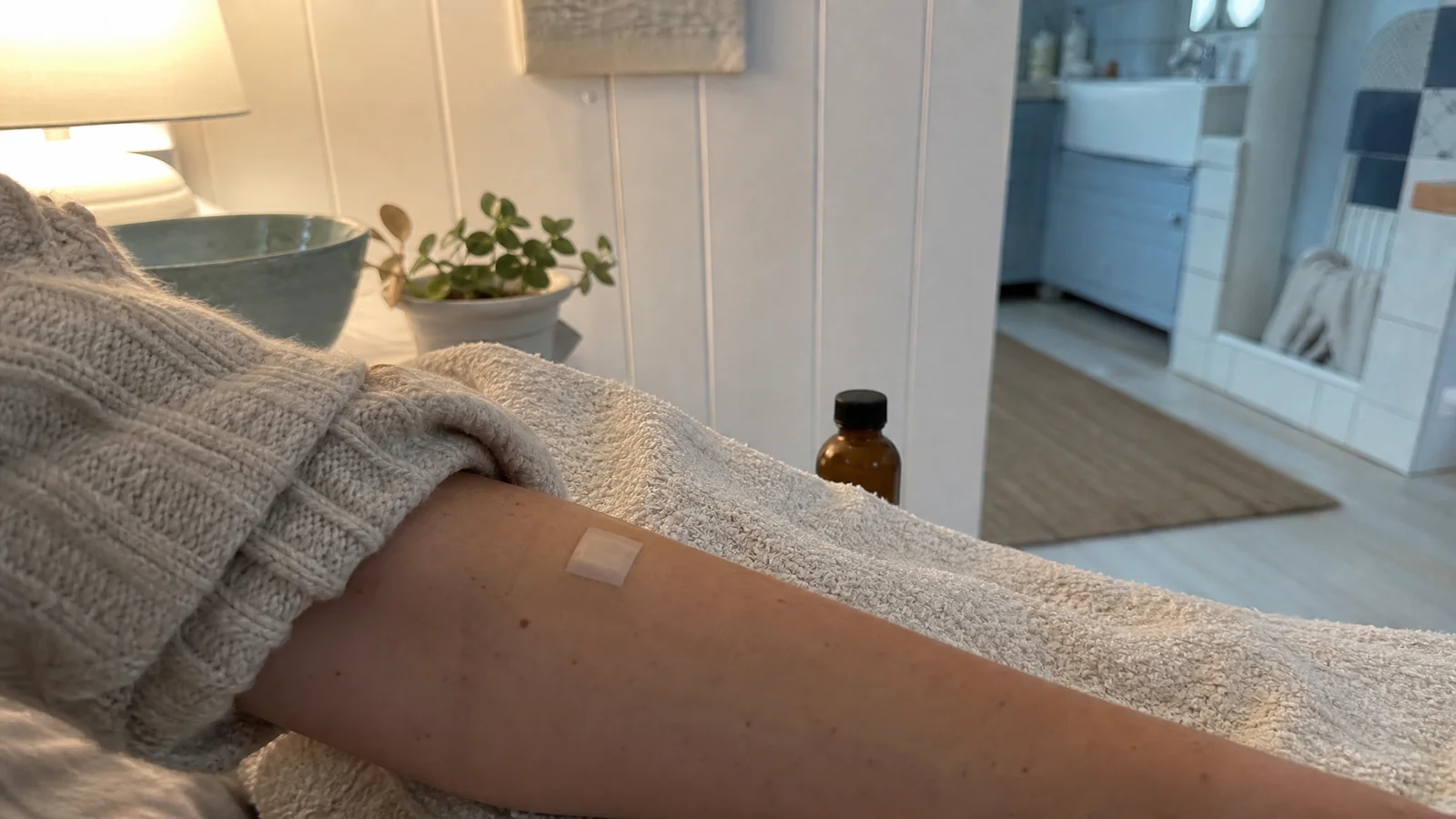
For skin care products, dermatologists suggest testing a quarter-sized spot twice daily for seven to 10 days, somewhere it will not be rubbed or washed away, like the underside of the arm or the bend of the elbow, using the normal amount you would use. For an essential oil, the thing to test is your finished, diluted blend, since that is what will touch your skin. If a reaction has already happened, a dermatologist is the person to help find the cause.
If skin turns red, itchy or sore
| What you notice | What the sources suggest |
|---|---|
| Redness or itching where it touched | Poison Control: stop using the product immediately and gently wash it off. |
| A rash that appears hours or days later | It may be an allergic reaction. Stop the product, keep the label, and see a dermatologist if it spreads, blisters or returns. |
| Oil in the eye | NPIC says oil of lemon eucalyptus can cause significant eye damage and that washing the eye right away can reduce irritation. Then follow the label or call Poison Control at 800-222-1222. |
| Swelling of the face or lips, or trouble breathing | Treat it as an emergency and call 911. |
Poison Control also advises never using essential oils on damaged skin. If you swallow any, call Poison Control; our page on eye and swallowing first aid has more. These are general sources, not a diagnosis, and a physician or dermatologist is the right person for anything persistent.
Keep a simple record
If you make your own blends, a small notebook goes a long way. Write down the date, the carrier oil you used, how many drops went into how much carrier, and where on your body you tried it. If something does show up later, you will have the answer to every question a pharmacist or dermatologist is likely to ask, and you will not have to guess which batch you used.
It also helps to change one thing at a time. If you try a new lotion, a new soap and a new oil blend in the same week, there is no way to tell which one your skin is objecting to. Introduce the new thing on its own, give it a few days, and then move on to the next.
A calmer way to enjoy it
Finally, remember that the label on any bottle you own is part of the product. Keep the box or take a photo of the label, because that is the first thing anyone helping you will want to see.
Most people who love this oil love it for its aroma, which is lemony, fresh and green, with a light camphor edge. Diffusing, scenting a candle or a soap batch, or a well-diluted blend with a carrier oil from a craft shop gives you that aroma with the least skin contact. If you want more on how the oil sits alongside other safety questions, is lemon eucalyptus safe is the place to continue. A cap on the bottle, a patch test and a low dilution are habits that make this oil easy to live with.
Lemon Eucalyptus Essential Oil
Lemon Eucalyptus Essential Oil from our own shop, in sizes from 0.5 oz to bulk.
From $9.99
Shop Now →Sources & Further Reading
- Essential oils: Poisonous when misused | Poison Control
- Eczema types: Contact dermatitis overview (American Academy of Dermatology)
- How to test skin care products (American Academy of Dermatology)
- Insect Repellents Fact Sheet (National Pesticide Information Center)
- Dilution for essential oils (Tisserand Institute)