Lemon Eucalyptus Diffuser Blends: Match the Device
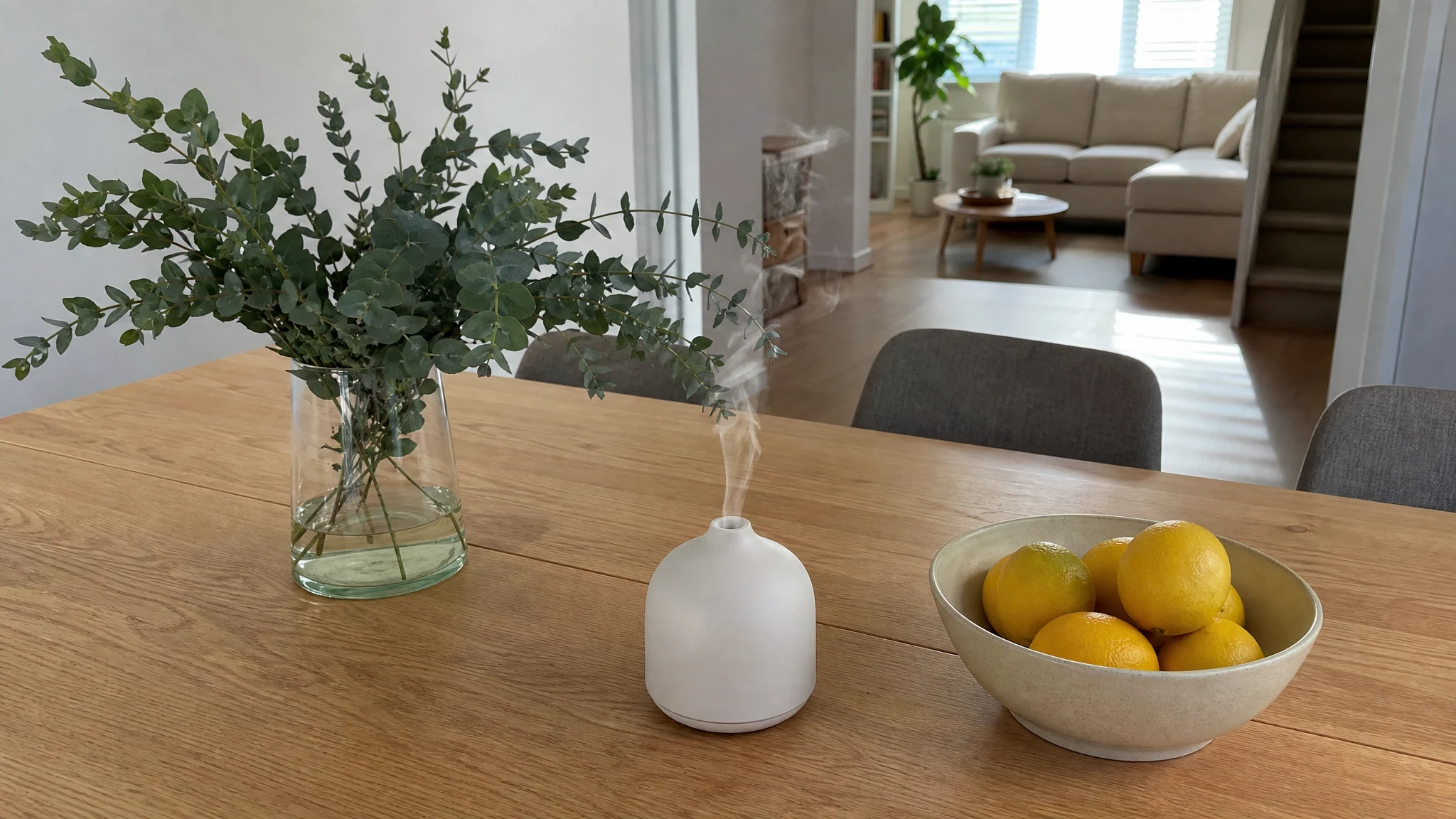
Two people can put the same oil in two different diffusers and describe two different scents. With a bright top note like lemon eucalyptus, the device matters nearly as much as the blend. So before you reach for partner oils, take a look at what you are diffusing with.

Lemon Eucalyptus Essential Oil
Our own Lemon Eucalyptus Essential Oil, in sizes from 0.5 oz to bulk.
From $9.99
Shop Now →What your diffuser does to a top note
Wikipedia's overview of aroma lamps describes the common types, and each treats lemon eucalyptus a little differently.
- Ultrasonic: a vibrating plate in room-temperature water releases fine particles. The oil is dispersed less concentrated than with a nebulizer, and the unit also humidifies the air.
- Nebulizing: no water, no heat; air is pushed past the oil to break it into fine particles, which gives a strong concentration.
- Heat: a small candle warms a bowl of water and oil. Wikipedia notes the heat can change the chemical structure of the oils.
- Evaporative: a pad, filter or reeds spread the scent, with the lighter components circulating near the ceiling first.
Here is how we read that. A top note is made of the quickest-evaporating molecules, so a heated bowl will send the lemony opening out fast and may change how it smells. A nebulizer is the device where a little goes a long way, so start at the low end of what its manual allows. An ultrasonic unit is a gentle default for most blends.
Before the first blend, just smell it
Open the bottle and hold it a hand's width from your nose before it goes anywhere near water or a pad. You will get the lemon first, bright and a little green, then a faint camphor edge underneath. Learning that opening on its own makes it much easier to tell, later, what a partner oil is really doing to it.
Ratios in parts, by weight
A recipe of five drops here and three drops there looks exact, but drops vary. The Tisserand Institute's review of drop-size studies found about 20 to 40 drops per millilitre, depending on the oil and the dropper. If you like a precise blend, weigh the oils on a small scale and write the ratio in parts. Premix in a small glass bottle, label it with the date, and dispense the mix by the drop, following your device's instructions for the total amount.
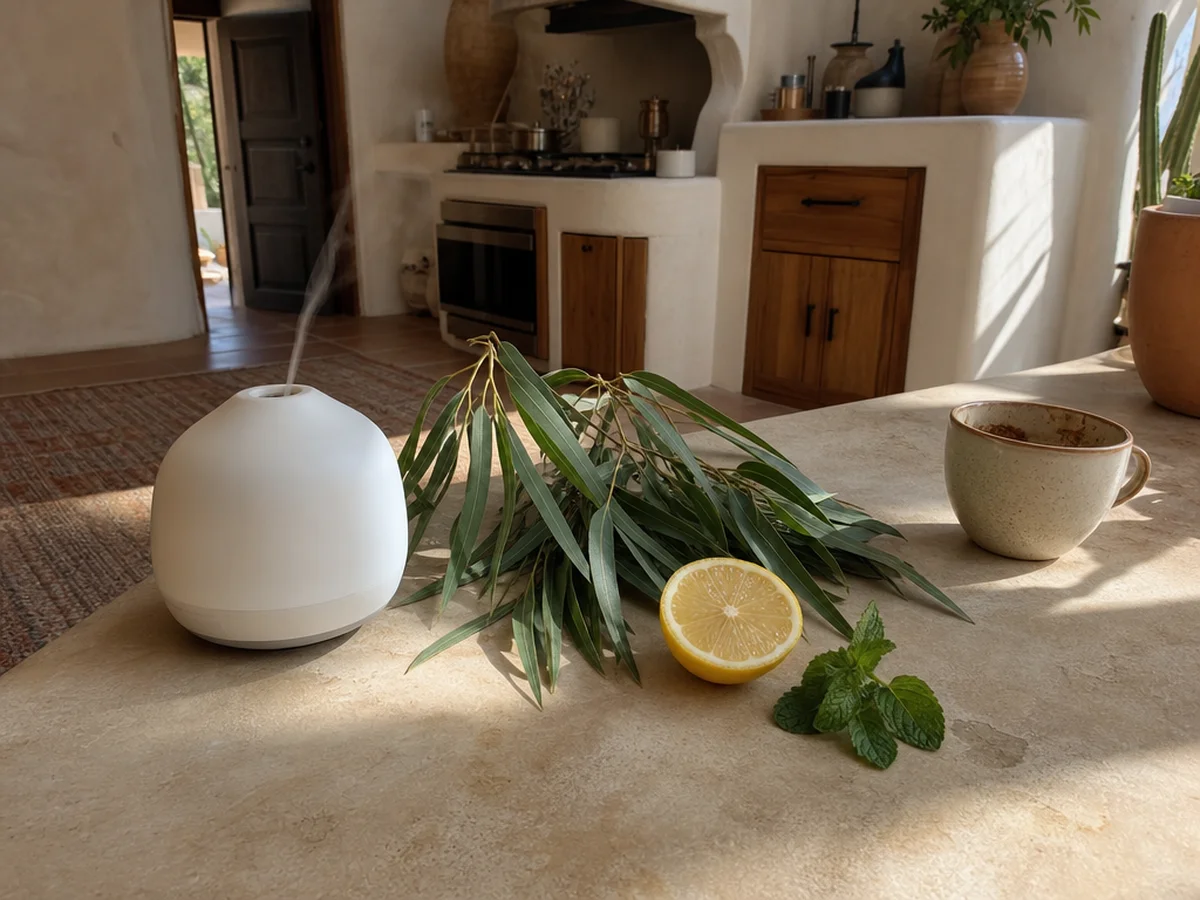
These are starting patterns for blotter trials, built from the partners we list as blending well with lemon eucalyptus (lemongrass, lavender, cedarwood, peppermint and sweet orange), plus frankincense for an anchor:
| Pattern | Parts by weight | What to know |
|---|---|---|
| Lemon on lemon | 2 lemon eucalyptus : 1 sweet orange | Orange oil is over 90% d-limonene and cold-pressed; buy small and fresh |
| Floral lift | 3 lemon eucalyptus : 1 lavender | Ask which lavender species; linalool differs a lot between them |
| Woody base | 3 lemon eucalyptus : 1 cedarwood | Cedarwood oils usually come from junipers or cypresses, so ask which one |
| Resin anchor | 4 lemon eucalyptus : 1 frankincense | See our frankincense article |
| Cool edge | 6 lemon eucalyptus : 1 peppermint | See the household notes below |
Smell the plain lemon eucalyptus first, then the blend, then the blend again an hour later. If the two smell the same at the hour mark, the partner is not adding anything, and that is useful to know before you buy a second bottle.
Why you will want to add more
Noses adapt. Research on odor habituation by Pellegrino and colleagues found that adaptation to an odor is relatively fast, so the room you scented ten minutes ago smells weaker to you than to someone walking in. The natural reaction is to add more, which is usually the wrong move. Step outside for a few minutes, come back and judge again before touching the dial.
Check the household first
A blend suits a home only as well as its least suitable ingredient.
- Babies and small children: Wikipedia notes that the menthol in peppermint oil may cause serious side effects in children and infants if inhaled, so we would skip the cool-edge pattern in any home with a baby and ask a pediatrician about the rest. Keep our oil away from children in any case.
- Pets: birds are the clearest case for leaving the diffuser off, and cats need a veterinarian's guidance. Our diffusing guide, cat article and dog article explain what we could find.
- Pregnancy, asthma or other conditions: check with a physician first. A review on lemon myrtle notes that citral-rich oils should be restricted in pregnancy; it concerns lemon myrtle and lemongrass, not our oil, but it is why we would think twice about adding lemongrass to a blend in that situation.
Letting the room breathe
Diffusing is nicer in short stretches than all afternoon. Run the device for a little while, then switch it off and let the scent settle. When you walk back in from another room, you will often find the lemon reads clearer than it did when you were sitting inside it. Opening a window for a few minutes between sessions resets your nose too, and it is a lovely excuse to step outside for a breath of air.
Keep citrus partners fresh
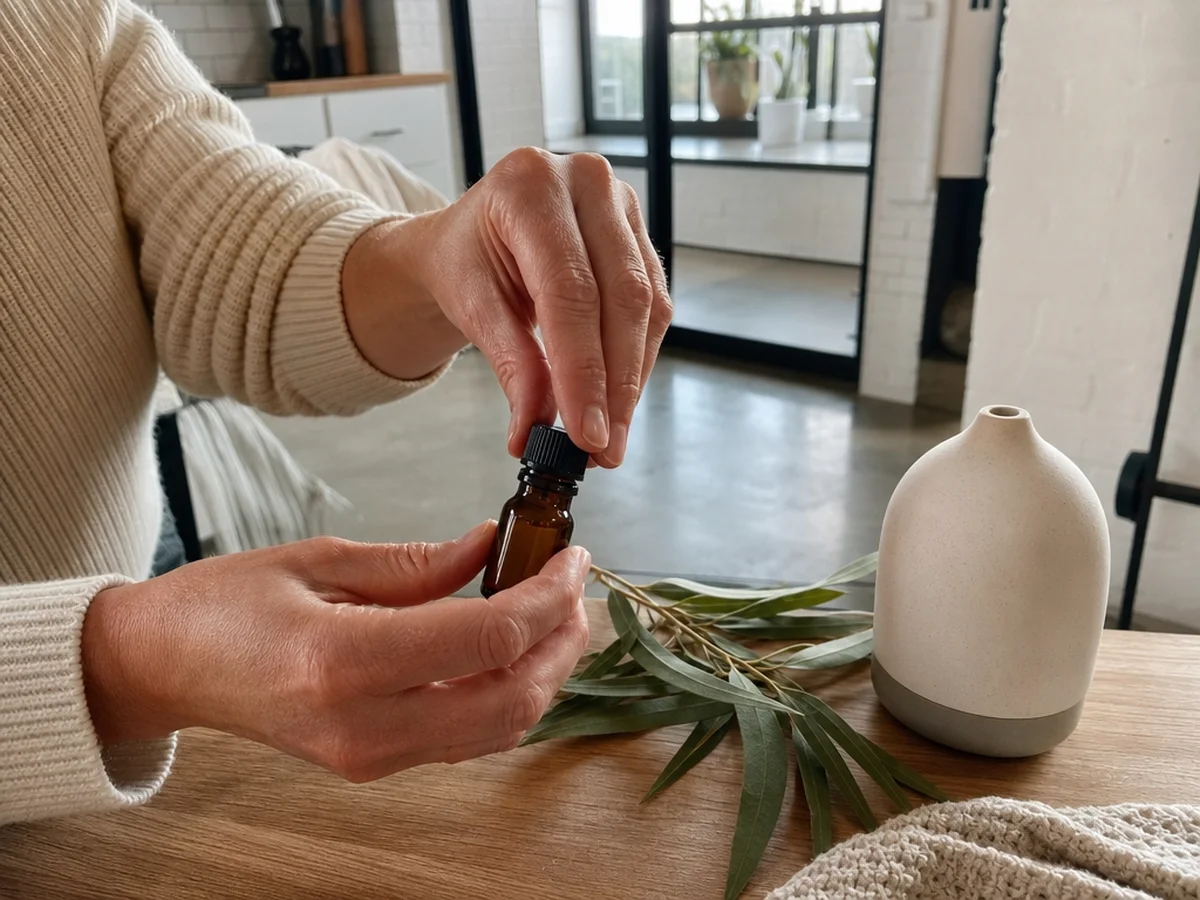
Citrus oils age. The Tisserand Institute describes limonene-2-hydroperoxide as a product of limonene oxidation, notes that citrus oils sometimes turn cloudy, and says oxidised oils tend to raise the chance of skin reactions. Refrigeration roughly doubles useful life. We say our oil typically holds its character for 2 to 3 years unopened, capped tight, away from sun and heat. Date each premix, and let go of one that has turned cloudy or flat.
Keep a small log with the device, the quantity, the pattern and your verdict at the hour mark. After three entries you will know more about your own diffuser than any list of recipes could tell you. For the usual trouble spots, our blending mistakes article is a handy companion.
A diffuser blend is a scent decision, and a lovely one when the device, the ratio and the household all line up. We sell the essential oil, not a repellent, so if bugs are your concern a registered product from a pharmacy or outdoor shop is the place to look.
Lemon Eucalyptus Essential Oil
Lemon Eucalyptus Essential Oil from our own shop, in sizes from 0.5 oz to bulk.
From $9.99
Shop Now →Sources & Further Reading
- Aroma lamp, Wikipedia
- How big is a drop?, Tisserand Institute
- Orange oil, Wikipedia
- Lavender oil, Wikipedia
- Peppermint extract, Wikipedia
- Habituation and adaptation to odors in humans, Wageningen University & Research (Pellegrino et al., 2017)
- Backhousia citriodora F. Muell. (Lemon Myrtle), an Unrivalled Source of Citral, Foods, 2021 (Southwell)
- Is my bottle of essential oil oxidized or no longer good to use?, Tisserand Institute