Lemon Eucalyptus Oil Myths: 7 Things People Get Wrong
Almost every mix-up about lemon eucalyptus oil comes from one assumption: that the name tells you what is in the bottle. It does not. The oil is a steam-distilled leaf oil, rich in citronellal, that smells of lemon without containing any. Here are the seven misunderstandings we run into most often, cleared up.

Lemon Eucalyptus Essential Oil
Our own Lemon Eucalyptus Essential Oil, in sizes from 0.5 oz to bulk.
From $9.99
Shop Now →A little patience helps here. Names in the oil world are shorthand, and shorthand gets stretched. Lemon eucalyptus is a perfect case: three different bottles under one friendly phrase. Go through the list below with a bottle in your hand if you can, and see which assumption you may have been making.
"It is eucalyptus oil with lemon added"
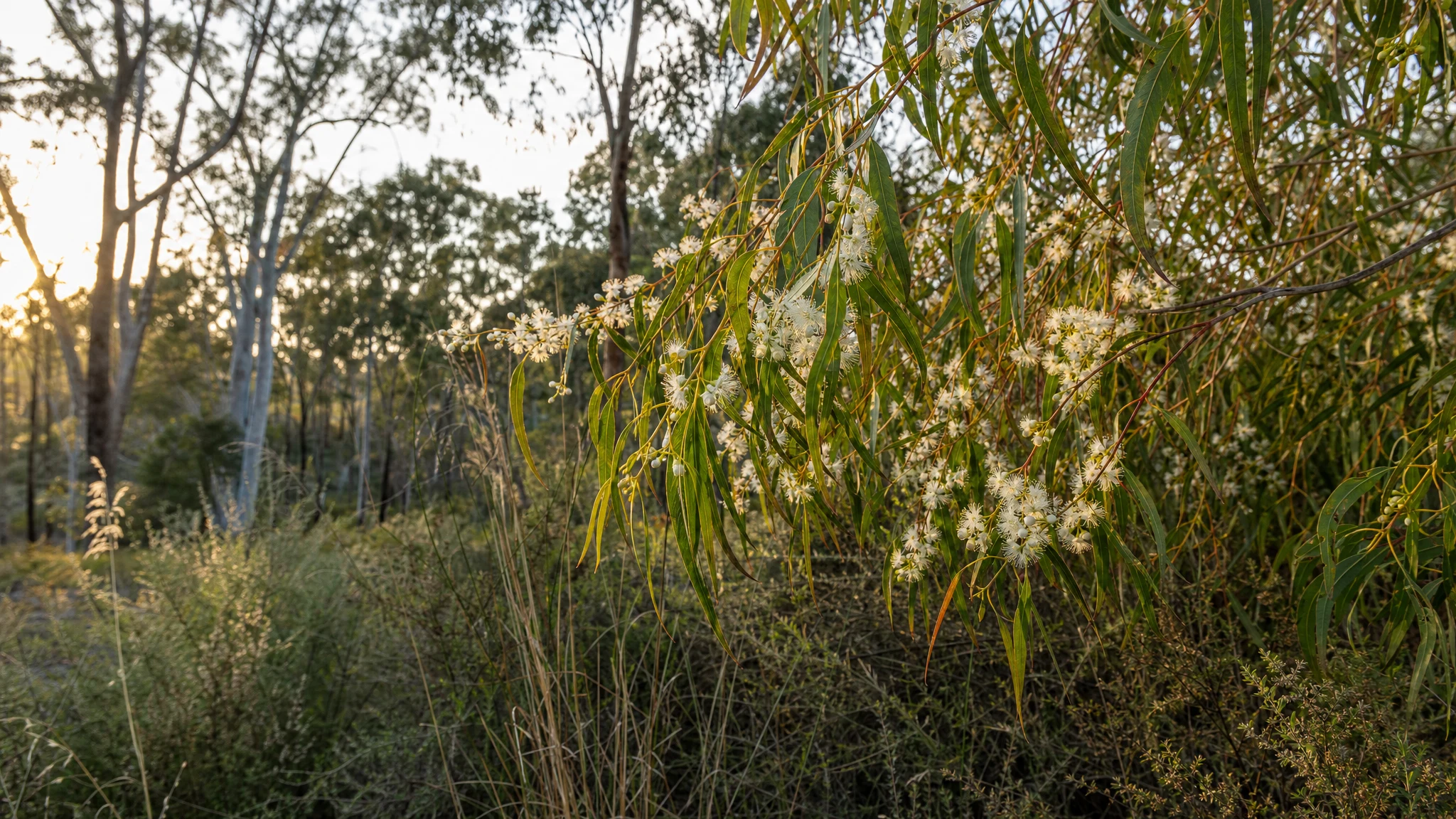
Nothing is added. The lemony note comes from the tree itself, a lemon-scented gum that is a distinct species from classic eucalyptus. Analyses of Corymbia citriodora oil report citronellal at roughly 65 to 85%, while the more familiar blue gum is dominated by a different compound, 1,8-cineole. That chemistry is the reason the two smell so different, and our comparison of lemon eucalyptus and eucalyptus globulus shows the contrast.
"It is the same as oil of lemon eucalyptus"
This one has real consequences. Oil of lemon eucalyptus (OLE) and PMD are the refined materials used in registered insect repellents. Our how-we-test page says the essential oil is not the same thing and not interchangeable, and we sell the essential oil, not a registered repellent. CDC's Yellow Book advises against using "pure" oil of lemon eucalyptus as a repellent, since it is unformulated and has not undergone validated testing for safety and efficacy. Any CDC recommendation of OLE applies to EPA-registered products. For repellent, buy one of those from a pharmacy or outdoor shop; for the long version, read our OLE comparison.

"High citronellal means one fixed recipe"
It does not. A 2018 study of Corymbia citriodora from a Portuguese arboretum found citronellal at 36%, with isopulegol at 13%, citronellol 12% and 1,8-cineole 11%. Next to the 65 to 85% range above, that shows how much origin, season and distillation can move the numbers. "Citronellal-rich" describes a character, not a single figure, which is part of what makes oils from different lots a little different in the bottle.
"Natural means gentle on skin"
Tisserand Institute's "Why Safety Is Important" says plainly that "natural" and "safe" have never been synonymous, and that adverse skin reactions are the most common safety issue with essential oils. Citronellal is a known skin sensitiser for some people, and our how-we-test page says this is not an oil to be generous with. We suggest 0.5% to 2% in a carrier oil with a patch test first, beginning at the bottom of that range. Tisserand's ranges run from 0.2 to 1% for sensitive skin and 1 to 3% for body products. Our skin irritation article has more.
"The Latin name on the label tells you what is inside"
A botanical name tells you which plant, not what was bottled. A 2021 paper on essential oil adulteration found that adding vegetable oil to an essential oil leaves the percentages in a standard GC report unchanged, so a report of percentages alone could miss it. It studied lavender, lemon and tea tree rather than eucalyptus, but the lesson travels: a number on a page is a starting point for questions. If you are buying in volume, ask any supplier for batch documentation and written confirmation of the botanical name, and our quality guide explains what to look for.

"One name, one species"
The tree has been renamed. You will see Eucalyptus citriodora on some labels and Corymbia citriodora on others. Our shop table uses the first and our product description uses the second, which is the current name. ISO 3044:2020, the standard for the oil, uses Corymbia citriodora with the older name as a synonym. Either points to the same tree.
"Top notes last all day"
Lemon eucalyptus is a top note, meaning it is the first thing you smell and the first to fade. That is a quality worth designing around, not a flaw: pair it with a slower base and you get a longer, rounder scent. Our blending article shows how.
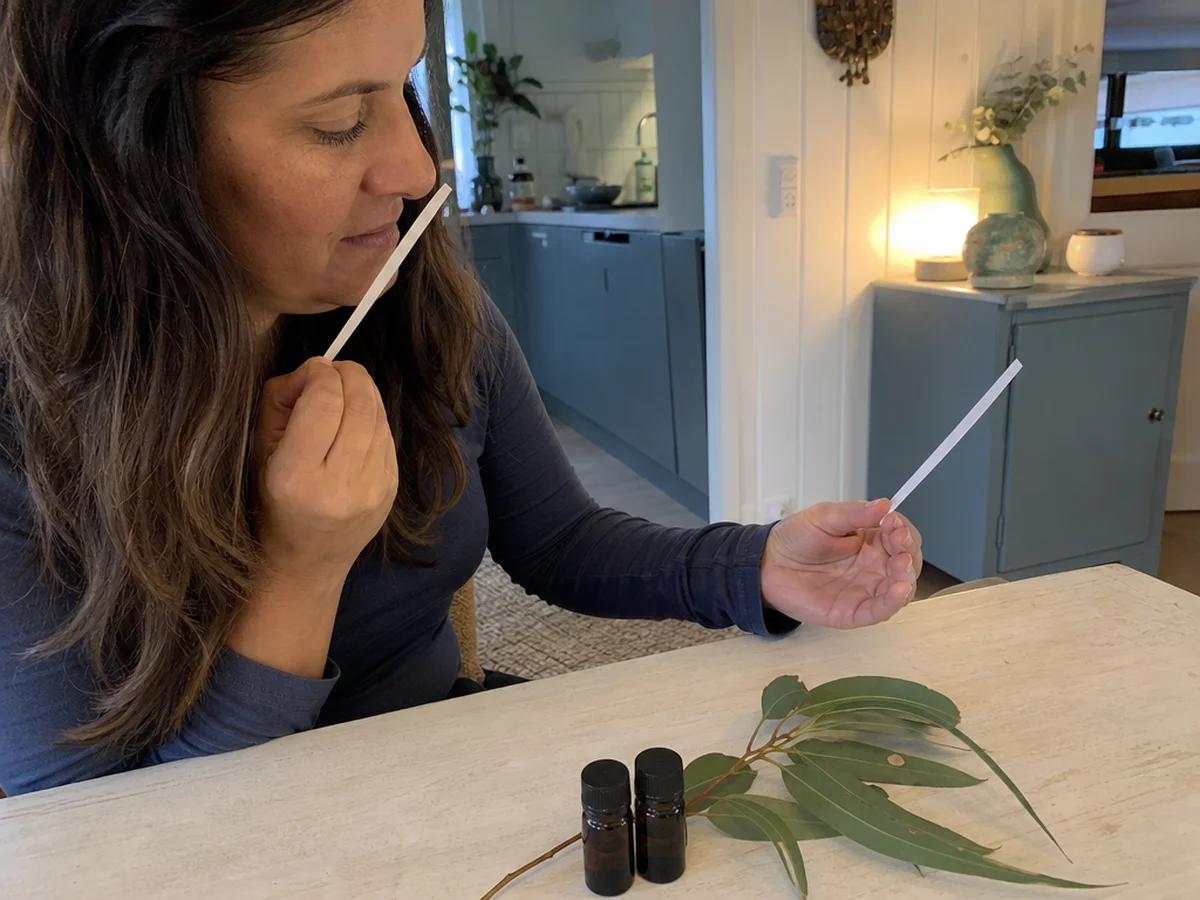
Try it for yourself: put a drop on a paper strip at breakfast and check it again at lunch. The lemon will have thinned, the greener notes will still be there, and you will have learned more about top notes than a paragraph can teach.
A few habits that sort most of this out
- Read the botanical name on the label, Corymbia citriodora or Eucalyptus citriodora, and ask if it is missing.
- Smell the oil on a paper strip before you use it: lemon first, then green leaf, then a faint camphor edge.
- Ask any seller for batch documentation in writing if the details matter to your project.
- Keep the bottle capped, cool and out of the sun.
A gentle way to get to know it
You do not need to master all of this at once. Start with the aroma, add one fact at a time, and let the oil teach you the rest. It is a plant oil, so it rewards a bit of curiosity, and a bottle you understand is a bottle you will enjoy. Keep this page handy for the next time someone tells you something about lemon eucalyptus that does not sound quite right, and check it against the bottle in front of you.
Once the names are straight, the oil is simple to enjoy: a bright, green, lemony aroma from a tall and handsome tree.
Lemon Eucalyptus Essential Oil
Lemon Eucalyptus Essential Oil from our own shop, in sizes from 0.5 oz to bulk.
From $9.99
Shop Now →Sources & Further Reading
- Backhousia citriodora F. Muell. (Lemon Myrtle), an Unrivalled Source of Citral (Foods, 2021; its tables also cover Corymbia citriodora)
- Antibacterial, Antioxidant, and Antiproliferative Activities of Corymbia citriodora and the Essential Oils of Eight Eucalyptus Species
- Mosquitoes, Ticks, and Other Arthropods | CDC Yellow Book™
- Why Safety Is Important
- Dilution for essential oils
- Adulteration of Essential Oils: A Multitask Issue for Quality Control. Three Case Studies: Lavandula angustifolia Mill., Citrus limon (L.) Osbeck and Melaleuca alternifolia (Maiden & Betche) Cheel.
- Corymbia citriodora: a valuable resource from Australian flora for the production of fragrances, repellents, and bioactive compounds